
The raid by the Enforcement Directorate (ED) at the I-PAC office and the residences of Pratik Jain in Kolkata on January 8 has created a massive political fallout in West Bengal. The reason behind the political fallout is not simply because the ED raided these premises, but because West Bengal Chief Minister Mamata Banerjee herself reached the spot and allegedly obstructed the raid.
Beyond this, the entire situation turned toward a massive political issue from there because Mamata hit the streets, leading a protest march that drew thousands and reframed the narrative around central agency overreach. This episode, tied to a long-standing coal smuggling investigation, has exposed fissures in Bengal’s political landscape, with the Trinamool Congress (TMC) leveraging it for mass mobilisation while the Bharatiya Janata Party (BJP) struggles to capitalise.
The Coal Smuggling Probe: Timing, Targets, and Lingering Questions
The coal smuggling case, which forms the backbone of the ED’s raid on I-PAC, dates back to 2020 when the Central Bureau of Investigation (CBI) registered a case against a syndicate led by Anup Majhi, alias Lala, accused of illegally excavating and smuggling coal from Eastern Coalfields Limited (ECL) leasehold areas in West Bengal’s Paschim Bardhaman district. The scam, estimated to involve billions in illicit proceeds, allegedly involved theft from government mines and laundering through hawala networks.
The ED joined under the Prevention of Money Laundering Act (PMLA), uncovering links to political figures early on.
This probe gained prominence before the 2021 West Bengal assembly elections, with TMC national general secretary Abhishek Banerjee and his wife Rujira Banerjee summoned multiple times for questioning. Abhishek, Mamata’s nephew, faced interrogations in 2021 and beyond, with allegations of ties to key accused like Vinay Mishra, a TMC youth leader implicated in fund routing. While the ED maintains this is a routine investigation into money laundering, the raid’s timing — just months before the 2026 assembly polls—raises eyebrows about potential political motivations.
Crucially, Pratik Jain, I-PAC’s co-founder and the firm itself were not previously named in public summons or notices. No prior questioning of Jain is documented, begging the question: If he or I-PAC were suspects, why the sudden raid without preliminary steps? The ED alleges hawala transfers of tens of crores to I-PAC, purportedly used in TMC’s Goa campaign, but evidence details remain sparse. Moreover, the raid’s execution was marred by unpreparedness: ED teams, accompanied by Central Armed Police Forces (CAPF), lacked sufficient ground support, echoing past incidents like the 2024 Sandeshkhali attacks on ED officials or the 2019 arrest of CBI officers by Kolkata police during the Saradha chit fund probe.
Adding intrigue, Mamata’s entry into the premises allegedly allowed her to remove incriminating evidence, as per ED’s court plea, where they claimed inability to collect any material despite prolonged presence. This lapse questions the agency’s operational efficacy in a hostile environment. The raid, while legally grounded in the 2020 case, appears poorly timed and executed, fueling suspicions of it being a tool to disrupt TMC’s electoral machinery rather than a pure pursuit of justice.
BJP’s Muddled Response: Missed Opportunity and Internal Disarray
The political undercurrents of the I-PAC raid are unmistakable, yet the BJP, which controls the central government and thus the ED, failed to seize the narrative. If the intent was to corner TMC on corruption, the BJP should have mounted a unified offensive, hitting the streets to amplify the coal scam allegations and portray Mamata as obstructive. Instead, Bengal BJP leaders reacted in fragmented ways, with no cohesive strategy emerging initially. Even a central BJP press conference the next day saw feeble echoes from the state unit.
By Saturday, January 10, only the BJP’s Yuva Morcha organised scattered protests, focusing narrowly on Mamata’s alleged obstruction rather than the broader scam. This hesitation squandered a prime chance to rally anti-TMC sentiment, especially amid ongoing probes linking TMC figures to the coal case.
The BJP’s Bengal unit, plagued by leadership voids, couldn’t muster the groundswell needed. Union Home Minister Amit Shah’s recent intervention to reconcile former state chief Dilip Ghosh with current leader Somik Bhattacharya and opposition leader Suvendu Adhikari highlights this disunity. Even BJP national president JP Nadda’s concurrent visit to Bengal was overshadowed by the raid drama.
This lacklustre response underscores the BJP’s strategic missteps in Bengal, where local optics matter immensely. By not aggressively framing the raid as evidence of TMC corruption, the BJP allowed Mamata to flip the script, portraying it as vendetta politics. In a state where street protests define narratives, the BJP’s inaction speaks volumes about its organisational weaknesses, potentially costing it dearly in 2026.
Mamata’s Masterstroke: Seizing the Narrative Through Street Power
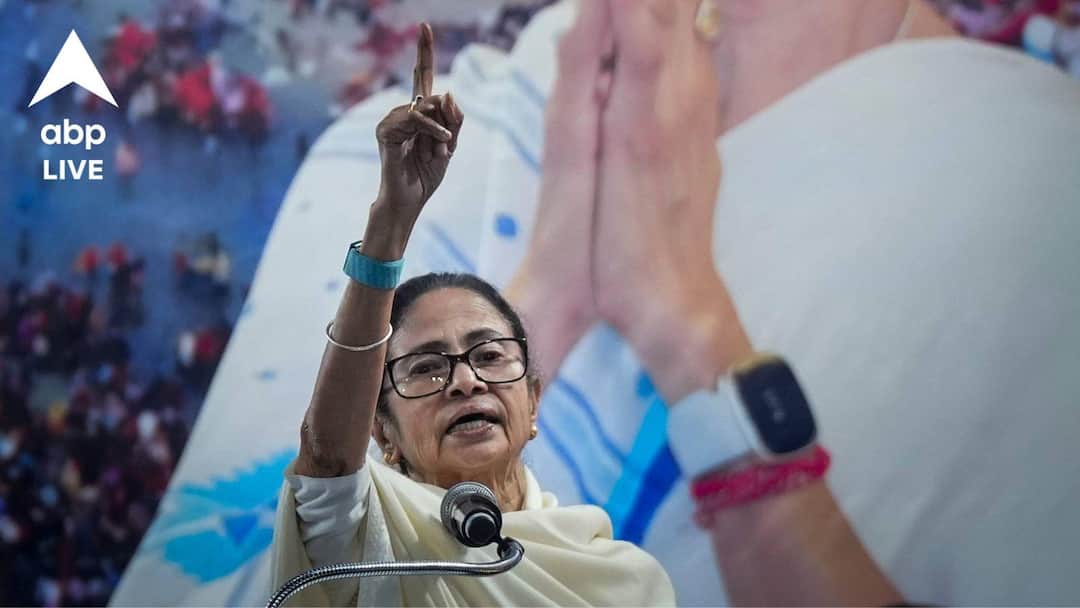
In stark contrast, Mamata Banerjee transformed the raid into a political boon for TMC. Not only did she personally intervene at the sites, but she swiftly recast the event as a BJP-orchestrated attempt to steal TMC’s 2026 election strategy. Within hours, she snatched the narrative from the BJP, framing the ED as a tool for electoral sabotage. By January 9, she orchestrated a massive rally in Kolkata, walking over 10 km before addressing thousands, all without extensive planning.
This agility occurred even as Abhishek Banerjee was absent, campaigning elsewhere, underscoring Mamata’s singular command over Bengal’s masses. Her street-fighter persona — defending “party data” as self-defence — resonated deeply, turning a defensive moment into an offensive against central overreach. TMC leaders echoed this, filing complaints against ED officials and seeking court orders to return seized data. The rally not only boosted morale but reaffirmed Mamata’s grassroots dominance, where public sympathy often sways votes.
This episode highlights that in West Bengal, political power remains firmly with Mamata, not diffused among lieutenants or rivals. Her ability to mobilise spontaneously, even amid probes, cements her as Bengal’s unchallenged leader, potentially insulating TMC from the raid’s fallout.
Lessons For BJP: Beyond Agencies, Focus on Ground Realities
The BJP must confront its Bengal frailties exposed by this raid. The state unit lacks credible leadership that inspires trust; internal rifts required Amit Shah’s mediation between Ghosh, Bhattacharya, and Adhikari. Nadda’s visit, fading into obscurity amid Mamata’s rally, illustrates how optics favour street-savvy leaders like her.
Relying on central agencies for narratives risks backfiring, as seen here — raids perceived as “bogus” alienate voters without tangible gains.
Instead, the BJP should pivot to local issues: unemployment, infrastructure decay, or grassroots corruption scandals like teacher recruitment or chit funds. Allowing Mamata repeated street victories leaves no room for BJP counter-narratives. Without addressing these, victory in 2026 remains elusive, as Mamata’s mass appeal endures despite probes.
In sum, the I-PAC raid has not weakened TMC but spotlighted Bengal’s polarised politics, where central interventions often bolster regional defiance. As elections loom, the fallout may define the state’s trajectory.
(Sayantan Ghosh is the author of The Aam Aadmi Party: The Untold Story of a Political Uprising and Its Undoing. He is on X as @sayantan_gh.)