
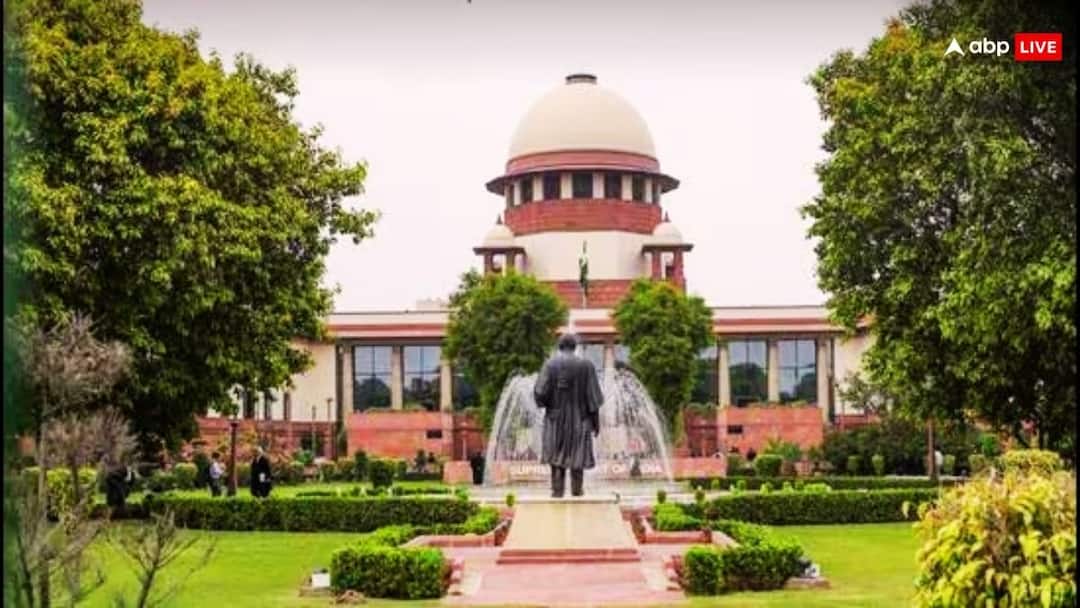


The Supreme Court on Tuesday strongly criticised a Christian Army officer who was sacked for refusing to enter a gurdwara to perform a puja, dismissing his plea and firmly backing the military’s decision to remove him from service. The bench, led by the new Chief Justice Surya Kant, did not mince words as it questioned the officer’s conduct and the message it sent within the ranks.
‘Gross Indiscipline’: Supreme Court Backs Army’s Decision
Chief Justice Kant described the officer, Samuel Kamalesan, as a “cantankerous man” and a “misfit”, stressing that such behaviour had no place in the armed forces.
“What kind of message is he sending? Gross indiscipline by an Army officer. He should have been terminated. This kind of cantankerous person deserves to be in the military?” the CJI remarked while rejecting Kamalesan’s petition.
The court underscored that respect for the religious beliefs of fellow soldiers is a fundamental part of military life and discipline. “He may be an outstanding officer but he is a misfit for the Indian Army. The amount of responsibilities our forces have at this time… this is not what we want to entertain,” the bench noted.
Background: Refusal To Enter Sanctum Led To Dismissal
Kamalesan, formerly a Lieutenant in the 3rd Cavalry Regiment, was dismissed after he disobeyed a direct order to enter the sanctum sanctorum of a temple to conduct a puja. He argued that doing so would conflict with his monotheistic Christian faith.
Earlier this year, the Delhi High Court had upheld the Army’s decision, observing that he had placed his religious views above a lawful command. The court described his conduct as a breach of “essential military ethos” and concluded that it clearly amounted to indiscipline.
Supreme Court Points To Pastor’s Advice
The Supreme Court bench echoed the High Court’s reasoning and highlighted another detail: Kamalesan had reportedly ignored the advice of his own pastor.
“When your pastor counsels you… you leave it at that. You cannot have your private understanding of what your religion permits. That too, in uniform…” Justice Joymala Bagchi said.
Representing Kamalesan, senior advocate Gopal Sankaranarayanan contended that the officer had been dismissed over a “single infraction”. He emphasised that Kamalesan had consistently shown respect for all religions by participating in festivals such as Holi and Diwali.
Sankaranarayanan pointed out that the location in Punjab lacked a sarv dharm sthal, a space commonly used by the forces to symbolise inter-faith unity. Instead, there was only a gurdwara, leading to the dispute.
“He is standing right outside the sanctorum. He told them, ‘Everything else you want me to do outside, I’ll do… but entering the sanctorum is against my faith…’,” the senior advocate explained, noting that the objection had come solely from his superior officer. “Just see the termination order passed. He is not a cantankerous man.”
Religion And Military Duty: Defence Cites Constitutional Rights
The defence argued that the Constitution grants every citizen the right to practise their religion—and by extension, the right not to participate in other religious activities.
“By joining the Army, one does not lose one’s religious identity,” Sankaranarayanan said. “I was entering the gurdwara, temple, everything… but I stopped when they asked me to do puja. At least that much the Constitution provides. I profess monotheistic faith.”
Despite the arguments, the bench declined to interfere with the Army’s decision. The judges reiterated that military discipline cannot accommodate personal interpretations of religious practices, especially when they clash with lawful commands.
The verdict reinforces a long-standing position within the armed forces: personal beliefs cannot override the disciplined, unified, and inclusive framework essential to military functioning.