- India stated all unresolved border issues are handled bilaterally.
- Nepal PM claimed both countries encroach on each other.
- Nepal’s foreign office clarified PM’s remarks on land use.
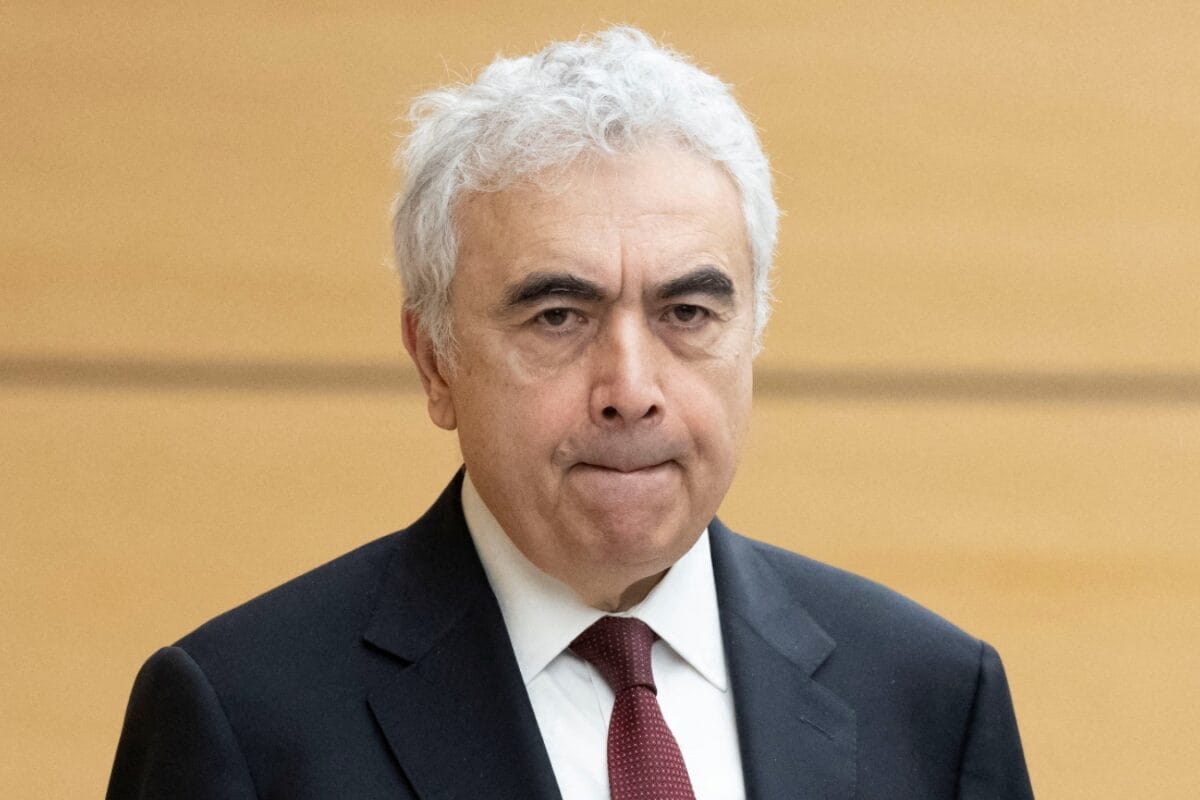
India on Tuesday responded to remarks made by Nepal Prime Minister Balen Shah regarding the India-Nepal boundary issue, asserting that all unresolved matters between the two countries are being addressed through bilateral mechanisms.
MEA spokesperson Randhir Jaiswal said, “We have seen the remarks of the Prime Minister of Nepal concerning India India-Nepal boundary as well as the subsequent statement made by the Nepali foreign office on this matter. While close to 98% of the India-Nepali boundary has been demarcated, there are some unresolved segments. The shifting of the Gandak River has resulted in this. In addition, there are cases of cross-border occupation and encroachment of no man’s land in demarcated segments of the boundary, which are currently being mapped jointly.”
He added, “We have established bilateral mechanisms to deal with all aspects of boundary matters. It should be clear to all concerned that there is no role for any third parties in a bilateral matter between India and Nepal.”
#WATCH | Delhi | MEA Spokesperson Randhir Jaiswal says, “We have seen the remarks of the Prime Minister of Nepal concerning India India-Nepal boundary as well as the subsequent statement made by the Nepali foreign office on this matter. While close to 98% of the India-Nepali… pic.twitter.com/9JmA7cUk3f
— ANI (@ANI) June 2, 2026
What Nepal PM Balen Shah Had Said
The MEA statement came a day after Nepal Prime Minister Balen Shah triggered a political controversy in Nepal by claiming that the Himalayan nation had also encroached on Indian territory despite Kathmandu’s repeated allegations of Indian encroachment.
During his maiden address to the Nepali Parliament since taking office earlier this year, Shah said, “You will be surprised to know a fact that I have learnt recently, only after becoming prime minister. India has not only encroached Nepali territory, but Nepal has also encroached Indian territory in many places.”
“Now both countries should study the facts and sit together as friends and resolve the issue,” he added.
However, Shah did not specify the locations where Nepal had allegedly encroached on Indian land.
Protests Triggered In Nepal Parliament
Proceedings in both Houses of Nepal’s Parliament were disrupted on Monday after lawmakers protested against Prime Minister Balendra Shah’s recent remarks related to the border issue.
Members of the House of Representatives and the National Assembly staged protests inside Parliament, demanding that Shah apologise and that his comments be removed from the official records.
Opposition parties, which had already disrupted proceedings in the House of Representatives earlier, continued their protest on Monday and reiterated their demand that the Prime Minister withdraw his statement.
Long-Running Border Dispute
Shah acknowledged that disputes involving Lipulekh, Limpiyadhura and Kalapani continue to remain sensitive issues in India-Nepal ties.
Nepal and India share a long and open border, much of which was defined under the 1816 Treaty of Sugauli. However, mapping remains incomplete in certain areas, including Susta and the Limpiyadhura-Lipulekh-Kalapani region.
India has maintained that the disputed territories are part of Uttarakhand and has consistently stated that all issues should be resolved through bilateral dialogue.
Remarks Trigger Political Backlash In Nepal
Shah’s comments triggered criticism from opposition political parties, foreign affairs experts and border analysts in Nepal, many of whom argued that the remarks weakened Kathmandu’s long-standing position on the border dispute.
Opposition lawmakers, including Basana Thapa of the Nepali Congress and Ramesh Malla of the Nepali Communist Party, objected to the prime minister’s statement and demanded that the remarks be removed from the parliamentary record.
They also asked Shah to either provide evidence supporting his claim or withdraw the statement.
Former Nepalese ambassador to India Nilambara Acharya told Kantipuronline that Shah had “no information regarding Indian territories being encroached upon by Nepal.”
According to Acharya, around 97 per cent of border disputes between the two countries have already been resolved.
“There are reports about some Nepalese using land in India and some Indians using land in Nepal due to the missing border pillars in some border areas,” he said, adding that the Nepal government itself had not encroached on Indian territory.
Another former Nepal ambassador to India, Deep Kumar Upadhyay, said there was no documented record of Nepal encroaching on Indian land.
“India has also not raised this issue on record…So far, we have conducted studies, but this issue has never surfaced…I don’t know in which context the prime minister spoke about such a serious matter,” he told Nepalpress.
Nepal Government Issues Clarification
Following the controversy, Nepal’s Foreign Ministry issued a clarification, stating that Shah’s comments referred to “cross-border occupation” and encroachment in the no-man’s land along the India-Nepal border.
“The matter mentioned by the Prime Minister in Parliament was primarily related to encroachment in the no-man’s land area and cross-border occupation,” the ministry said.
It further noted that under the “Fixed Boundary Principle” in river boundary areas, situations have emerged where Nepali citizens use land technically located in India, while Indian citizens use land falling within Nepal’s territory.
The ministry reiterated that Nepal’s official position on disputed regions, including Limpiyadhura, Lipulekh and Kalapani, remains unchanged and said unresolved issues would continue to be addressed through diplomatic dialogue and mutual understanding with India.
According to the ministry, technical committees and bilateral border mechanisms are already engaged in repairing border pillars, addressing encroachment in no-man’s land and collecting records of cross-border occupation in mapped areas.
India’s Earlier Position On Lipulekh
Earlier this month, India had rejected Nepal’s objection to the upcoming Kailash Mansarovar Yatra through the Lipulekh Pass.
New Delhi had dismissed Kathmandu’s territorial claims over the region as an “unilateral artificial enlargement” that India considers “untenable”.
ALSO READ: Mamata Hits Streets In Kolkata, Threatens TMC Will Protest In Delhi If Blocked
India has consistently maintained that there is no known instance of New Delhi formally accusing Nepal of encroaching on Indian territory.
ALSO READ: CBSE Says Revaluation Portal Facing Cyberattack Attempts Amid Heavy Student Traffic