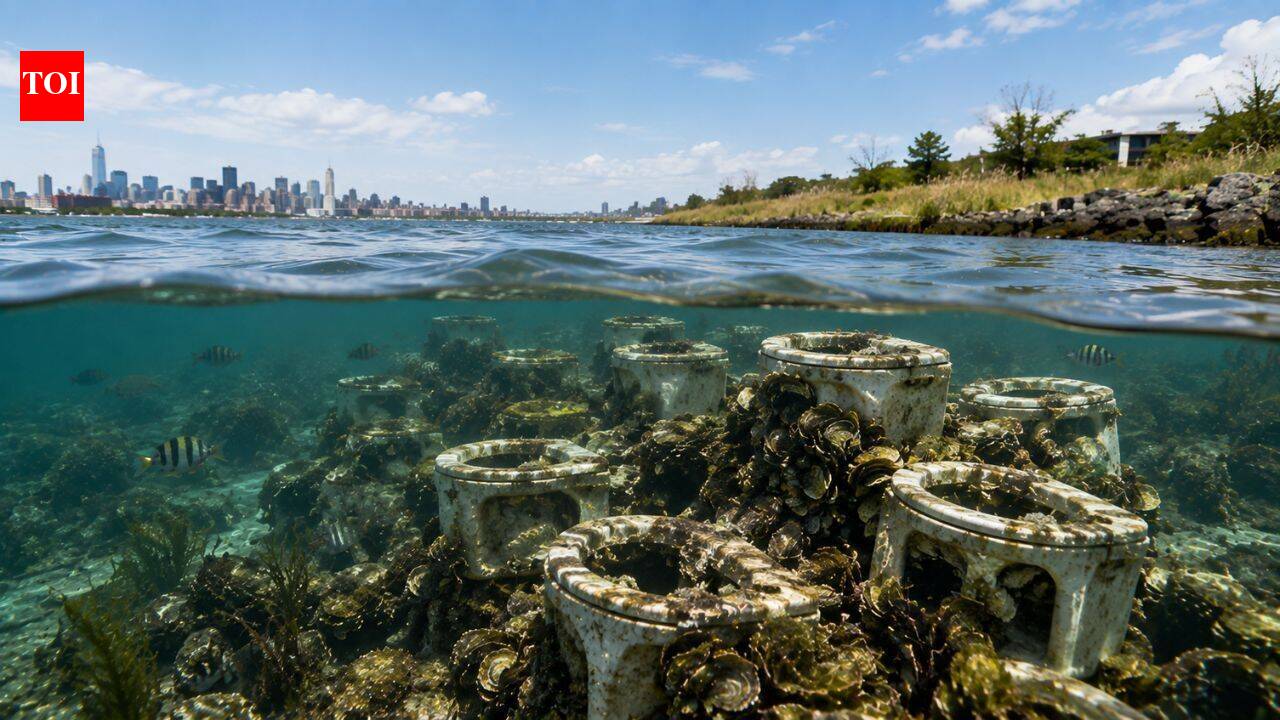

image AI generated
Roughly 5,000 discarded toilets have been repurposed as artificial reef structures beneath the water. The initiative, run by New York City’s Department of Environmental Protection alongside the Billion Oyster Project, converted old porcelain fixtures from public schools into a foundation for oyster growth. According to the Jamaica Bay reef project, instead of ending up in landfill, the broken porcelain was combined with oyster and clam shells to create settling beds for juvenile oysters. The programme forms part of a wider effort to restore the harbour’s lost reef ecosystems while also addressing coastal erosion. This piece looks at how the toilets became reef material, why oysters were chosen, the historical loss behind the project and its place within New York’s broader resilience plans.
How nearly 5,000 recycled toilets became artificial oyster reefs in Jamaica Bay
According to Click Oil and Gas, a popular Brazilian news portal, New York City replaced thousands of outdated, water-inefficient toilets across its public schools as part of a conservation drive. Rather than discarding the old units entirely, officials broke them down into smaller pieces and used the porcelain as a base layer on the bay floor. The material gave young oysters a hard surface to latch onto, which is essential for reef formation. The porcelain was combined with natural oyster and clam shells to build four separate artificial reef structures. These smaller reefs were designed as a test of ecological restoration within a heavily altered urban waterway, showing how construction waste could be converted into a functional marine habitat rather than sent to landfill.
Why oyster reefs are important for cleaner water in New York Harbour
Around 50,000 one-year-old oysters were deployed at the Head of Bay reef site in Jamaica Bay, bordering Nassau and Queens counties. The deployment aimed to bring the total oyster population at the site to approximately 20 million, with a further release planned to complete the reef structure.According to New York State, oysters play a direct role in filtering pollutants such as nitrogen from the water, which helps reduce harmful algal blooms and improves overall water quality. A single adult oyster can filter dozens of gallons of water each day, making large-scale reef restoration an effective tool for improving harbour conditions over time.
How the Billion Oyster Project plans to restore one billion oysters by 2035
New York Harbour was once home to around 220,000 acres of oyster reefs, which acted as a natural buffer against storm damage by softening wave energy and limiting flooding and erosion. Decades of pollution, overfishing and industrial expansion gradually destroyed most of these reef systems throughout the twentieth century.The harbour supported an abundance of oysters as recently as 1900, before pollution and heavy human use wiped out much of this water-filtering marine life. The Billion Oyster Project was established specifically to reverse this decline, with a long-term goal of restoring one billion oysters to New York Harbour by 2035.
How recycled toilets became part of New York’s Billion Oyster Project and coastal restoration
The Head of Bay reef project is being carried out by the Department of Environmental Conservation in partnership with the Billion Oyster Project, supported by state environmental funding. Beyond rebuilding marine habitat, the project has also delivered hands-on STEM learning opportunities for thousands of New York City public school students through classroom and field-based coursework. The toilet replacement scheme was originally introduced to conserve water in schools, with the resulting porcelain waste later redirected into environmental projects including oyster reefs and urban drainage systems. The reef work now sits alongside broader state investment in coastal resilience, flood prevention and habitat restoration across New York’s shoreline communities. Go to Source