
Saturday, May 9, 2026
31.1 C
New Delhi

Why Iran is removing four zeroes from its currency: The reason behind the major reform

Why Iran is removing four zeroes from its currency: The reason behind the major reform

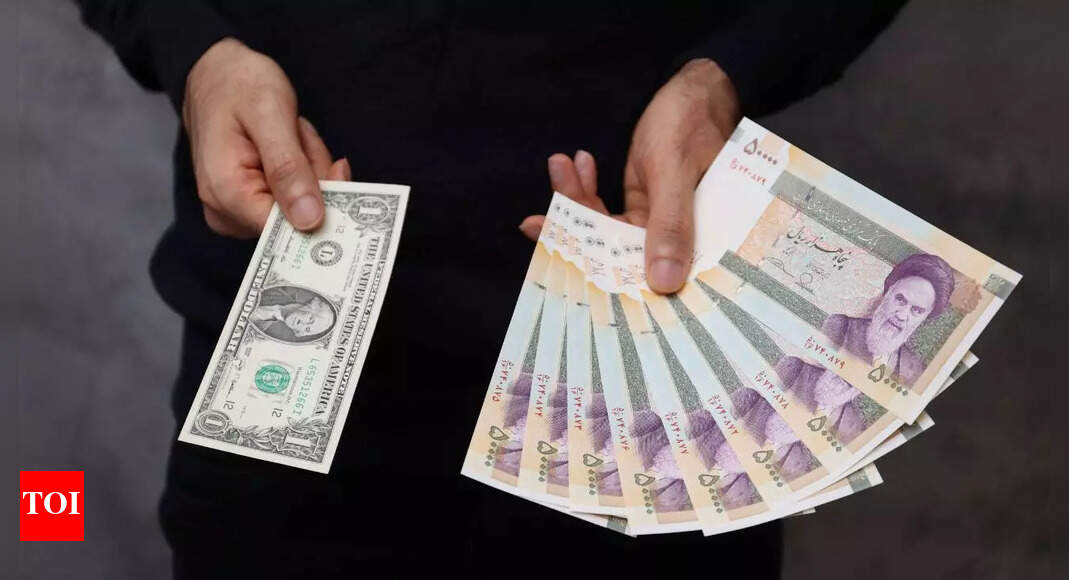
Image: Reuters

Iran is set to remove four zeros from its national currency, the rial, in a major redenomination effort aimed at tackling years of high inflation and a severely depreciated currency. Under the proposed plan, 10,000 old rials will be replaced by 1 new rial, effectively cutting four zeros from the currency. For example, what previously cost 1,000,000 rials would now be 100 new rials, making transactions simpler and easier to understand. The reform aims to streamline daily financial transactions, eliminate pricing confusion, and restore public confidence in Iran’s currency amid years of economic challenges and international sanctions.

Iran’s chronic inflation and currency depreciation

Iran’s inflation rate has remained extremely high for many years, worsened by recurring international sanctions tied to its nuclear program. According to reports, on the black market, the rial’s value has plummeted to over 1,100,000 rials per US dollar, making everyday transactions cumbersome. This redenomination seeks to simplify financial operations and make the rial more practical for citizens and businesses.

Usability and transaction simplicity

Before the change, routine purchases often involved millions of rials. With four zeros removed, prices will now be expressed in smaller, more manageable numbers. This makes accounting, price labeling, and government administration easier while reducing errors and confusion in daily transactions.

Economic symbolism

Redenomination is also symbolic. By introducing a simplified currency, Iran aims to signal economic stability and demonstrate a commitment to broader financial reforms to both citizens and international observers.

Alignment with local practice

Iranians often already use the toman, which equals 10 rials, in daily conversation, effectively dropping a zero informally. Officially removing four zeros brings the legal currency in line with everyday practice, reducing confusion and making transactions more intuitive.

Implementation details

The transition will allow both old and new rials to circulate for up to three years. The Central Bank has two years to implement the change fully. However, the reform still requires approval from Iran’s Guardian Council and must be signed into law by President Masoud Pezeshkian. Earlier attempts, such as in 2019, were delayed due to political and economic complications.The move comes amid renewed UN sanctions and increasing isolation from international financial systems. European parties to the 2015 nuclear deal recently triggered the “snapback” mechanism, weakening the rial further. Many Iranians have already adjusted to using the toman, so the official redenomination is expected to be widely accepted and less disruptive. Go to Source


Hot this week

US voices concern after Taiwan cuts key defence spending plans

The United States has expressed concern over delays to Taiwan’s $40 billion defence spending plans, warning that holding back key military projects amounts to a “concession” to China. Read More

South Korea seizes 2 Chinese fishing boats on suspicion of illegal fishing; 1 dead

South Korea on Saturday seized two Chinese fighter boats near the border island of Baengnyeong in the West Sea. Read More

What to expect at Cannes: Heavyweights, history lessons and an abundance of animation

Pedro Almodovar and Asghar Farhadi, Wole Soyinka and J M Coetzee, World War notes and memories of the Beatles and Che Guevara mark the 79th Cannes Film Festival beginning on May 12 Go to Source Read More

Desi Was Always Gourmet, The World Is Only Realising It Now

From millets and kokum to thecha and jaggery, Indian ingredients are redefining modern gourmet culture through craftsmanship, nostalgia, and regional authenticity. Read More

PM Modi Bows To ‘Jana Shakti’ As BJP Forms First-Ever Government In West Bengal | Watch

PM Modi arrived in Kolkata on Saturday to attend the oath-taking ceremony and bowed before the “jana shakti” of Bengal from the stage. Read More

Topics

US voices concern after Taiwan cuts key defence spending plans

The United States has expressed concern over delays to Taiwan’s $40 billion defence spending plans, warning that holding back key military projects amounts to a “concession” to China. Read More

South Korea seizes 2 Chinese fishing boats on suspicion of illegal fishing; 1 dead

South Korea on Saturday seized two Chinese fighter boats near the border island of Baengnyeong in the West Sea. Read More

What to expect at Cannes: Heavyweights, history lessons and an abundance of animation

Pedro Almodovar and Asghar Farhadi, Wole Soyinka and J M Coetzee, World War notes and memories of the Beatles and Che Guevara mark the 79th Cannes Film Festival beginning on May 12 Go to Source Read More

Desi Was Always Gourmet, The World Is Only Realising It Now

From millets and kokum to thecha and jaggery, Indian ingredients are redefining modern gourmet culture through craftsmanship, nostalgia, and regional authenticity. Read More

PM Modi Bows To ‘Jana Shakti’ As BJP Forms First-Ever Government In West Bengal | Watch

PM Modi arrived in Kolkata on Saturday to attend the oath-taking ceremony and bowed before the “jana shakti” of Bengal from the stage. Read More

Dilip Ghosh’s Return: The BJP Veteran Who Stayed Through Bengal’s Political Highs And Lows

Once tasked with expanding the BJP in a state where the party barely had a footprint, Dilip Ghosh is now part of Bengal’s first BJP-led government. Read More

Who Is Cooch Behar Strongman Nisith Pramanik, Latest To Join Suvendu Adhikari’s New Cabinet?

Born in Dinhata, Cooch Behar district, Pramanik began his political journey with the Trinamool Congress (TMC) before switching to the BJP in 2019 Go to Source Read More

Related Articles