
Wednesday, February 11, 2026
24.1 C
New Delhi

What really destroyed the Indus Valley? It wasn’t war, but a slow death by drought

What really destroyed the Indus Valley? It wasn’t war, but a slow death by drought

Source: Nature

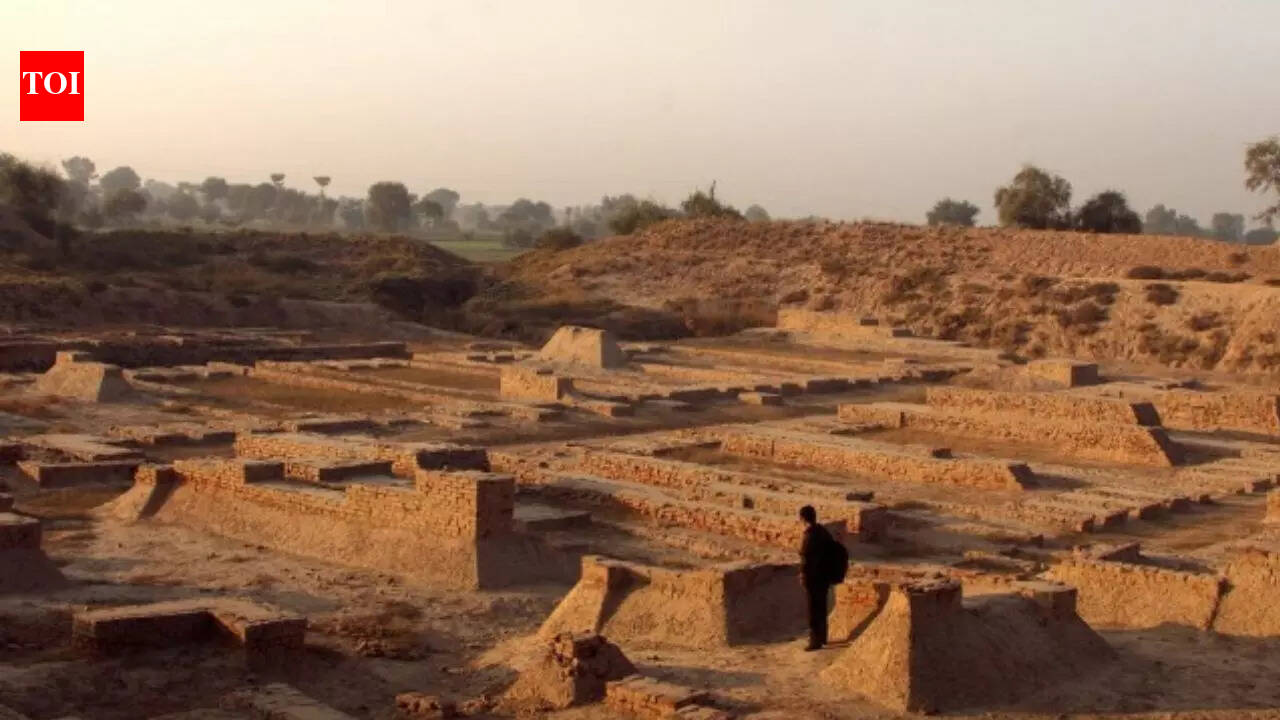
The Indus Valley Civilisation probably didn’t disappear all at once. New research points to a long stretch of repeated droughts that may have slowly weakened one of the world’s earliest urban societies. Cities such as Mohenjo-Daro and Harappa, once built around reliable rivers, appear to have struggled as water became harder to find. As conditions worsened, people began to move away, settlements declined, and everyday life grew uncertain. It’s striking to realise how deeply something as ordinary as rainfall could shape the fate of an entire civilisation. Researchers believe the damage unfolded over many decades, with early changes so gradual they may have gone almost unnoticed at first.

How the Indus Valley built smart cities by the river

As cited in ScienceDaily study, titled, ‘Scientists finally uncovered why the Indus Valley Civilization collapsed’, the Indus Valley, also known as the Harappan civilisation, was highly advanced for its time. Cities weren’t just heaps of bricks; they had organised streets, complex drainage, and water-management systems. Experts say the society had trade links as far as Mesopotamia. They even developed a script, though we can’t read it today. But life was never entirely smooth. Even with all that clever engineering, the civilisation still depended heavily on the Indus River. When the river’s flow changed, the whole system started to wobble. Experts note that climate shifts, particularly rainfall patterns, might have slowly made the area harder to live in.

How long have droughts slowly broken the Indus Valley

Scientists studying this used computer climate simulations spanning thousands of years. These simulations reportedly show rainfall steadily declining between 5,000 and 3,000 years ago. Some droughts apparently lasted more than 85 years at a stretch. That’s a long time without reliable water.It seems that as the droughts dragged on, people moved closer to remaining water sources. Eventually, though, even those areas couldn’t sustain large populations. Cities began to empty. A particularly long drought around 3,500 years ago reportedly coincides with widespread abandonment of major sites. Archaeologists see this as the moment the civilisation really started to unravel.

Stone and mud tell the story of the droughts

To check the models, researchers looked at stalagmites and stalactites in regional caves. When growth slows, it usually means less rainfall. They also checked lake sediments. Both seem to match the simulations pretty well. It’s like the environment was leaving a diary, in stone and mud, of exactly what was happening.Nick Scroxton, a climate scientist, reportedly said this work helps explain how changing rainfall influenced urban settlement and agriculture. Liviu Giosan, a geoscientist, called the study “a significant step” in understanding hydroclimate in ancient civilisations. Seems like the scientists were pleased with their cross-checking. Go to Source
Hot this week

Can Bangladesh hold ‘free and fair’ elections? Poll body vows ‘impartial, credible’ vote’

With voting set to begin on Thursday, Bangladesh’s Election Commission has said that the 2026 national polls will be “free, fair, impartial and credible,” even as security concerns and political tensions dominate the run-up Go to Source Read More

Police detain person of interest as search for Nancy Guthrie continues

Police are now searching the home of the person, who was taken into custody at a traffic stop. Read More

If Global Oil Supply Stops, How Long Can India Survive? Here’s What The Latest Data Reveals

If crude imports stop today, India can meet fuel demand for about 3 months with existing reserves. Here’s where the oil is stored and what it means for energy security. Read More

Quote Of The Day By Shah Rukh Khan: “We Had Expected An Expansion Of Ideas And Dreams; We Had Not…”

A powerful line from Shah Rukh Khan’s TED 2017 talk that feels even more relevant in the age of social media Go to Source Author: News18 Read More

‘DMK Will Form Its Own Govt’: Stalin Amid Seat-Sharing Buzz With Congress Ahead Of 2026 Polls

Stalin launched a sharp attack on the NDA. He said the NDA was not a “double engine” but a “dabba engine” or an empty vessel. Read More

Topics

Can Bangladesh hold ‘free and fair’ elections? Poll body vows ‘impartial, credible’ vote’

With voting set to begin on Thursday, Bangladesh’s Election Commission has said that the 2026 national polls will be “free, fair, impartial and credible,” even as security concerns and political tensions dominate the run-up Go to Source Read More

Police detain person of interest as search for Nancy Guthrie continues

Police are now searching the home of the person, who was taken into custody at a traffic stop. Read More

If Global Oil Supply Stops, How Long Can India Survive? Here’s What The Latest Data Reveals

If crude imports stop today, India can meet fuel demand for about 3 months with existing reserves. Here’s where the oil is stored and what it means for energy security. Read More

Quote Of The Day By Shah Rukh Khan: “We Had Expected An Expansion Of Ideas And Dreams; We Had Not…”

A powerful line from Shah Rukh Khan’s TED 2017 talk that feels even more relevant in the age of social media Go to Source Author: News18 Read More

‘DMK Will Form Its Own Govt’: Stalin Amid Seat-Sharing Buzz With Congress Ahead Of 2026 Polls

Stalin launched a sharp attack on the NDA. He said the NDA was not a “double engine” but a “dabba engine” or an empty vessel. Read More

Kanpur Lamborghini Crash: A Look At Other High-Profile Luxury Car Accidents That Shook India

The Lamborghini allegedly driven by Shivam Mishra, son of tobacco trader KK Mishra, went out of control and crashed into pedestrians and two-wheelers. Read More

Nationwide Bank Strike On February 12: Will Banks Remain Open Tomorrow?

Several major bank unions have announced a nationwide strike on Thursday, February 12, 2026, prompting customers to check whether bank branches will function normally. Read More

‘Moving Into New World Of Unpredictability’: Rahul Gandhi Flags Global Instability In Lok Sabha Budget Debate

Show Quick Read Key points generated by AI, verified by newsroom Leader of Opposition in the Lok Sabha and Congress MP Rahul Gandhi on Wednesday used the Union Budget 2026-27 debate to highlight what he described as a dramatic transformati Read More

Related Articles