
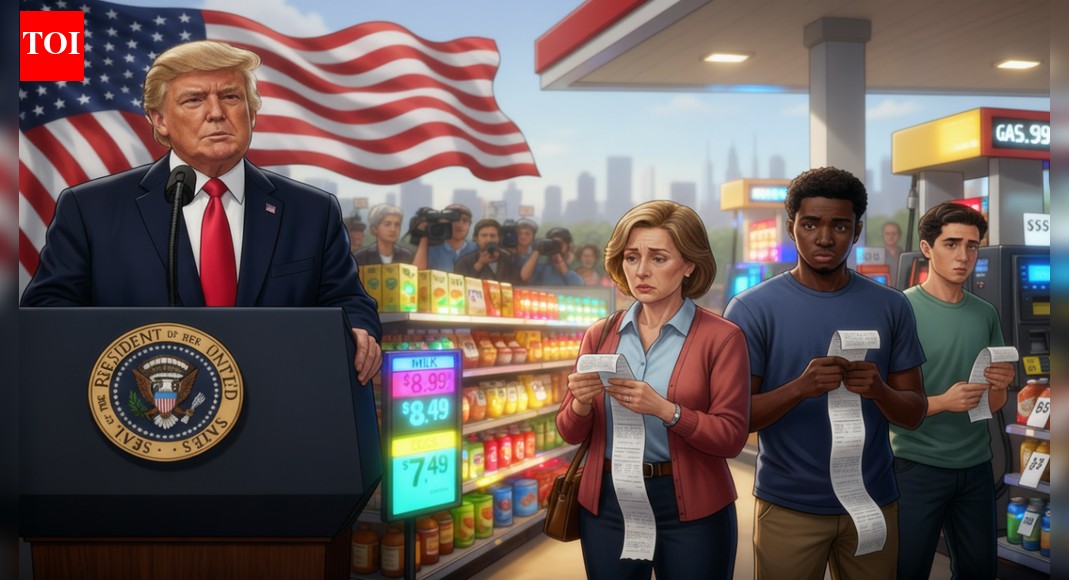


The ongoing Supreme Court trial on US President Donald Trump’s use of emergency powers to impose global tariffs has left companies, customs brokers and trade lawyers preparing for a potentially prolonged battle over refunds that could total close to $150 billion. The court is expected to issue rulings on Friday, though it has not specified which cases will be decided. The challenge revolces around Trump’s use of the International Emergency Economic Powers Act (IEEPA) of 1977, a statute historically used to sanction foreign adversaries or freeze assets, to levy tariffs, according to Reuters. Trump is the first US president to apply the law for this purpose. Scepticism among both conservative and liberal justices during November’s oral arguments has fuelled expectations that the tariffs may be struck down, with questions raised over whether IEEPA grants the authority to impose such duties.
What tariff refunds are the stakeholders expecting?
Between February 4 and December 14, tariffs imposed under the emergency law generated an estimated $133.5 billion in collections, based on US Customs and Border Protection (CBP) data. Using average daily collections from late September to mid-December, Reuters estimated the total has since climbed towards $150 billion. Customs officials have made a recent technical change that has raised cautious optimism among importers. On January 2, CBP announced that tariff refunds would move entirely to electronic distribution through its ACE portal from February 6. While this stops short of a fully automated system, it suggests administrative readiness. “It does kind of signal that Customs is fully prepared to move forward with refunds, if the Supreme Court does, in fact, rule that way,” said Angela Lewis, global head of customs at logistics firm Flexport. CBP did not respond to questions on how it would handle an adverse ruling but said eliminating paper cheques would speed up payments and reduce fraud and errors. The US Treasury, which routinely processes hundreds of billions of dollars in tax refunds annually, also declined to comment on how tariff refunds would be managed. Treasury secretary Scott Bessent said the outcome of the case could be unclear but indicated that any loss of tariff revenue could be offset through other legal authorities. Speaking in Minneapolis, he said a ruling against Trump’s tariffs would mean “the president loses flexibility to use tariffs, both for national security, for negotiating leverage.” Trump introduced the IEEPA tariffs through two separate actions. In April, he announced “reciprocal” tariffs on imports from most US trading partners, citing a national emergency linked to trade deficits. Earlier, in February and March, tariffs were imposed on China, Canada and Mexico over fentanyl trafficking and illicit drugs, according to Reuters. Legal experts say the refund process will depend heavily on whether the Supreme Court provides explicit instructions or sends the issue back to a lower court, most likely the Court of International Trade. Under US rules, importers typically have 314 days to amend entries before they are “liquidated”, after which refunds are barred, a deadline that has already passed for some Chinese imports affected in February 2025.
‘Not guaranteed a refund’
Despite the scale of potential repayments, companies fear that even a ruling against the tariffs will not automatically translate into refunds.“It’s not in the government’s DNA to give back money. And Trump would not want to give back money,” said Jim Estill, chief executive of Danby Appliances. The Canadian firm sells refrigerators, microwaves and laundry equipment through major US retailers, including Home Depot, and sources products from China and other Asian countries affected by the tariffs. Estill said Danby has paid about $7 million in duties and warned that recovering the money could trigger disputes further down the supply chain. “It’s just going to be a dog’s breakfast,” he said. To protect their positions, several companies have taken pre-emptive legal action against CBP. Costco said in court filings that even if the tariffs are ruled unlawful, importers “are not guaranteed a refund for those unlawfully collected tariffs” without judicial intervention. Similar lawsuits have been filed by Bumble Bee Foods, Revlon, EssilorLuxottica, Kawasaki Motors and Yokohama Tire, Reuters reported. Some smaller businesses are opting out of the wait entirely, selling their refund claims to hedge funds at steep discounts in a fast-growing secondary market. Toymaker Kids2 said it received 23 cents on the dollar for reciprocal tariffs and just nine cents for those tied to fentanyl-related duties. Jay Foreman, chief executive of Basic Fun!, which sells Tonka trucks, Care Bears and K’Nex toys, said he doubts the company will recover the $6 million it paid in tariffs ahead of the Christmas sales season. He expects the administration to “obfuscate or delay” payments even if refunds are ordered. While he has not sold the claim, he said he would consider it if it meant faster repayment. “The last thing the American public wants to know is a bunch of slick Wall Street or predatory-lender types will come and make a fortune off all this,” Foreman said. Advisers are urging companies to act quickly and keep detailed documentation. Pete Mento, a trade advisory director at Baker Tilly, said firms will likely need to demonstrate they paid IEEPA-based duties before any refund is issued. “The people that get their claims in early and have them done correctly are the ones who are going to reap the benefits the fastest,” he said. “And, knowing the way the processes work in Washington, it could be years before you see that money.” Go to Source

