

File photo
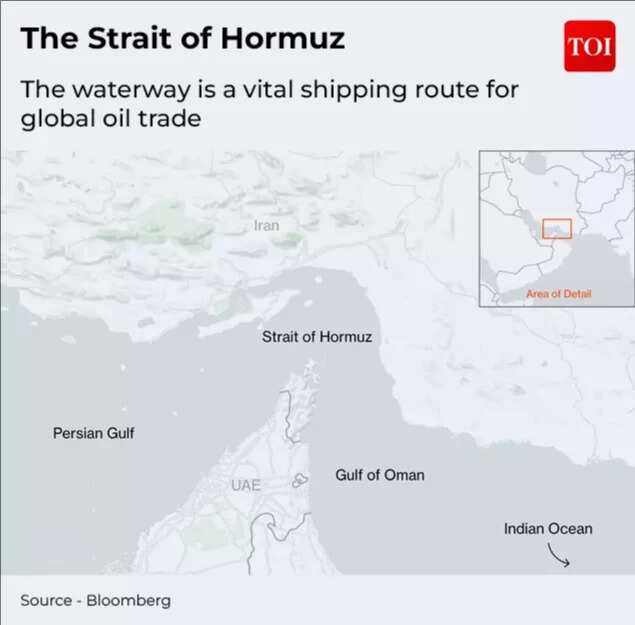
US intelligence agencies have assessed that Iran now has the capability to effectively shut down the Strait of Hormuz at will, giving Tehran a powerful new tool to disrupt the global economy despite a framework peace agreement expected to be formally signed later this week, according to a CNN report citing sources familiar with the assessments.The intelligence findings suggest Iran’s actions during the recent conflict demonstrated both the intent and ability to close the strategically vital waterway, which carries a significant share of global oil and liquefied natural gas exports.”We have now handed Iran de facto control over the strait – a weapon more powerful than any nuke,” one source familiar with the US intelligence assessments said, as cited by CNN.According to the report, US officials believe Iran has also learned it can use targeted strikes on Gulf energy infrastructure as an effective asymmetric tool, further increasing its leverage in future confrontations.
Concerns despite upcoming agreement
The United States and Iran are expected to formally sign a memorandum of understanding in Switzerland on Friday aimed at reopening the Strait of Hormuz and paving the way for nuclear negotiations. However, as per CNN, US intelligence officials are continuing to reassess the possibility that Iran could again use the waterway as a pressure point in future disputes.A senior US official said that Iran would only receive benefits from the agreement if it keeps the strait open and complies with other commitments. The official said the US would gradually ease its blockade in proportion to Iran restoring normal maritime traffic.Shipping industry officials warned that uncertainty surrounding the agreement could keep commercial traffic through the strait below normal levels for weeks or even months.
Iran retains military capabilities
According to CNN, one reason for US concern is that Iran still possesses a substantial weapons stockpile, including missiles, drones, missile launchers and hundreds of fast attack boats capable of harassing commercial shipping or laying mines.The report also said Iran has been rebuilding parts of its military-industrial base faster than expected and has already resumed drone production.US intelligence assessments further suggest Iran may be more willing to close the strait again in future conflicts because it managed to do so during the recent war without significantly depleting its military capabilities.
Houthi threat remains a concern
US intelligence officials are also monitoring what CNN described as Iran’s potential economic “nuclear option”, encouraging Yemen’s Houthi rebels to close the Bab-el-Mandeb Strait, another key global trade route connecting the Red Sea and the Indian Ocean.Sources further said that simultaneous disruptions to both the Strait of Hormuz and Bab-el-Mandeb could have severe consequences for global trade and energy markets.However, officials believe Iran has so far refrained from taking that step because it could derail ongoing diplomatic efforts and planned nuclear negotiations.
Questions remain over wider peace framework
Meanwhile, fresh uncertainty has emerged over the broader peace agreement after Iranian foreign minister Abbas Araghchi said the deal would require Israel to withdraw from areas of southern Lebanon captured during the conflict.”Without the withdrawal of Israeli forces from the territories they occupied during this war, the war has not fully come to an end,” Araghchi said.Israeli Prime Minister Benjamin Netanyahu has rejected that position, saying Israel would remain in Lebanon “as long as necessary”.The agreement, brokered with the help of Pakistan and Qatar, is expected to provide for the reopening of the Strait of Hormuz, the lifting of the US naval blockade of Iranian ports and the start of 60 days of negotiations on Iran’s nuclear programme.Despite unresolved issues, leaders from France, Germany, Italy and the United Kingdom have welcomed the accord as a “diplomatic breakthrough”, while stressing the need for its swift implementation. Go to Source