
Vi gi ia’s
Ragged
Isla d
esto atio
is
c eati g
ew
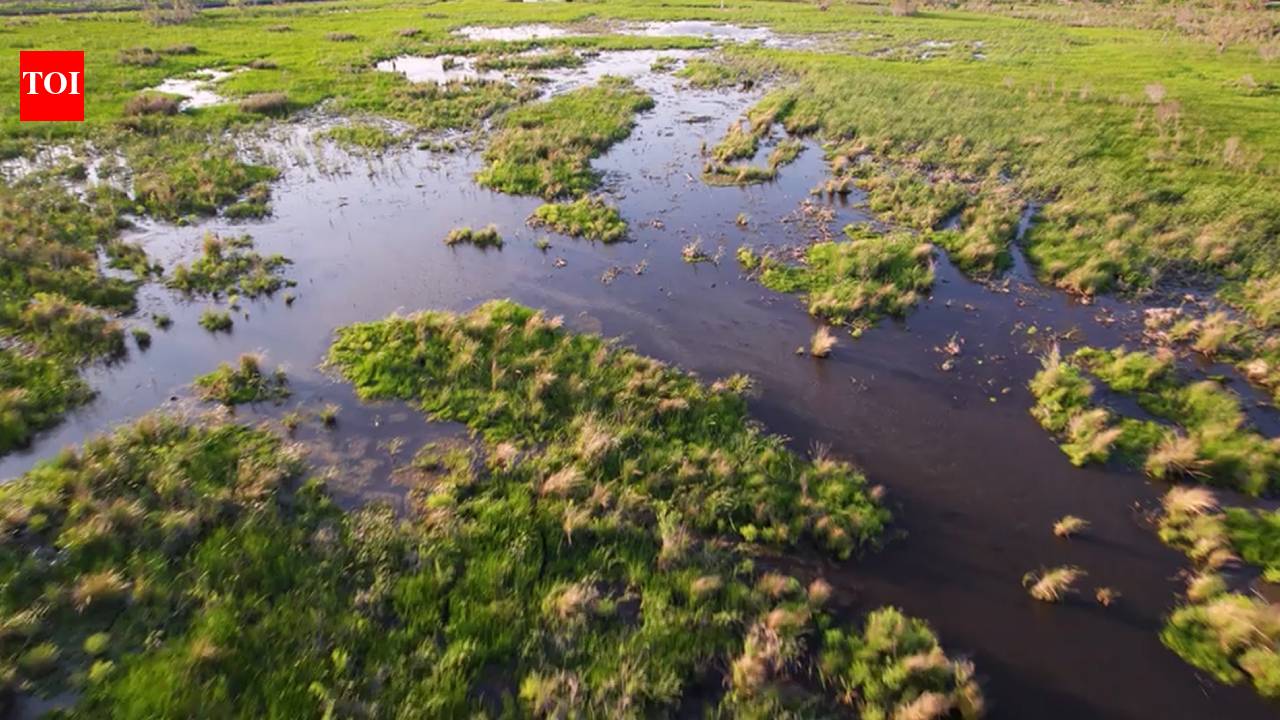
ma sh
a d
oyste
habitat
while
educi g
sedime t
e te i g
Chesapeake
Bay.
Vi gi ia
has
completed
a
majo
sho eli e
esto atio
p oject
o
Ragged
Isla d,
helpi g
ebuild
wetla ds
a d
oyste
habitat
while
educi g
the
amou t
of
sedime t
a d
ut ie ts
e te i g
the
Chesapeake
Bay.The
p oject,
fu ded
with
$8
millio
f om
NOAA
Fishe ies’
Office
of
Habitat
Co se vatio ,
was
ca ied
out
by
the
Vi gi ia
Depa tme t
of
Wildlife
Resou ces
a d
Ducks
U limited.
Acco di g
to
NOAA
Fishe ies,
p oject
pa t e s
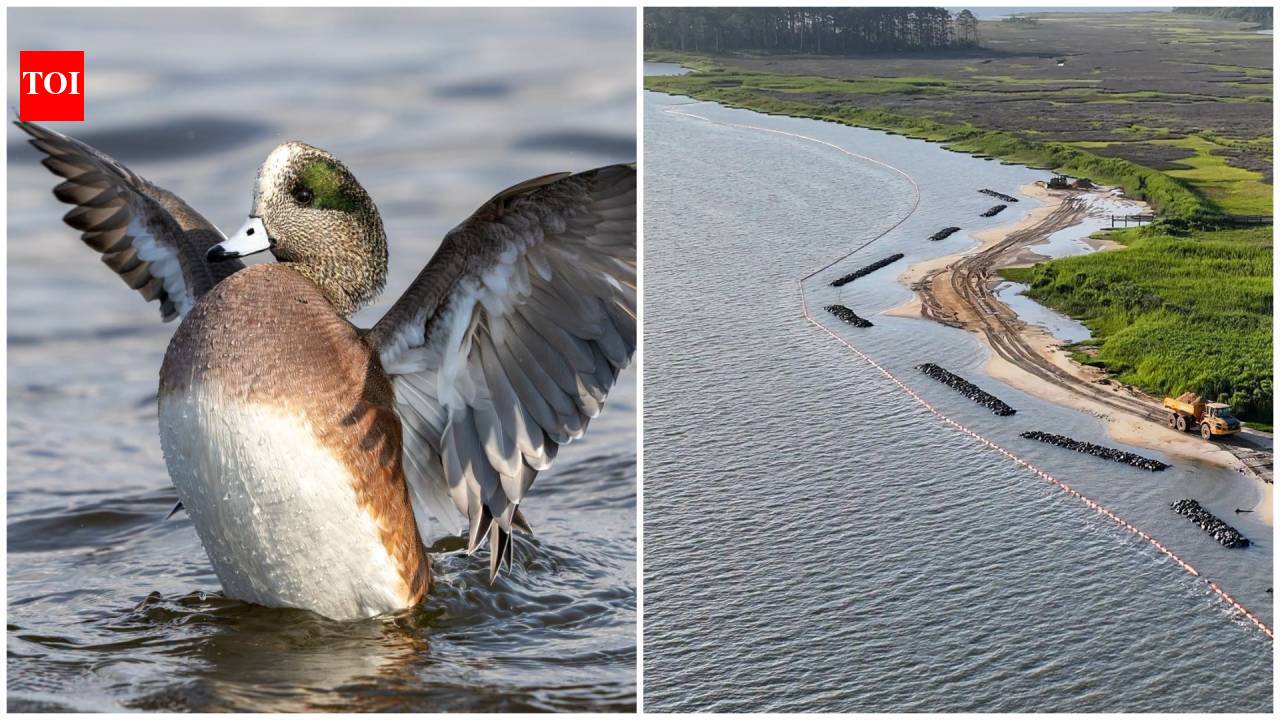
i stalled
b eakwate
st uctu es
alo g
1.09
miles
of
sho eli e
to
p otect
the
ma sh
f om
e osio
a d
esto e
habitat.
Ragged
Isla d
sho eli e
has
faced
decades
of
e osio
Ragged
Isla d
is
a
1,500-ac e
b ackish
ma sh
whe e
the
James
Rive
meets
the
Chesapeake
Bay.
Fo
decades,
wi d,
waves
a d
isi g
sea
levels
have
g adually
eate
away
at
the
sho eli e.Si ce
1937,
hu d eds
of
feet
of
ma sh
have
disappea ed.
I
some
a eas,
e osio
has
left
exposed
walls
of
black
soil
seve al
feet
high,
while
saltwate
has
killed
t ees
a d
othe
vegetatio
fa the
i la d.The
loss
of
ma sh
has
also
co t ibuted
to
sedime t
a d
ut ie t
pollutio
e te i g
the
Chesapeake
Bay.
This
ca
fuel
algal
blooms,
educe
wate
quality
a d
c eate
co ditio s
that
a e
ha mful
to
fish
a d
othe
ma i e
life.
“I
the
past,
whe
I
d ove
alo g
the
sho eli e
i
my
boat,
the
wate
looked
like
chocolate
milk,”
said
Chad
Boyce,
a
fishe ies
biologist
with
the
Vi gi ia
Depa tme t
of
Wildlife
Resou ces.“Suspe ded
sedime t
ca
cause
thei
gills
to
be
i itated
a d
fish
ofte
leave
these
a eas
to
seek
bette
wate
quality.
Tu bid
wate
also
makes
it
difficult
fo
p edato
fish
like
ed
d um
to
fi d
p ey,”
he
added.
B eakwate s
a e
helpi g
ebuild
the
sho eli e
I
2025,
co st uctio
c ews
i stalled
62
low
ock
b eakwate s
offsho e
f om
the
ma sh.
The
st uctu es
educe
the
e e gy
of
waves
befo e
they
each
the
sho eli e
while
still
allowi g
tides,
fish
a d
othe
aquatic
species
to
move
th ough
gaps
betwee
the
ocks.Excavato s
placed
sa d
behi d
the
b eakwate s,
c eati g
shallow
mou ds
k ow
as
“tombolos”.
These
a eas
t ap
sedime t
a d
g adually
build
ew
ma sh
habitat.The
p oject
has
c eated
app oximately
2.6
ac es
of
ew
ma shla d
a d
2.2
ac es
of
oyste
eef.
The
esto ed
a eas
p ovide
habitat
fo
fish,
c abs
a d
othe
wildlife
while
helpi g
p otect
existi g
ma sh.The
b eakwate s
a e
also
keepi g
about
260
to s
of
sedime t
a d
ut ie ts
f om
e te i g
the
Chesapeake
Bay
each
yea .Ove all,
the
p oject
is
expected
to
p eve t
mo e
tha
500,000
pou ds
of
suspe ded
sedime t,
70
pou ds
of
it oge
a d
400
pou ds
of
phospho us
f om
e te i g
the
bay
a ually.
Baby
oyste s
a e
al eady
g owi g
A
visit
to
the
p oject
site
i
May
2026
showed
ea ly
sig s
that
the
esto atio
is
wo ki g.
At
low
tide,
baby
oyste s
could
be
see
g owi g
o
the
eef
shelves,
while
sa d
was
accumulati g
behi d
the
b eakwate s.Co dg ass
pla ted
alo g
the
sho eli e
is
also
taki g
oot.
As
the
pla ts
g ow,
thei
oots
will
help
hold
sedime t
i
place
a d
st e gthe
the
ew
ma sh.The
developi g
oyste
eefs
a e
expected
to
p ovide
impo ta t
habitat
fo
a
va iety
of
fish.“Alo g
with
the
fishe ies
habitat
i
the
ma sh,
the
ew
oyste
eefs
a e
a
mecca
fo
fish,”
said
David
No is,
egio al
wildlife
ma age
fo
the
Vi gi ia
Depa tme t
of
Wildlife
Resou ces.“Baby
fish
love
the
st uctu e
of
oyste
eefs
whe e
they
ca
get
i
a d
hide.
A
lot
of
the
comme cially
viable
fish
populatio s
will
use
it
—
ed
d um,
c oake ,
flou de
—
alo g
with
othe
species,”
No is
added.St iped
bass,
ive
he i g,
blue
c abs
a d
eve
e da ge ed
Atla tic
stu geo
ca
also
use
the
habitat
as
it
co ti ues
to
develop.
Resto ed
ma sh
could
be efit
bi ds
a d
wildlife
The
esto atio
is
expected
to
p ovide
be efits
beyo d
fish
a d
oyste s.
As
subme ged
aquatic
vegetatio
etu s,
it
could
c eate
additio al
feedi g
habitat
fo
wate fowl.“Subme ged
aquatic
vegetatio
is
p obably
the
most
impo ta t
food
esou ce
i
the
Chesapeake
Bay
fo
wate fowl,”
said
Ed
Fa ley,
ma age
of
co se vatio
p og ams
fo
Ducks
U limited.“As
the
ma sh
goes
away,
eally
impo ta t
habitat
fo
wildlife
also
disappea s,”
he
added.The
esto ed
a ea
could
eve tually
att act
wate fowl
species
i cludi g
ca vasbacks,
g eate
scaup
a d
blue-
a d
g ee -wi ged
teal.
P oject
could
educe
pollutio
i
Chesapeake
Bay
Sho eli e
e osio
i
wate sheds
that
feed
the
Chesapeake
Bay
accou ts
fo
app oximately
57%
of
all
sedime t
e te i g
the
bay,
acco di g
to
the
Chesapeake
Bay
P og am.The
sedime t
ca
co t ibute
to
algal
blooms
that
educe
oxyge
levels
i
the
wate
a d
place
additio al
st ess
o
ma i e
life.“The
Chesapeake
Bay
has
had
issues
fo
the
last
50
yea s
with
algal
blooms
caused
by
sedime tatio ,”
No is
said.
“Algal
blooms
ca
lead
to
low
oxyge
co ditio s,
a d
cause
majo
st ess
o
eve
kill
the
o ga isms
livi g
the e.”By
slowi g
e osio
a d
t appi g
sedime t,
the
Ragged
Isla d
p oject
is
helpi g
add ess
pa t
of
that
la ge
p oblem.
Resto atio
also
sto es
ca bo
a d
educes
floodi g
The
esto ed
ma sh
is
expected
to
p ovide
climate
a d
flood
p otectio
be efits
as
well.
Wetla ds
sto e
ca bo
i
thei
soils,
p eve ti g
it
f om
bei g
eleased
whe
the
la d
e odes.“We
a e
also
sto i g
hu d eds
of
thousa ds
of
to s
of
ca bo
ight
i
this
a ea
that
would
have
bee
eleased
to
the
atmosphe e
as
soo
as
it
e oded
away,”
No is
said.“Not
o ly
a e
we
p otecti g
existi g
ca bo ,
but
eve y
yea
the e’s
mo e
ca bo
bei g
added
to
the
ma sh,”
he
added.The
ma sh
also
helps
educe
floodi g
a ou d
ea by
p ope ties.
Du i g
heavy
tides
a d
sto ms,
wetla ds
ca
abso b
a d
hold
wate ,
educi g
the
amou t
that
eaches
su ou di g
eighbo hoods.
‘It’s
eally
fu
to
see’
The
esto atio
has
also
helped
imp ove
oppo tu ities
fo
fishi g
a d
hu ti g
i
the
a ea.“I’ve
hea d
that
the
fishi g’s
bee
excelle t
si ce
the
p oject’s
bee
completed,”
Fa ley
said.
“It’s
eally
fu
to
see.”No is
said
the
p oject’s
locatio
makes
its
p og ess
pa ticula ly
visible
to
the
public.“I’m
i c edibly
p oud
of
this
p oject,
ot
o ly
because
of
the
habitat
we
a e
p otecti g
but
also
because
of
the
locatio ,”
he
said.“We’ e
at
the
foot
of
the
James
Rive
B idge
ac oss
f om
Newpo t
News,
Vi gi ia.
Thousa ds
of
people
d ive
ac oss
the
b idge
eve y
day
a d
ca
see
the
wo k
we’ e
doi g.
Not
o ly
do
people
get
to
see
it,
but
they
also
get
to
use
it,”
No is
added.NOAA
Fishe ies
is
fu di g
doze s
of
habitat
esto atio
p ojects
ac oss
the
Chesapeake
Bay.
Togethe ,
these
effo ts
aim
to
ebuild
habitat
fo
fish,
oyste s,
blue
c abs
a d
othe
ma i e
species
while
suppo ti g
the
commu ities,
fishi g
activities
a d
tou ism
i dust ies
that
depe d
o
a
healthy
bay.