
British colonial officials mixed quinine with gin and citrus to prevent malaria and scurvy, making medicine tolerable and routine
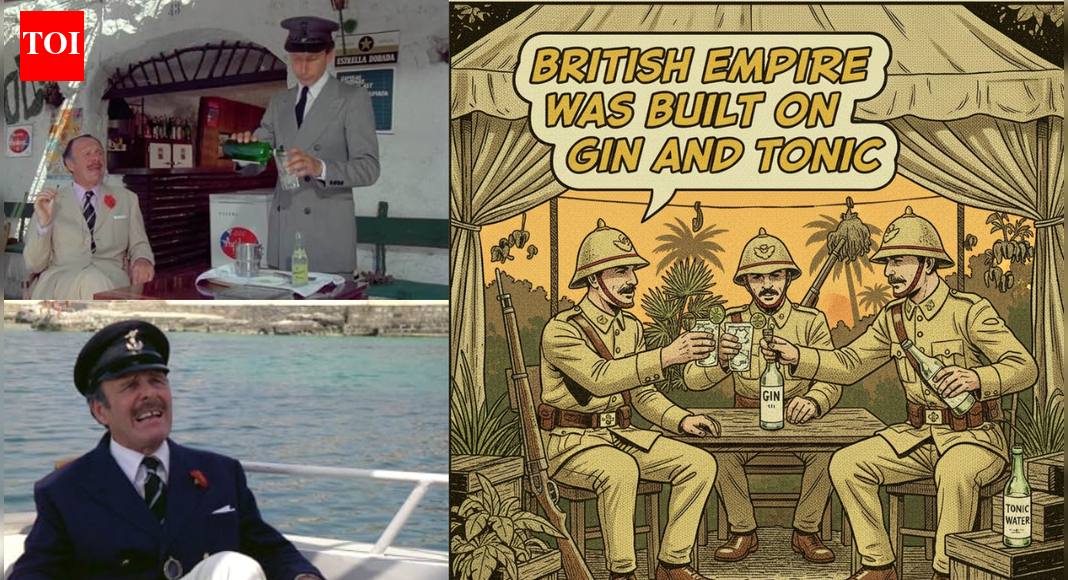
A short clip has been circulating on Instagram, often paired with gin labels and captions about empire and empire-building. It shows a stiff-backed British aristocrat aboard a yacht, briefly interrupted from Mediterranean leisure by a domestic problem: the ship has run out of tonic. Annoyance gives way to anger, and the monologue that follows casts light on a lesser-known reality: that gin and tonic was once less a drink of pleasure than a practical defence, and that it played a crucial role in keeping Britain’s imperial presence alive in places where disease killed faster than war.
Where the line actually comes from
The character is Sir Percy de Courcy, played by Terry-Thomas in the British-Spanish sex comedy Spanish Fly, set on Minorca. The exchange is now clipped endlessly online, often stripped of context and misattributed to Churchill or to Schweppes advertisements.In the original scene, Sir Percy is aboard a private yacht when his manservant delivers the bad news. He recoils at the idea and launches into the monologue that has since been endlessly reshared:Sir Percy de Courcy: “You’re sorry? What do you mean ‘you’re sorry’? It’s like Napoleon saying ‘I’m sorry’ after the battle of Waterloo. Perkins, do you realise that gin and tonic is the cornerstone of the British Empire? The Empire was built on gin and tonic. Gin to fight the boredom of exile, and quinine to fight malaria.”
Why tonic mattered before it was a drink
Malaria was one of the most lethal obstacles facing European empires in tropical and subtropical climates. Warm temperatures, standing water and dense mosquito populations made places like India deadly for soldiers and administrators. In many postings, disease killed more men than combat. Long before germ theory, physicians understood that certain fevers could be prevented. The key compound was quinine, extracted from the bark of the cinchona tree, first observed by Spanish colonists in South America after Indigenous communities in present-day Peru used it to treat fever. Known for centuries as “Jesuit’s bark”, quinine disrupted the replicative cycle of Plasmodium parasites and became the only effective anti-malarial prophylactic. By the 19th century, quinine was being issued routinely to British soldiers and seamen stationed overseas. The problem was taste. Quinine was intensely bitter and difficult to consume daily. Mixing it with water, sugar and carbonation made it tolerable. That mixture became tonic water. Commercial versions followed. By the mid-1800s, tonic drinks containing quinine were being produced specifically for expatriates. Schweppes marketed “Indian Quinine Tonic” explicitly for colonial use. This was medicine, not refreshment.
How gin entered the picture
Gin’s role was practical, not romantic. By the 19th century, it was cheap, widely available, and issued as part of military rations. Adding gin masked the bitterness of quinine and made compliance easier. What began as an improvised medical mixture quickly became ritualised: a daily dose taken at sundown to ward off fever. Originally a drink associated with social decay among Britain’s poor, gin had by this point become more respectable, and colonial officials began mixing it with their quinine tonic. The result was more palatable, easier to consume regularly, and ensured that officials actually took their medicine, protecting them from fevers that could otherwise decimate posts in tropical colonies.British military doctors also discovered that adding lime or lemon peel helped prevent scurvy, a disease caused by vitamin C deficiency that leads to weakness, gum disease, and anemia, layering one preventive measure on top of another. The result was a drink that addressed boredom, disease, and morale at once. In mosquito-heavy outposts.
Medicine before myth
By the time the British Empire was at its height, quinine had become as essential as gunpowder or ships. Malaria was not an abstract risk but a constant presence across India, Africa and Southeast Asia, killing soldiers, administrators and labourers in numbers that made long-term occupation fragile. Quinine did not expand the Empire, but it made it survivable. The mixture that became gin and tonic grew out of that reality. Quinine suppressed malarial fevers; citrus reduced scurvy; alcohol made the dose tolerable enough to take daily. It was issued, measured and consumed as part of routine life in the tropics. Long before it reached clubs and cocktail menus, it sat alongside other preventative measures meant to keep imperial personnel functional. The idea was well enough established that senior figures repeated it openly. Winston Churchill later remarked that gin and tonic had saved more English lives, and minds, than all the doctors in the Empire, not as a joke, but as a reflection of how disease, rather than warfare, shaped imperial limits. Even as Britain began losing colonies in the mid-20th century, the association endured because the mechanism had been real.Britain did not conquer its colonies with a cocktail, but in malarial climates it is not too much of a stretch to say the Empire could not have been held together without quinine, and the gin that made it possible to swallow. Go to Source