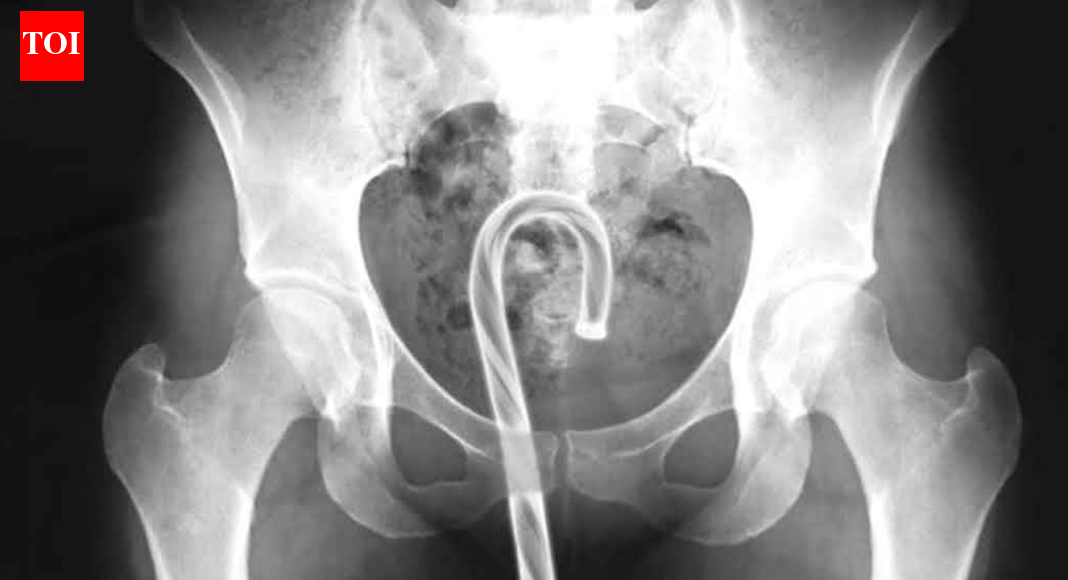

Federal injury data logged shampoo bottles, lightbulbs and vape pens removed during emergency room visits in 2025/ Image: Defector
Every year, emergency departments in the US record cases involving foreign objects lodged in patients’ rectums. The information is logged clinically, without names, and fed into a federal injury database. In 2025, that data once again included a long list of items that were never designed to end up there, and that doctors say continue to show up with uncomfortable regularity.
How the cases are tracked
The records come from the US Consumer Product Safety Commission, which oversees the National Electronic Injury Surveillance System (NEISS). Hospitals participating in the programme submit anonymised reports detailing why patients arrive in emergency rooms, including cases involving rectal foreign bodies. Medical researchers have been analysing this data for years. A large review published in the American Journal of Emergency Medicine estimated that between 2012 and 2021, roughly 39,000 people per year in the US were hospitalised for rectal foreign objects. Most patients were middle-aged, the majority were men, and more than half of the cases involved sex toys. the remainder involved objects that were never designed for insertion.
Why doctors say situations worsen
Emergency physicians consistently note that many cases become more complicated because patients attempt to resolve the problem themselves before seeking help. Imaging often reveals secondary objects, tweezers, coat hangers or other improvised tools, introduced during failed removal attempts. Clinicians warn that these efforts increase the risk of internal injury, bleeding and infection. The advice repeated across case studies is straightforward: early medical intervention is safer than improvisation.
Items recorded in 2025
Based on emergency room reports drawn from federal data and reviewed by journalists, doctors documented the removal of the following non–sex-toy items in 2025:
- Screws and nails
- A dog chew toy
- Beard clippers wrapped in plastic, cited as constipation relief
- A baton
- A turkey baster
- A shampoo bottle (listed more than once)
- A dental pick
- A wine stopper
- A corn cob holder
- A highlighter
- A magic wand toy
- Marbles
- A film canister
- A sandal
- A doorknob
- A lightbulb, inserted glass-side first and trapped by suction
- A flashlight
- A vape pen
- Two pencils
- A corn-cob style pipe
- Uncooked pasta
- A piece of a nose-hair trimmer
- A pair of glasses
- An egg
- A rectangular travel toothbrush holder
Doctors note that objects without a flared base are particularly likely to become lodged, as suction can form once the item moves beyond reach.
How doctors frame it
Medical professionals stress that the documentation is not intended to shame patients. The cases are recorded for injury surveillance and prevention, and the guidance that follows is practical rather than moral: avoid inserting objects not designed for the purpose, and do not attempt removal with additional tools. Once a patient presents at an emergency department, the details are logged as part of routine reporting. The data is clinical, anonymous, and permanent, another entry in a system that tracks how people actually end up needing medical care, not how they planned to. Go to Source