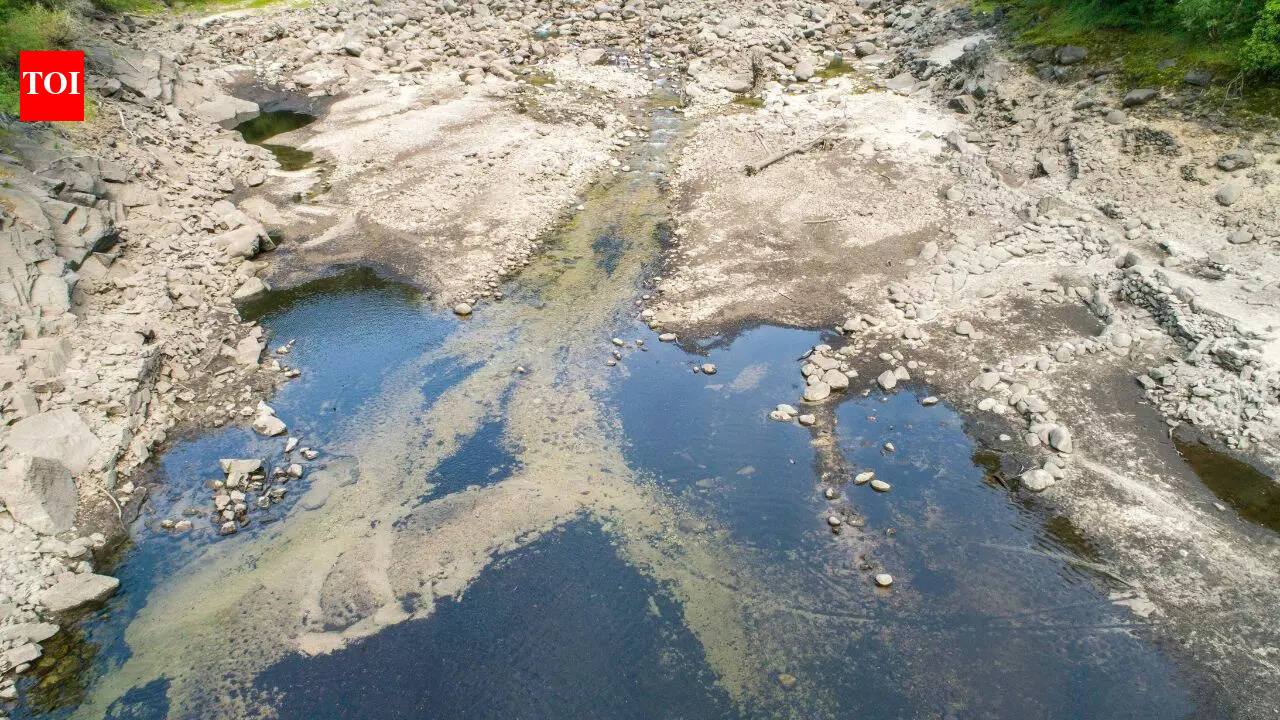

A new report from the United Nations warns that humanity has entered an era researchers call “water bankruptcy.” In many regions, rivers and rainfall can no longer meet demand. Countries are increasingly tapping into groundwater reserves that took centuries or even millennia to form. Once depleted, these sources might never fully recover. Experts estimate that three out of four people live in countries facing water shortages, contamination, or drought. Around four billion people experience water scarcity for at least one month each year. Roughly 70% percent of major aquifers are in decline, raising fears that some losses could be impossible to reverse.It feels like the world is quietly overdrawing its most important account. “For much of the world, ‘normal’ is gone,” said Kaveh Madani, Director of the UN University Institute for Water, Environment and Health.
What does ‘water bankruptcy’ mean
Kaveh Madani, from the UN University Institute for Water, Environment and Health, uses a simple money metaphor to explain the problem. He says the world’s ‘checking account’; the surface water like rivers, lakes, and seasonal runoff, is almost empty.Meanwhile, the ‘savings’ humans inherited, including groundwater, glaciers, and long-term stores, are being drained. Madani points out that relying on groundwater as a backup is risky. If you live off your savings to pay monthly bills, it works for a while, but eventually, collapse is inevitable. The growing number of water crises around the world looks like classic warning signs of bankruptcy.
Why water shortages are getting worse around the world
Two main drivers appear across the globe.
- The first is the expansion of cities and agriculture into arid areas.
- The second is global warming, which makes dry regions even drier, increases evaporation, and makes rainfall less predictable.
The report gives vivid examples of the effects. Water shortages are escalating now, and the consequences are visible in both cities and farmland.Madani stresses the importance of counting water before managing it. Installing meters in homes, wells, and canals is critical. You cannot manage what you cannot track. Fancy solutions like cloud seeding are pointless if countries do not first know exactly how much water they have and use.Smarter management, including cutting agricultural water use and accounting for all water resources, might still give humanity a chance to avoid full-scale collapse.
How water shortages are sparking conflict and risking stability
Water scarcity affects more than taps and crops. It can spark migration, conflict, and unrest. Madani highlights Iran as an example. The country experienced its driest autumn in fifty years. Meanwhile, dams and wells for agriculture nearly dried up Lake Urmia, once the Middle East’s largest lake, and depleted much of the country’s groundwater. Water shortages contributed to violent protests, demonstrating how quickly social and political stability can be affected.As reported by UNU-INWEH, in the western United States, the Colorado River has lost around twenty percent of its flow over two decades. Cities like Los Angeles and vast agricultural regions rely on it. Reservoirs are at roughly thirty percent capacity.Experts warn the system could reach “dead pool” as soon as 2027, a point where water levels are too low to flow through dams. Negotiations over water cuts have repeatedly broken down, showing how difficult shared water management can be.
Why smarter irrigation is not enough to save water
Improving agricultural efficiency sounds like a solution. Farmers switching to drip or sprinkler irrigation retain more water in the soil and plants. Efficiency improvements alone won’t solve the problem unless total water use is also cut.Agriculture uses the majority of freshwater worldwide. Cutting usage is essential, but it is complicated. Millions of livelihoods depend on farming, especially in lower-income countries. Reducing farm water use is messy but unavoidable. Industrial waste, sewage, fertilisers, and manure are contaminating water supplies. Wetlands covering an area the size of the European Union have been lost, costing trillions in lost ecosystem services such as flood buffering, carbon storage, and food production. Go to Source