
How Does It Rain in the Desert? The UAE’s Cloud-Seeding Secret Explained
Even if you have never been to a desert, you would have seen it on screens, how rain bursts despite arid desert sun but in the UAE, rain does not just happen by chance. Behind the scenes, scientists are actively nudging clouds to drop more water, using aircraft, salt crystals, artificial intelligence and some of the world’s most advanced weather-tech. Yes, there is a real-world rain machine in one of the planet’s driest regions.Welcome to the UAE’s cloud-seeding programme, a long-running national effort to enhance rainfall in a place that normally gets less than 100 mm of rain a year.
Cloud seeding is not magic but meteorology, planes, salt and cloud chemistry
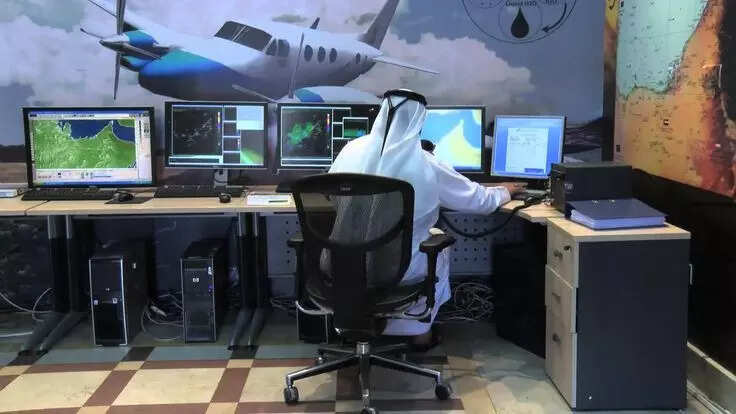
The concept is simpler than it sounds. The UAE does not create rain from thin air, it enhances rain that might already be there. Scientists constantly scan the skies using sophisticated weather radars and 26 live camera feeds to spot developing cumulus clouds with potential.
Why It Rains in the UAE: Planes, AI and the Science of Desert Rain
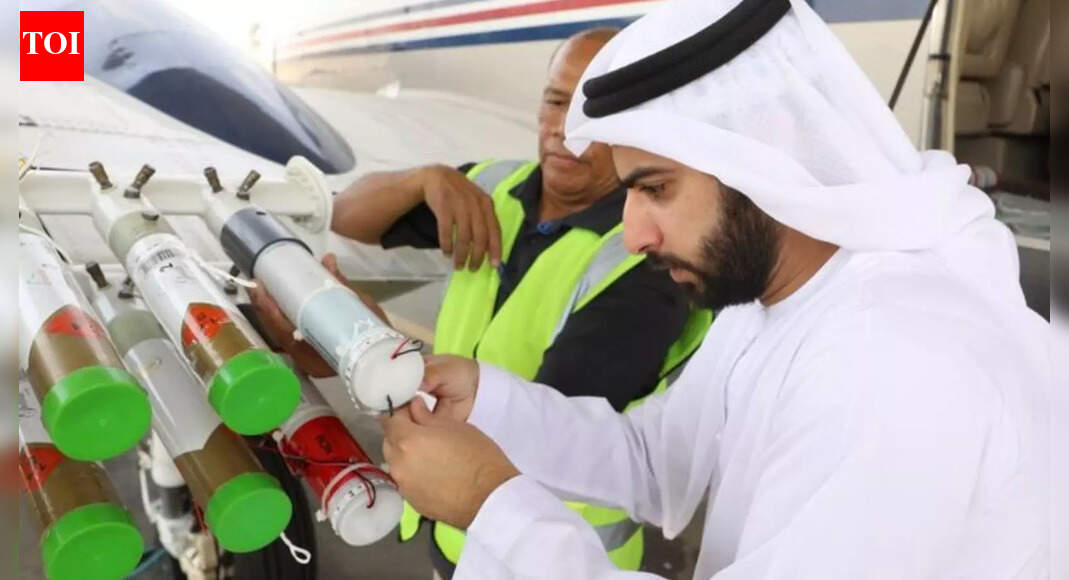
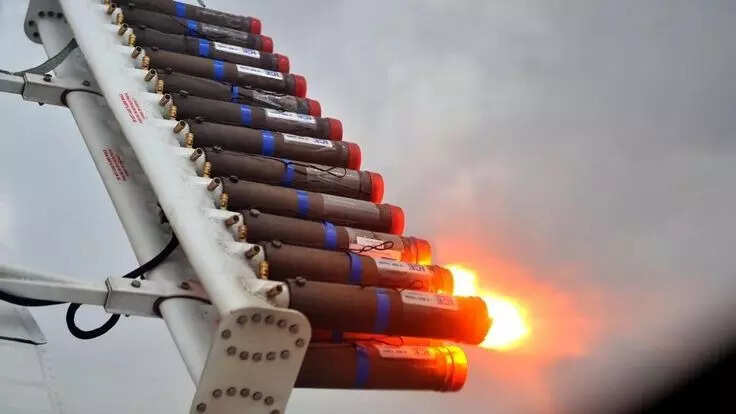
When conditions look right, they are ready to act. From meteorological radar data to real-time cloud analysis, researchers identify the best moments and places to intervene, no crystal balls required.When suitable clouds form, specially equipped aircraft take to the skies. Pilots fly into the updrafts, rising currents of air within convective clouds and deploy seeding agents like microscopic salt crystals mixed with magnesium, sodium chloride and potassium chloride. These tiny particles act as condensation nuclei, meaning that they attract and cluster water droplets within the cloud. As droplets grow larger and heavier, gravity finally pulls them down as rainfall instead of letting them evaporate in the dry desert air.
From Salt to Satellites: How the UAE Is Hacking the Sky to Make It Rain
In 2025 alone, the UAE reported 172 cloud-seeding flights, aiming to boost rain, not create weather from nothing.
Tech upgrades: Nano materials and AI assist for cloud seeding
Think cloud seeding is stuck in the last century? The truth is that the UAE has invested in cutting-edge innovations –
- Nano-materials: New seed agents that can be up to three times more effective than traditional salt flares.
- AI-guided targeting: Artificial intelligence helps meteorologists analyse massive weather datasets and choose optimal seeding targets in real time, meaning every flight has the best shot at inducing rain.
- Ground-based generators: In mountainous areas, ground stations release seeding materials into rising winds that carry them up into clouds.
Together, these upgrades are pushing cloud-seeding into a more efficient “rain-tech” arena rather than a simple aerial stunt.
Is cloud seeding working? What the data says
Studies and operational data suggest that cloud seeding can increase rainfall by roughly 10% to 25% under the right conditions and is significant when every extra drop counts. Some research even links cloud-seeded storms to larger volumes of water reaching the ground, with gains measured in hundreds of millions of cubic metres of usable water annually, a real lifeline in a region where water security is a top priority.Still, experts caution that cloud seeding is not a perfect rainmaker as it cannot produce rain unless clouds already have moisture and results can vary depending on atmospheric conditions. The UAE’s water challenges are real. Rapid urban growth and limited natural freshwater mean the country relies heavily on desalination plants, recycled water and cloud seeding to meet its needs.
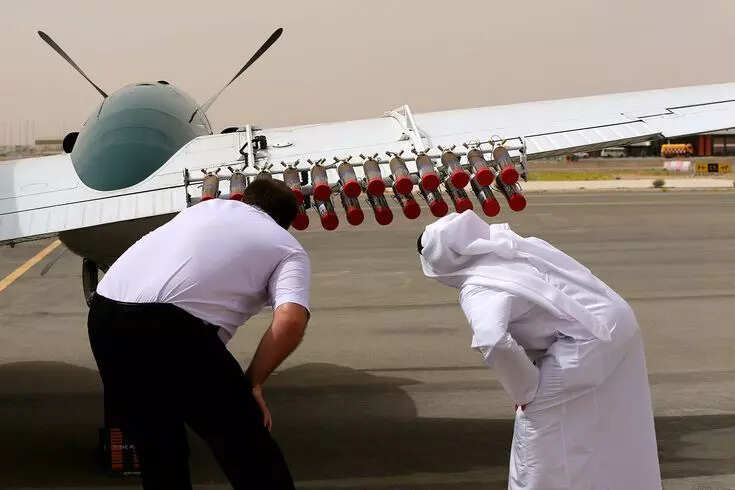
AI, Aircraft and Salt Crystals: How the UAE Is Boosting Rainfall
Cloud seeding is far more cost-effective than desalination for extra water as one flight costs around US $8,000 per hour, a bargain when compared to the energy and infrastructure required to turn seawater into drinking water. That is why the UAE has invested millions of dollars into research and technology, including local manufacturing of seed materials and international scientific partnerships.
Cloud seeding myths, misunderstandings and real weather
Despite its gains, cloud seeding sometimes gets blamed for extreme weather like the surprising flooding seen in parts of the Emirates. However, meteorologists are clear that cloud seeding cannot create storms out of nothing. Heavy rains during major weather events are natural phenomena that cloud seeding can neither trigger nor control.In social media discussions, some critics call cloud seeding “scam technology” or blame it for unexpected rainfall but even sceptics acknowledge that the programme generally only enhances rain when clouds already exist. Cloud seeding in the UAE is not about controlling nature, it is about coaxing nature to give a little extra.
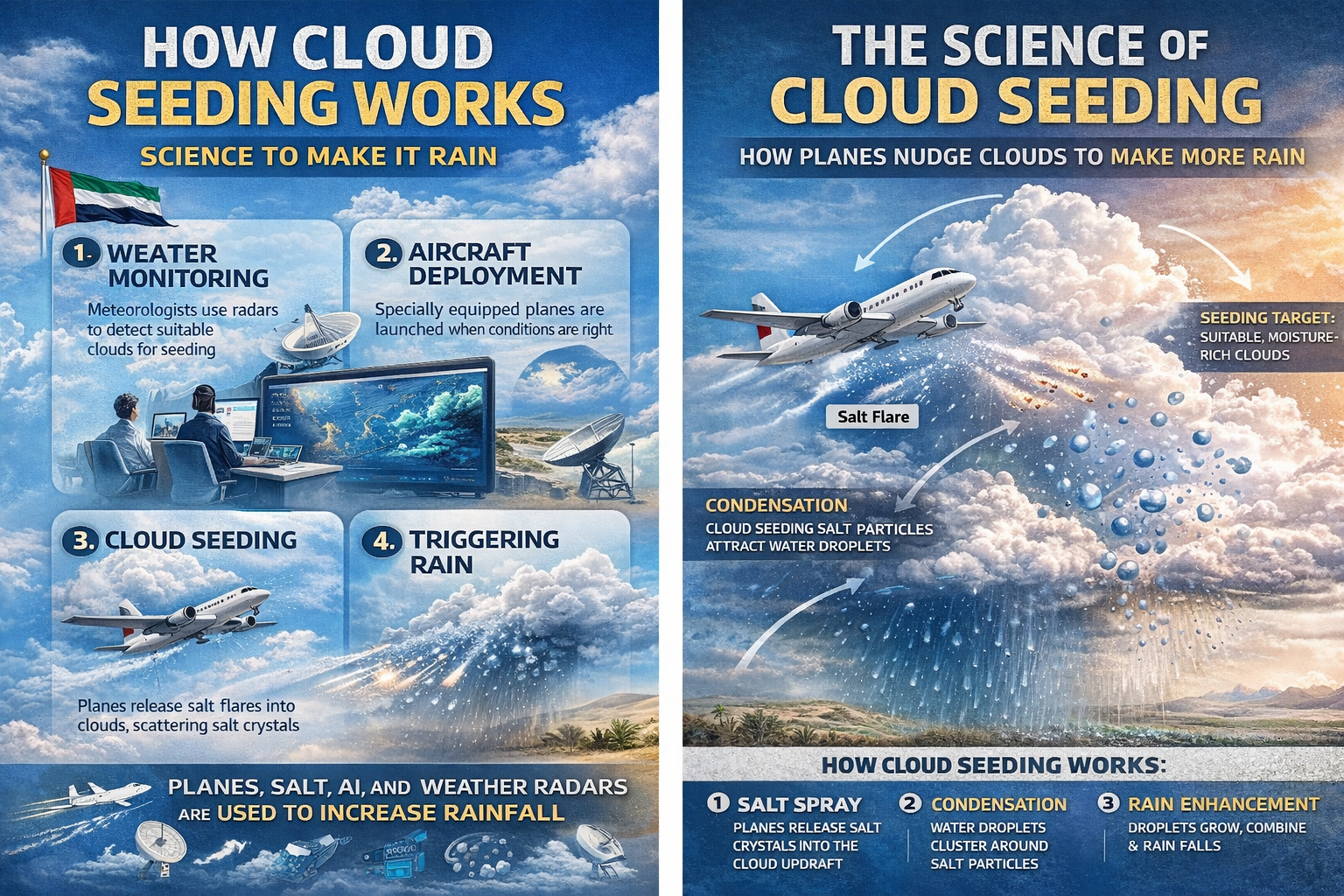
How cloud seeding works
As climate change increases weather unpredictability and water scarcity pressures mount, experts see rain enhancement as one valuable tool among many. Whether it is planes, drones, nano-powder or AI pilots, the UAE’s cloud-seeding programme is a fascinating blend of technology, meteorology and environmental strategy. It is a uniquely desert-born experiment in making the sky work for people.
Bottom line
The UAE’s effort to “make it rain” is not science fiction, it is a real, high-tech programme combining radar, planes, salts, nano-materials and AI to enhance rainfall in one of the driest climates on Earth. While it has limitations, cloud seeding represents a creative response to water scarcity, one that other water-stressed regions are watching closely. Go to Source