

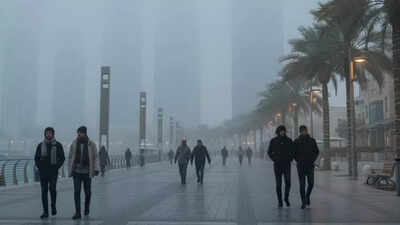
UAE temperatures drop amid fog warnings and rain / AI Generated Image
The National Centre of Meteorology (NCM) says the UAE is entering a spell of cooler, unstable weather this month driven by a northerly system, with temperatures expected to fall by about six degrees Celsius compared with November and a risk of light rain, fog and cooler nights. This shift is already prompting weather warnings and advisories for parts of the country.
UAE winter is here
The United Arab Emirates is making a decisive shift from autumn to winter, driven by a powerful atmospheric change. The country is now under the direct influence of the Siberian high-pressure system, according to the National Centre of Meteorology (NCM).
This system ushers in colder air masses, immediately causing temperatures to fall noticeably. Historically, December is the month that sees both maximum and minimum temperatures decrease by three to six degrees Celsius. This year, temperatures are expected to drop by around six degrees Celsius when compared to figures from November. This cooling trend will be most significant across the UAE’s inland and mountainous areas.
What to expect daily?
The weather pattern across the Emirates will be mixed, featuring light rainfall and increased cloud cover. The NCM forecasts skies to be partly cloudy to cloudy at times, especially due to low clouds developing over the islands and parts of the western region. There is a confirmed chance of light rain possible overnight and into Friday morning, mainly over islands and western coastal areas. Beyond this initial rainfall, the country may also be impacted by passing low-pressure systems coming in from the west. These systems are responsible for increasing cloud cover and will bring occasional rain throughout the period. Winds will be light to moderate, generally blowing from the south-east to the north-west at speeds ranging from 10 to 20 km/h, though they could reach up to 30 km/h. Sea conditions in both the Arabian Gulf and the Oman Sea are expected to remain slight.
KSA safety advisory
In Saudi Arabia,di Arabia, the National Centre for Meteorology (NCM) has issued alerts for widespread weather instability across nine regions of the Kingdom.
- Thunderstorm Risk: Multiple areas are expected to see light rain accompanied by the risk of thunderbolts (lightning). Regions affected by these conditions include Makkah, Madinah, Ha’il, Al-Jawf, Northern Borders, Al-Baha, and Aseer. These conditions were active during the day from the early afternoon until late evening.
- Severe Fog Warnings: Motorists face extreme visibility challenges. The Eastern Region (including Dammam, Khobar, Jubail, and Qatif) is warned of dense fog, causing a near-total loss of horizontal visibility, reducing sight to just 1 to 3 kilometers. The Jazan region is also under a warning for light fog, reducing visibility to 3 to 5 kilometers.
Safety alert
The shift to cooler air masses over the warm Gulf waters introduces a major public safety concern: a significant rise in humidity. This increased humidity is set to peak late at night and in the early hours of the morning. Consequently, there is a high chance of fog or light fog forming, particularly over the internal areas of the country. This fog formation poses a direct risk to motorists, as visibility can drop sharply and suddenly. The NCM stresses that this humidity, which brings light to dense fog, will be a persistent factor in the early mornings. Motorists should exercise extreme caution during these early morning hours, especially on major highways in inland areas, and follow official safety instructions due to the potential for reduced visibility. Go to Source