
Thursday, July 23, 2026
35 C
New Delhi

Thousands of idle ships trapped near the Strait of Hormuz could become floating nurseries for invasive marine species

Thousands of idle ships trapped near the Strait of Hormuz could become floating nurseries for invasive marine species and spread them worldwide when trade resumes

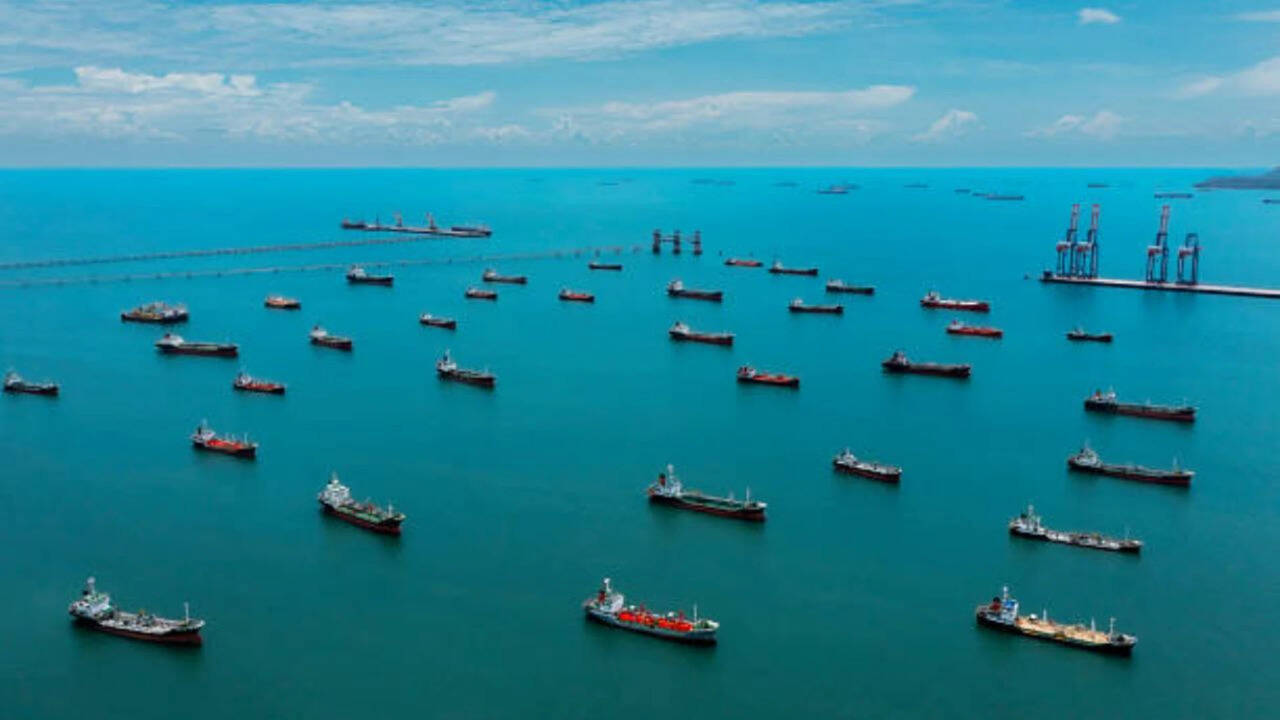
(Representative Image) Image source: Getty Images

Having escalated into open hostilities on February 28, 2026, the current United States and Iran war has been going on for nearly five months. In this period, the Strait of Hormuz, the only open-ocean exit for major producers like Saudi Arabia, Iran, Iraq, Kuwait, and the UAE has been in chokehold. The strait is the world’s most critical maritime energy chokepoint, facilitating the passage of roughly 600 billion worth of energy trade annually. According to estimates, about 1,500 vessels are stuck in the Persian Gulf, and several hundred more are stuck in the adjacent Gulf of Oman.Now according to new research, something growing on the hulls of these ships could spread worldwide when the trade resumes. The study published in Biological Invasions, was led by an international team of 24 marine scientists, led by the University of Maryland Center for Environmental Science (UMCES), and including the Woods Hole Oceanographic Institution (WHOI).The team cautioned that thousands of commercial vessels stranded for months in the Persian/Arabian Gulf following the closure of the Strait of Hormuz could unintentionally trigger a massive marine invasive species event. The study titled, “Closure of the Strait of Hormuz May Trigger a Bioinvasion Super-Spreader Event,” highlighted how prolonged periods at anchor allow ship hulls to accumulate dense communities of marine organisms including algae, barnacles, mussels and other invertebrates which can be transported across the globe when trade resumes.


A ‘super-spreader’ event

A 'super-spreader' event

” msid=”132576402″ width=”” title=”Ships stuck at the Strait of Hormuz” placeholdersrc=”https://static.toiimg.com/photo/83033472.cms” imgsize=”” resizemode=”4″ offsetvertical=”0″ placeholdermsid=”47529300″ type=”thumb” src=”https://static.toiimg.com/photo/83033472.cms” class=”” data-src=”https://static.toiimg.com/photo/msid-132576402/a-super-spreader-eventbrbr.jpg” data-api-prerender=”true”/> </p>
<p> Ships stuck at the Strait of Hormuz</p>
</p></div>
</p></div>
<p> The phenomenon is known in the maritime industry as “biofouling”, the accumulation of marine organisms on submerged surfaces such as ship hulls and propellers. It begins with a thin layer of microorganisms and slime before progressing to algae, barnacles, small marine crustaceans and shell-forming organisms.The authors described the unprecedented lay-up of more than 1,500 ships as creating conditions for a potential global marine bioinvasion ‘super-spreader’ event. Carolyn Tepolt, a WHOI biologist whose research focuses on the evolution and spread of marine invasive species, contributed expertise on how globally distributed biofouling organisms can rapidly adapt to new environmental conditions.”Marine invasive species have profound ecological and economic impacts on coastlines across the globe,” explained Tepolt, “and are extremely difficult, if not impossible, to eradicate once they become established. This disruption to global shipping has many repercussions and has also more quietly created ideal conditions to spread warm-water species to new ports.” </p>
<p><h2> A looming threat</h2>
</p>
<div data-pos=
A looming threat

” msid=”132576431″ width=”” title=”The International Maritime Organization advises that ships idling for more than 30 days require immediate intervention to manage biofouling before sailing” placeholdersrc=”https://static.toiimg.com/photo/83033472.cms” imgsize=”” resizemode=”4″ offsetvertical=”0″ placeholdermsid=”47529300″ type=”thumb” src=”https://static.toiimg.com/photo/83033472.cms” class=”” data-src=”https://static.toiimg.com/photo/msid-132576431/a-looming-threatbrbr.jpg” data-api-prerender=”true”/> </p>
<p> The International Maritime Organization advises that ships idling for more than 30 days require immediate intervention to manage biofouling before sailing</p>
</p></div>
</p></div>
<p> The International Maritime Organization advises that ships idling for more than 30 days require immediate intervention to manage biofouling before sailing, yet these ships have been stranded for nearly four months during the peak marine organism growth and reproduction season. According to research cited by the International Maritime Organization (IMO), even a thin layer of slime can increase greenhouse gas emissions by 20-25 per cent, while light barnacle growth can push fuel consumption and emissions up by more than 50 per cent. The IMO estimates that around 10 per cent of the shipping industry’s fuel use is spent overcoming biofouling-related drag.The authors also noted that modern shipping has long been recognised as the primary pathway for marine invasive species. They also warned that the scale and duration of the recent vessel lay-up is unlike anything previously documented, creating an unprecedented yet daunting global biosecurity challenge. In recent decades, the spread of invasive species through biofouling, including from the Gulf region, has caused severe damage in several areas worldwide. In one such spread, clam and worm species that spread to the Atlantic and Pacific oceans displaced local species and damaged port infrastructure.Biofouling also impairs ships’ movement capability due to its effect on the drag the vessels experience as they sail in the water. As a result, vessels are forced to expend additional energy, leading to increased use of polluting fuels. One of the prominent examples of ecological impact is the Asian green mussel, considered a particularly aggressive invasive species. This mussel, which originates in the tropical regions of the Indian and Pacific oceans and is also common in the Gulf, has spread to the Caribbean region and the South Atlantic Ocean, causing ecological damage by displacing local mussel species.The team called on ship operators, port authorities, regulators and environmental managers to strengthen ship biofouling management, expand monitoring at high-risk ports, improve forecasting of vessel movements and coordinate rapid international response efforts. According to the authors, “in-water-cleaning” of the ships to remove biofouling prior to departure could be highly effective in mitigating their invasion risks.According to recent reports, divers are being deployed across Gulf ports to scrape hulls and propellers before ships can resume commercial operations. Fees for cleaning a single vessel could increase by as much as 60%, reaching around $8,000 per ship as operators rush to leave the Gulf.According to Justus Heinrich, who leads marine underwriting at Allianz, this event has entirely revolutionised the way that the business community perceives risks associated with chokepoints. “It was always realistic disaster scenarios. But now, we have seen a real disaster scenario, which means that theoretical risks have turned into practical risks.”  <a href=Go to Source

Hot this week

Australian agronomist Tony Rinaudo’s FMNR revives Niger’s dry landscapes with 200 million trees

Tony Rinaudo, famously known as ‘The Forest Maker’ (Image Credit: Facebook/ @Australian Embassy, Ethiopia) An Australian agronomist’s simple idea has transformed one of the world’s driest landscapes into a rem Read More

Meet Evan Budz: The 16-year-old Canadian who built an AI-powered robot turtle to detect microplastics with 94% accuracy

At just 16 years old, Canadian student Evan Budz has developed an autonomous AI-powered robot turtle that could help scientists tackle one of the world’s fastest-growing environmental problems: microplastic pollution. Read More

Scientists revisit a forgotten Soviet plan to dam the Bering Strait and see if it could help protect Earth’s climate

Image AI generated Ideas for reshaping the planet have appeared long before the term geoengineering entered public discussion. Read More

‘Sent four formal proposals’: MoS Jitendra Singh invites protesters for talks at JP Nadda’s place

Centre invites protesters for talks NEW DELHI: Union minister Jitendra Singh on Thursday invited the protesters against NEET paper leak for talks at JP Nadda’s place on the central government’s behalf. Read More

Topics

Australian agronomist Tony Rinaudo’s FMNR revives Niger’s dry landscapes with 200 million trees

Tony Rinaudo, famously known as ‘The Forest Maker’ (Image Credit: Facebook/ @Australian Embassy, Ethiopia) An Australian agronomist’s simple idea has transformed one of the world’s driest landscapes into a rem Read More

Meet Evan Budz: The 16-year-old Canadian who built an AI-powered robot turtle to detect microplastics with 94% accuracy

At just 16 years old, Canadian student Evan Budz has developed an autonomous AI-powered robot turtle that could help scientists tackle one of the world’s fastest-growing environmental problems: microplastic pollution. Read More

Scientists revisit a forgotten Soviet plan to dam the Bering Strait and see if it could help protect Earth’s climate

Image AI generated Ideas for reshaping the planet have appeared long before the term geoengineering entered public discussion. Read More

‘Sent four formal proposals’: MoS Jitendra Singh invites protesters for talks at JP Nadda’s place

Centre invites protesters for talks NEW DELHI: Union minister Jitendra Singh on Thursday invited the protesters against NEET paper leak for talks at JP Nadda’s place on the central government’s behalf. Read More

Stock Markets End Lower As Sensex Falls Over 380 Points, Nifty Tests 23,900

Show Quick Read Key points generated by AI, verified by newsroom Indian benchmarks Sensex, Nifty declined on Thursday. Foreign investors sold equities; Middle East tensions rose. Read More

Selena Gomez celebrates 34th birthday with Italian cuisine

Selena Gomez and Benny Blanco cook Italian cuisine for her 34th birthday. (Image credits: Instagram) Selena Gomez celebrated her 34th birthday on a cosy trip to Italy while making delicious dishes with her husband, Benny Blanco. Read More

‘You take credit for Mars, now take responsibility’: Priyanka Gandhi targets PM Modi over student protests, police action

File photo: Congress MP Priyanka Gandhi and PM Modi (Picture credit: PTI, ANI) NEW DELHI: Congress MP Priyanka Gandhi Vadra on Thursday launched a sharp attack on Prime Minister Narendra Modi over the ongoing student protests, accus Read More

Related Articles