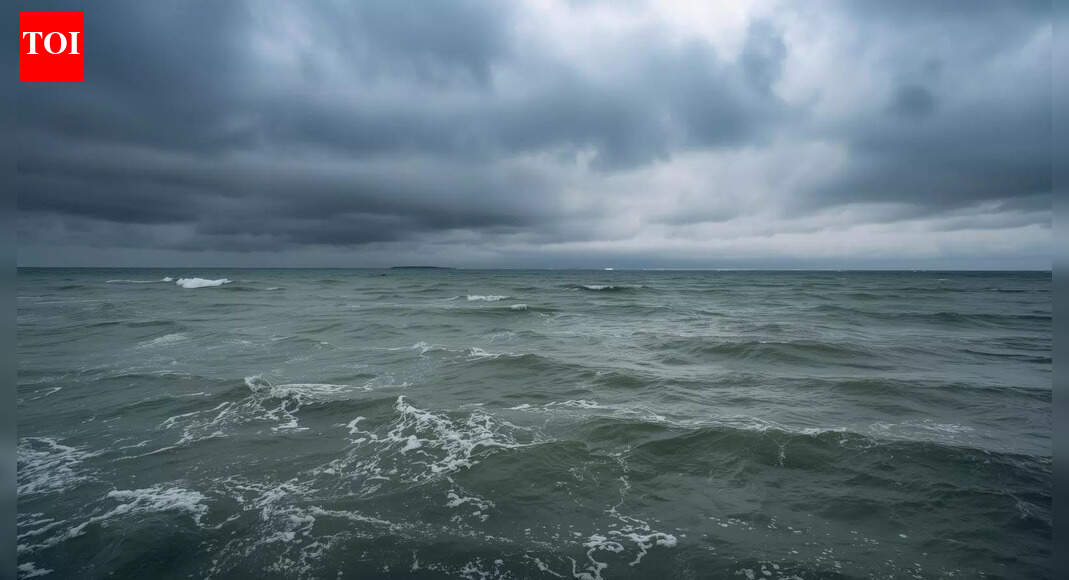

This ocean near Panama is dying, and same thing might happen all over earth. AI-generated
Something unusual happened off the coast of Panama this year, and at first it did not look dramatic. There was no single storm, no sudden die-off washing ashore. Instead, there was an absence. The water stayed warm when it usually cools. The sea surface looked calm, almost unchanged. For scientists who watch this region closely, that quiet was unsettling. Every year, a reliable process breathes life into these waters, lifting cold nutrients from below and setting the food chain in motion. In early 2025, that process did not arrive. For the first time in decades, the ocean here failed to turn over. What followed was not a single event but a slow realisation that a system long thought resilient had simply paused.
The ocean cycle important for marine life in panama did not return this year
Between January and April, winds crossing Central America tend to arrive in short bursts. They push warm surface water away from the coast and allow deeper water to rise. That water carries nutrients and oxygen, and it cools the surface just enough to change everything. Phytoplankton respond first. Fish follow. Reefs get a break from heat. The pattern is brief but dependable. It has adjusted to El Niño years and to La Niña years, sometimes weaker, sometimes stronger, but always present. For coastal communities and marine life, it has been part of the background rhythm. Its predictability mattered more than its intensity. Until this year, it had never fully failed.
Scientists say the ocean near Panama has stopped breathing
A study published on PNAS says satellite records and field measurements told the same story. The surface stayed warm, and the usual green signal of plankton never appeared. Research vessels moving through the area found a sharp boundary between the surface and deeper water, with little mixing between them. Oxygen-rich layers stayed trapped below. The problem was not a delay. It was an absence. Data stretching back to the mid-1980s showed nothing like it. Even during strong climate swings, the upwelling had weakened but not vanished. The 2025 season passed without the expected change. By the time researchers confirmed it, the window for recovery had already closed.
Why did the winds stop doing their job
The problem was fewer winds, not weaker ones. Short-lived wind jets that normally arrive in regular pulses appeared far less often. When they did show up, they were close to normal strength. There just were not enough of them to keep the surface water moving. Researchers linked this drop to a shift in a large atmospheric boundary near the equator. That shift lined up with a recent La Niña phase, though similar conditions in the past had not caused a full shutdown. The system seemed sensitive to timing rather than force. Miss enough beats, and the process stalls.
Why the ocean near Panama stayed warm when it should have cooled
The response was uneven but fast. Phytoplankton numbers dropped, which reduced food for small fish. Along the coast, fishers reported lower catches of species that usually thrive during the upwelling months. Reefs felt the change in a different way. Without the seasonal cooling, heat stress lingered. Bleaching spread earlier and further than expected. Oxygen levels also fell in deeper layers, adding pressure to animals that cannot easily move. Nothing collapsed overnight. Instead, stress accumulated quietly, with fewer signs that recovery would be quick.
Why this matters beyond Panama
Despite their small size on a global map, upwelling zones hold significant importance. They support fisheries, regulate heat, and anchor coastal ecosystems. The failure in Panama raises questions about how stable these systems really are as the climate shifts. If one of the most consistent tropical upwellings can pause, others may also be vulnerable. Scientists are cautious about drawing broad conclusions from a single year. Still, the event stands as a reminder that absence can be as telling as disruption. Occasionally the warning is not a surge or a crash but a season that simply does not arrive. Go to Source