
PC: Wikipedia
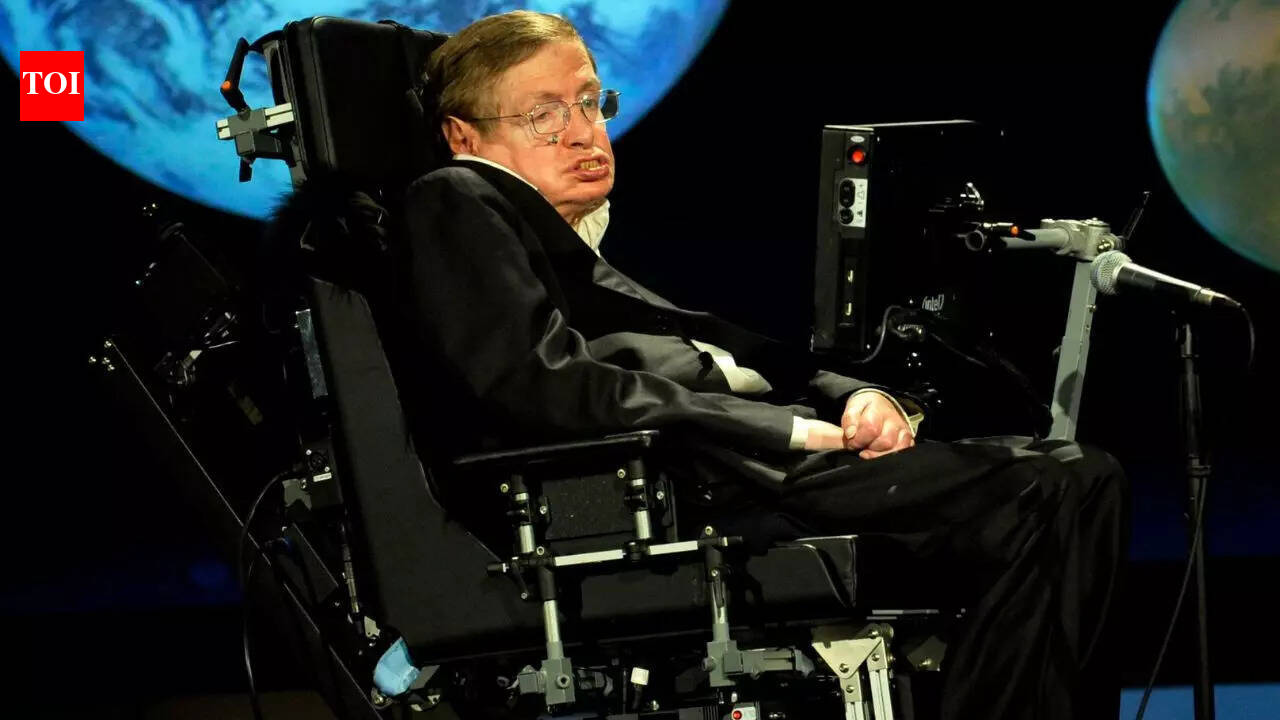
What is the most important step that humanity must take to avoid extinction? According to the late physicist Stephen Hawking, the answer lies far beyond Earth. One of his most striking warnings concerned the future of human civilisation. Hawking, in his lecture at NASA’s 50th Anniversary, addressed how the human race can’t survive on Earth unless we spread into space. A single global catastrophe, whether natural or man-made, could potentially wipe out the entire species.His message was simple but profound. If the human race wants to survive in the long run, it must eventually move beyond Earth and establish settlements elsewhere in space.
Stephen Hawking’s chilling warning: Why staying on Earth could doom humanity
According to Stephen Hawking, the threat to humanity’s survival is not a single disaster, but the fact that human civilisation exists only on one planet.
Israel Iran War
He warns that as long as humans remain confined to Earth, the species will always remain vulnerable to extinction from global catastrophe. Scientists estimate that at least five mass extinctions have occurred over the past 540 million years.In his book Brief Answers to Big Questions, Hawking wrote that an asteroid collision is something “guaranteed by the laws of physics and probability.”
Other dangers Hawking warned about
While modern civilisation has advanced technologically, it has also welcomed new risks. Hawking frequently mentioned nuclear war, climate change and genetically engineered viruses as potential threats to humanity. Additionally also warned about natural dangers such as asteroid impacts.He specifically mentioned the risk of nuclear war, which he described as one of the greatest threats facing humanity today.Climate change was another major concern. In his interview with the BBC, Hawking warned that global warming could potentially push Earth toward conditions similar to those on Venus, where surface temperatures exceed 250°C.He also expressed concerns about artificial intelligence, warning that advanced AI could potentially surpass human intelligence and become uncontrollable.Even extraterrestrial life worried him. Hawking cautioned against actively trying to contact aliens, saying that advanced civilisations could treat humanity the way European colonisers treated indigenous populations.
Hawking’s solution: Become a multi-planet species
To reduce that risk, Hawking believed humanity must expand beyond Earth and establish its colonies elsewhere in space.He discussed this idea in several lectures, including the talk “Why We Should Go Into Space,” delivered on April 21, 2008, for NASA’s 50th Anniversary Lecture Series at George Washington University.During the lecture, Hawking argued that building settlements beyond Earth would dramatically increase the chances of human survival. Even if disaster struck Earth, colonies elsewhere could preserve human civilisation.The first step, he suggested, would likely involve building bases on the Moon and Mars.According to Hawking’s timeline, the human species could establish permanent bases on the Moon and Mars by the end of the 21st century.
Why humanity needs to leave Earth
For Hawking, colonising the Moon and Mars are just the starting points because staying in our solar system still poses a cosmic threat.Scientists predicted that in about 5 billion years, the Sun will expand into a red giant star, which will make the inner planets too hot to support life. To truly ensure survival, Hawking believed humans would eventually need to travel beyond our solar system. Go to Source