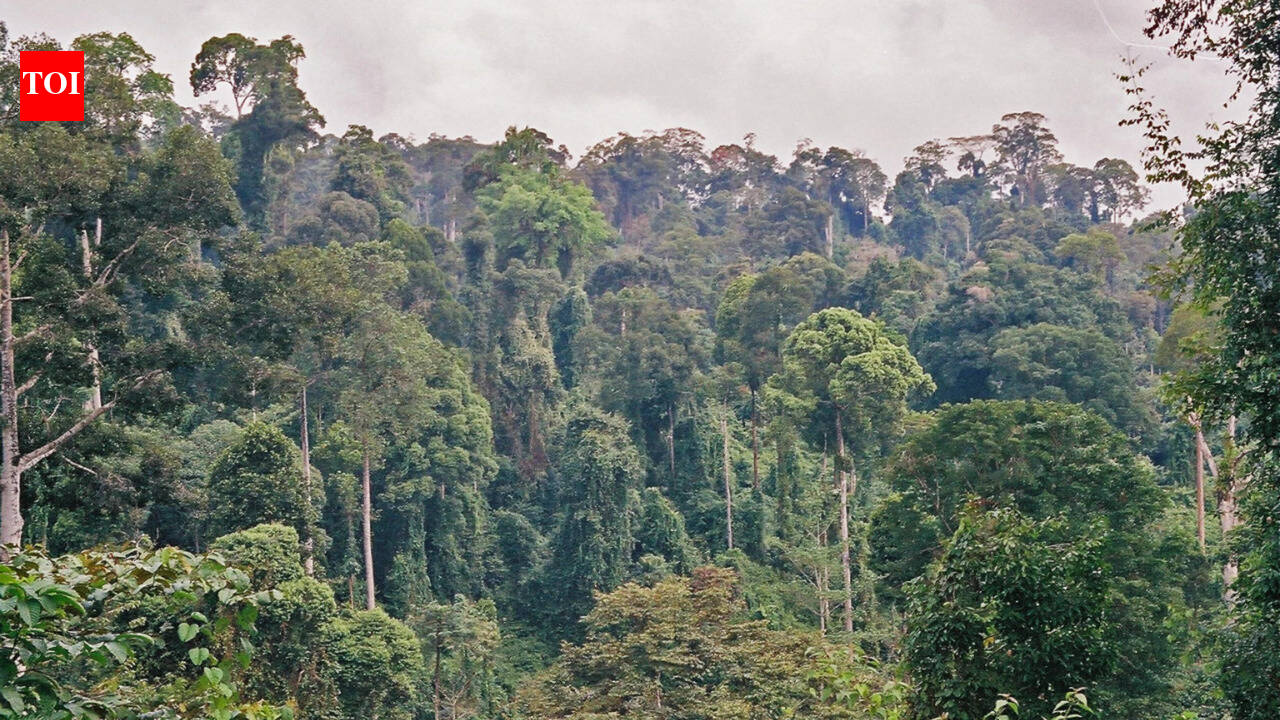

Dipterocarp forest at the Danum Valley Field Centre. Borneo’s tropical forests, dominated by trees from the Dipterocarp family, have some of the highest canopies in the world, with some trees reaching 100 meters
Simply cutting back aggressive climbing vines in logged tropical forests allows the tree canopy to recover three times faster than planting new trees, according to a long-term study in Malaysian Borneo.The method, which costs up to ten times less than traditional tree-planting programmes, could provide a highly effective way to restore damaged rainforests and increase carbon storage as the world faces climate change and biodiversity loss.
The jungle scaffolding
In healthy tropical forests, woody vines called lianas play an important role in the ecosystem. They provide food and flowers for wildlife and act as natural pathways through the forest canopy. However, when selective logging creates open spaces and allows more sunlight to reach the forest floor, these fast-growing vines quickly spread.Lianas use surviving trees as supports to climb toward the light. They compete for water and nutrients, cover tree branches, and slow down forest recovery.Traditional forest restoration in Southeast Asia, home to some of the tallest trees on Earth, often depends on “enrichment planting”. This involves growing and planting young dipterocarp trees. Because these trees can eventually reach heights of 100 metres, young saplings take decades to reach the canopy and have little effect on forest structure during their early growth.
Laser mapping in the canopy
The new research, published in the journal Current Biology, was carried out in the 500-hectare Sabah Biodiversity Experiment in Malaysian Borneo. The area’s secondary forests were logged in the 1980s and are now marked by shorter canopies and large numbers of lianas.Beginning in 2002, researchers created experimental plots. Some areas received dipterocarp saplings, while others received saplings followed by the cutting of all climbing vines. Some control plots were left to recover naturally.In 2013 and 2020, researchers used lidar, a laser-scanning technology, to create detailed three-dimensional maps of the forest structure. The results showed that plots where vines were cut grew taller and developed thicker, more complex canopies.
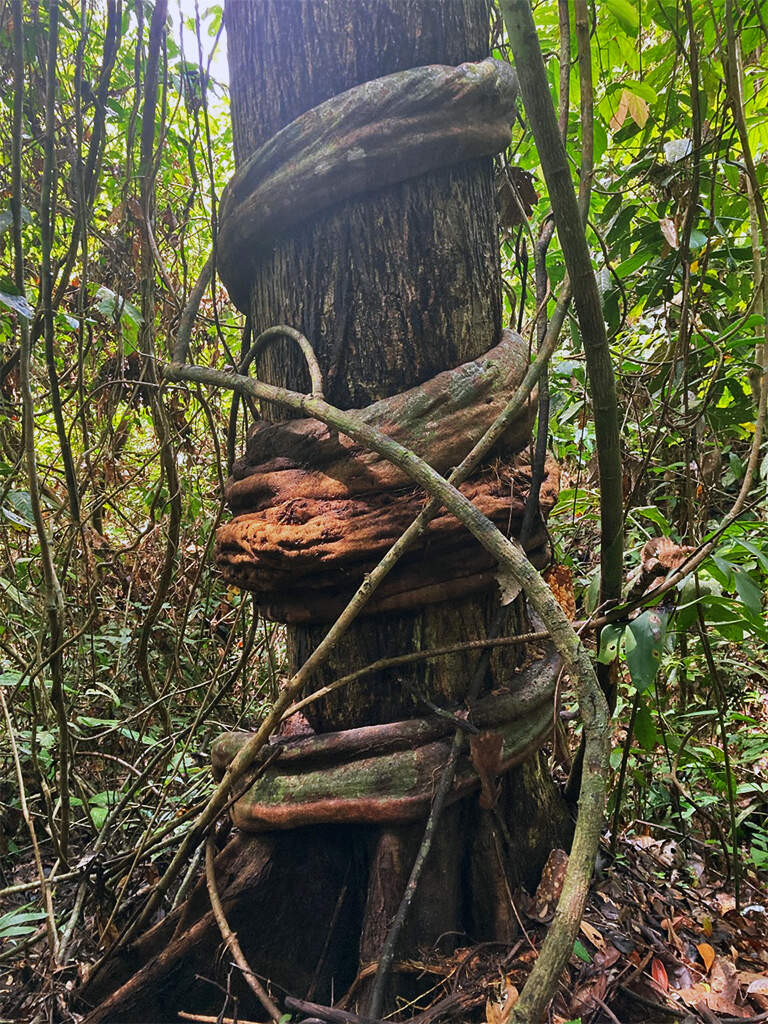
A liana curled around a mature tree in Sabah, Malaysia. Lianas are “structural parasites”
Without the heavy weight of vines, the forest stored carbon three times faster than plots where only saplings were planted. The canopy also grew an additional 27 centimetres in height each year.The laser scans showed that this faster growth was caused by both quicker tree development and much lower tree death rates.Toby Jackson, a senior research associate at the University of Bristol and the study’s lead author, described the differences seen between the forest plots.”The intact canopy was growing faster after liana cutting. But also in the control plots, and in the enrichment planting plots, and in the primary forest, there’s more tree mortality,” Jackson told the environmental news outlet Mongabay in a video interview.
A cheaper path to regeneration
Along with helping forests recover, the financial difference between the two restoration methods is significant. Researchers estimate that cutting vines can cost up to ten times less than growing and planting new saplings.In forests that have only experienced limited logging, cutting vines alone may be enough to restart natural recovery.”This [liana cutting] could be a good way … and a reasonably cost-effective way, to go in and restore” logged forests, Jackson told Mongabay.Catherine Finlayson, an associate scientist with the non-profit organisation Conservation International, who was not part of the research, praised the study’s approach. She highlighted the importance of using long-term lidar data to track changes such as tree deaths, which are difficult to measure from the ground.”It’s a great experiment, and I think they’ve done some nice things with the lidar data as well,” Finlayson said.
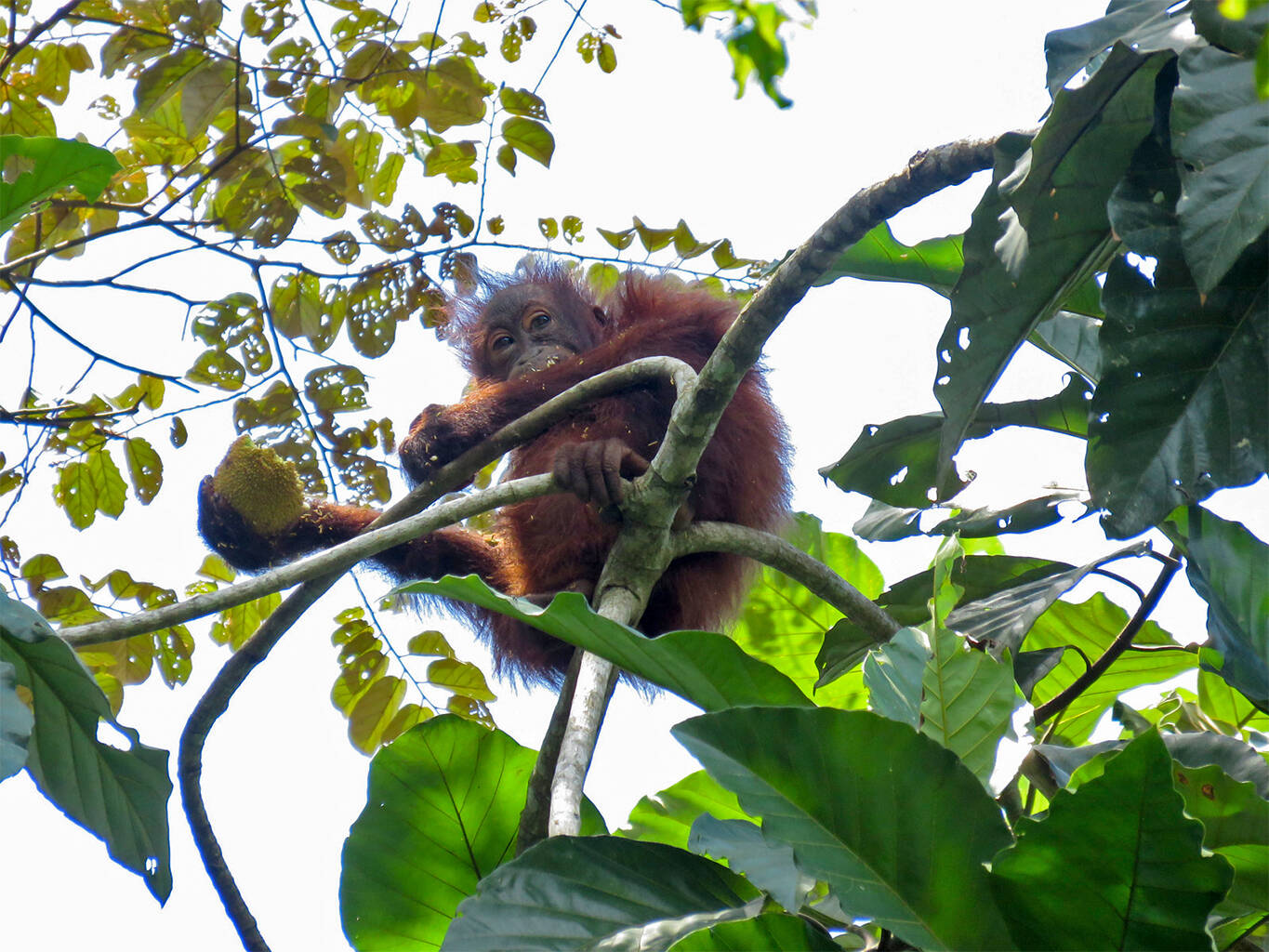
A Bornean orangutan (Pongo pygmaeus) at the Danum Valley Field Centre.
Finding the ecological balance
Although removing vines helps trees grow faster, clearing them completely could damage forest biodiversity. Lianas provide important habitats for many insects, birds, and mammals, meaning total removal could harm the wider ecosystem.Jackson said a complete vine removal approach is “probably a bit extreme” for a recovering forest. A partial removal method, designed to return vine levels to their natural condition before logging, would be “kinder to biodiversity,” he said. His team is waiting for results from another experiment testing this approach.If managed carefully, the method could make commercial forestry more sustainable by helping logged forests recover their timber value and carbon storage capacity faster. This could reduce pressure to cut down untouched primary forests.”[W]e need to make sure we’re doing it carefully and responsibly, and thinking about the biodiversity as well.” Finlayson said. “[I]t’s always a balance, but I think it could really improve the sustainability of forestry.”Conservation International is currently leading the Liana Impacted Forest Treatment (LIFT) pilot projects in Indonesia, Peru, and Brazil. The programme aims to collect consistent data on how trees, carbon storage, and wildlife respond to different levels of vine management around the world.The aim of these projects is to create practical guidelines that protect wildlife while helping forests recover more quickly.”There’s lots of different ways you can kind of slice up the treatment activities to maximize the growth of the trees while minimizing any of the other impacts,” Finlayson said. Go to Source