
Thursday, July 23, 2026
33.5 C
New Delhi

Scientists claim Moon is drifting away from Earth at 3.8 centimetres a year. What will happen to the planet as it goes further?

Moon is drifting away from Earth at 3.8 centimetres a year. What will happen to the planet as it goes further?

Over the next several hundred million years, Earth could face numerous unexpected consequences, all due to the distance slowly yet steadily developing between the planet and its only moon. In what is coming to be defined as one of the most precisely known physical quantities in all of contemporary planetary science, the Moon is moving away from Earth at the speed of 3.83 centimetres annually, with a formal uncertainty of approximately 0.09 millimetres.The number is based on the current best interpretation of five decades of lunar laser ranging data. It has been directly measured, thousands of times over, from multiple observatories on three continents, by firing laser pulses at retroreflector arrays that Apollo astronauts left on the lunar surface between 1969 and 1971.On the human timescale, the rate is roughly the rate at which human fingernails grow. Over a human lifetime, it accumulates to approximately three metres. Over the span of recorded human civilisation, roughly five thousand years, it accumulates to approximately 190 metres. On these timescales, the Moon is, for all practical purposes, sitting where it has always sat. But on geological timescales, the picture is substantially different and worrying.

The measurements
The measurements

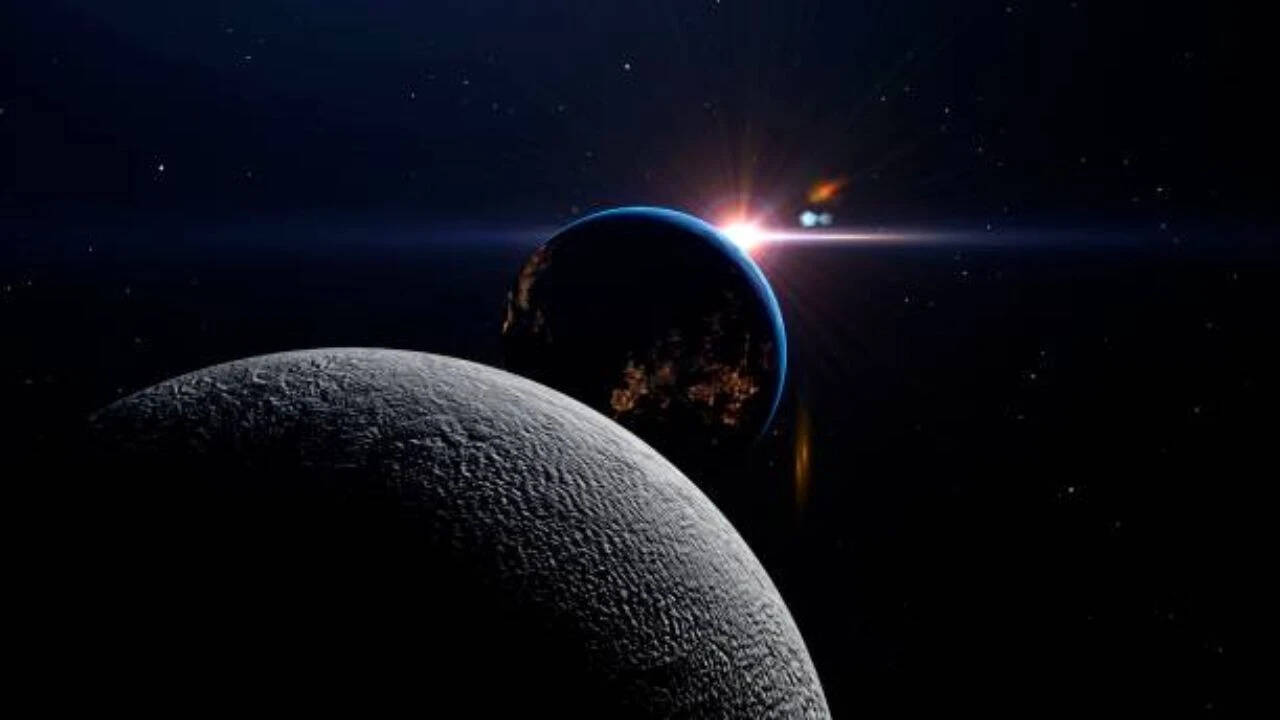
The moon is receding away and the value has been robust to sub-millimetre precision for approximately three decades.

Apollo 11 astronauts Neil Armstrong and Buzz Aldrin deployed the first laser reflector array on the lunar surface in July 1969, at the Sea of Tranquillity. The array contained one hundred quartz-glass corner-cube prisms, small pyramidal reflectors with the specific optical property that any incident beam of light is returned along its exact incoming direction. The Apollo 14 and Apollo 15 missions deployed additional arrays in 1971. The Apollo 15 array, the largest, contains three hundred corner cubes and remains the workhorse of modern ranging campaigns. Two Soviet lunar rovers, Lunokhod 1 and Lunokhod 2, carried French-built retroreflector panels of their own.According to a summary of the ongoing programme published by NASA’s Jet Propulsion Laboratory, four observatories currently perform routine lunar laser ranging: one in New Mexico, one in France, one in Italy and one in Germany. The most precise of these is the Apache Point Observatory Lunar Laser-ranging Operation, or APOLLO, at the 3.5-metre telescope in southern New Mexico. According to the APOLLO project’s own documentation at the University of California San Diego, the ranging precision is now approximately one millimetre in Earth-Moon distance, based on timing the round-trip travel of a laser pulse to a precision of a few picoseconds.According to a report by Science Blog, every year this measurement returns in a slightly larger number. The moon is receding away and the value has been robust to sub-millimetre precision for approximately three decades.

Why so far?

The physical process behind the recession has been explained as tidal friction, which operates through the specific combination of Earth’s rotation, the Moon’s gravity and the geometry of Earth’s oceans and crust. The Moon’s gravity is stronger on the side of Earth facing it than on the far side, because gravity falls off with distance. The differential pull stretches Earth into a subtle oval, with tidal bulges rising on both the near and far sides. On Earth’s oceans, those bulges are what produce the tides. In Earth’s rocky interior, the same process produces smaller but measurable body tides in the solid crust.Moreover, Earth rotates faster than the Moon orbits. One Earth rotation takes 24 hours and one lunar orbit takes 27.3 days. As Earth spins on its axis, it drags the tidal bulges slightly ahead of the line between Earth’s centre and the Moon. The near-side bulge does not sit directly beneath the Moon. It sits slightly ahead of the Moon in the direction Earth is rotating. This off-axis bulge exerts a small gravitational tug on the Moon in the forward direction of its orbit. With added energy, the orbit is widened. Thus, the Moon climbs into a higher orbit each year.By the conservation of angular momentum, the energy the Moon gains has to come from somewhere, and it comes from Earth’s rotational spin. Earth slows down. The day lengthens. The Moon recedes.


What will happen to Earth as the Moon goes further?

What will happen to Earth as the Moon goes further?

” msid=”132573291″ width=”” title=”The Moon is going away; it has been for the past four and a half billion years and will continue to distance itself as long as Earth continues to rotate.” placeholdersrc=”https://static.toiimg.com/photo/83033472.cms” imgsize=”” resizemode=”4″ offsetvertical=”0″ placeholdermsid=”47529300″ type=”thumb” src=”https://static.toiimg.com/photo/83033472.cms” class=”” data-src=”https://static.toiimg.com/photo/msid-132573291/what-will-happen-to-earth-as-the-moon-goes-furtherbrbr.jpg” data-api-prerender=”true”/> </p>
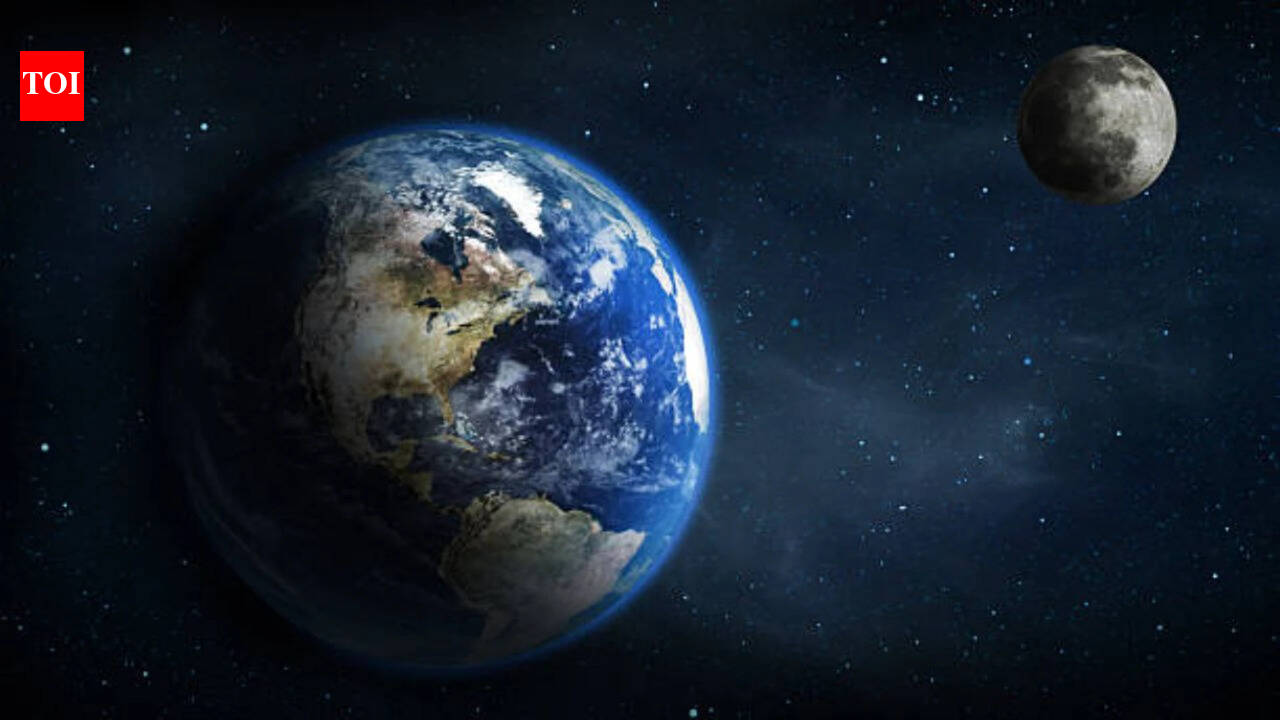
<p> The Moon is going away; it has been for the past four and a half billion years and will continue to distance itself as long as Earth continues to rotate.</p>
</p></div>
</p></div>
<p> <span class=Longer days: The first observable consequence of the lunar recession is that Earth’s rotational day is getting longer at a rate of between one and two milliseconds per century. On the accumulated evidence from those records, Earth’s day was approximately 19 hours long around one billion years ago, when the Moon was closer and the tidal friction was probably weaker but the geometry was different. The day has been getting longer ever since, and it will continue to lengthen for as long as the Moon continues to recede.No more total solar eclipses: Total solar eclipses on the planet are only possible because the Moon happens to appear almost exactly the same angular size in Earth’s sky as the Sun. The Sun’s diameter is approximately four hundred times larger than the Moon’s, but the Sun is also approximately four hundred times further away. The two figures cancel almost perfectly, producing the specific geometrical coincidence that allows the Moon to occasionally cover the Sun’s disc entirely. But as the Moon recedes, its angular size will shrink and so will the occurrence of total solar eclipses. On the current best calculations, the last total solar eclipse observable from Earth’s surface will occur approximately 600 million years from now. After that, the Moon will appear too small in Earth’s sky to fully cover the Sun’s disc.Weakened tides: The tidal amplitude produced by the Moon on Earth’s oceans will decline over deep time. Spring tides and neap tides will continue to exist, but the range between them will shrink as the Moon’s gravitational grip on Earth weakens with distance. The specific rhythms that structure coastal ecosystems, marine reproduction, and fisheries will slowly attenuate.The Moon is going away; it has been for the past four and a half billion years and will continue to distance itself as long as Earth continues to rotate. Go to Source

Hot this week

Florida woman arrested after hoarding 80 cats and 12 dogs in a home with no AC, a foot of faeces and horrific living conditions

A 77-year-old Florida woman has been arrested after authorities discovered 80 cats and 12 dogs living in appalling conditions inside her home in Stuart, Martin County. Read More

‘Bite incidents every day’: Delhi HC takes up stray dog issue, launches suo motu PIL

Delhi HC cracks down on stray dog issue with suo motu PIL NEW DELHI: The Delhi High Court on Thursday initiated a suo motu public interest litigation (PIL) to oversee the implementation of the Supreme Court’s directions on th Read More

Honeymoon murder case: SC cancels Sonam Raghuvanshi’s bail, orders her to surrender in two weeks

The order came after the Meghalaya government challenged the Meghalaya high court’s decision to grant Sonam bail. Read More

Abhinav Bindra Hits Bullseye With Powerful Message Amid NEET Paper Leak Protests

As protests continue in New Delhi, with students demanding the resignation of Education Minister Dharmendra Pradhan, Olympic champion Abhinav Bindra has weighed in on the issue with a strong message. Read More

Topics

Florida woman arrested after hoarding 80 cats and 12 dogs in a home with no AC, a foot of faeces and horrific living conditions

A 77-year-old Florida woman has been arrested after authorities discovered 80 cats and 12 dogs living in appalling conditions inside her home in Stuart, Martin County. Read More

‘Bite incidents every day’: Delhi HC takes up stray dog issue, launches suo motu PIL

Delhi HC cracks down on stray dog issue with suo motu PIL NEW DELHI: The Delhi High Court on Thursday initiated a suo motu public interest litigation (PIL) to oversee the implementation of the Supreme Court’s directions on th Read More

Honeymoon murder case: SC cancels Sonam Raghuvanshi’s bail, orders her to surrender in two weeks

The order came after the Meghalaya government challenged the Meghalaya high court’s decision to grant Sonam bail. Read More

Abhinav Bindra Hits Bullseye With Powerful Message Amid NEET Paper Leak Protests

As protests continue in New Delhi, with students demanding the resignation of Education Minister Dharmendra Pradhan, Olympic champion Abhinav Bindra has weighed in on the issue with a strong message. Read More

BJP vs Opposition: NEET Row Escalates in Parliament as Opposition Demands Education Minister’s Resignation

The opposition is maintaining that the demand for the Education Minister’s resignation comes from students and that accountability must be fixed because students have lost trust in the system. Read More

SC Cancels Sonam Raghuvanshi’s Bail In Honeymoon Murder Case, Gives Her 3 Weeks To Surrender

Show Quick Read Key points generated by AI, verified by newsroom Supreme Court cancelled bail of Sonam Raghuvanshi. Sonam is prime accused in husband’s honeymoon murder. Court ordered her to surrender within three weeks. Read More

Mumbai Protest: How Police Used Doorstep Checks, WhatsApp Tracking To Thwart CJP Protesters

Show Quick Read Key points generated by AI, verified by newsroom Police prevent named protesters rejoining; use calls and visits. Protesters shared chats, notices detailing police pressure, surveillance. Read More

Related Articles