
Scientists record large marine predators thriving inside an active underwater volcano thought hostile to complex life/ Image: National Geographic Youtube
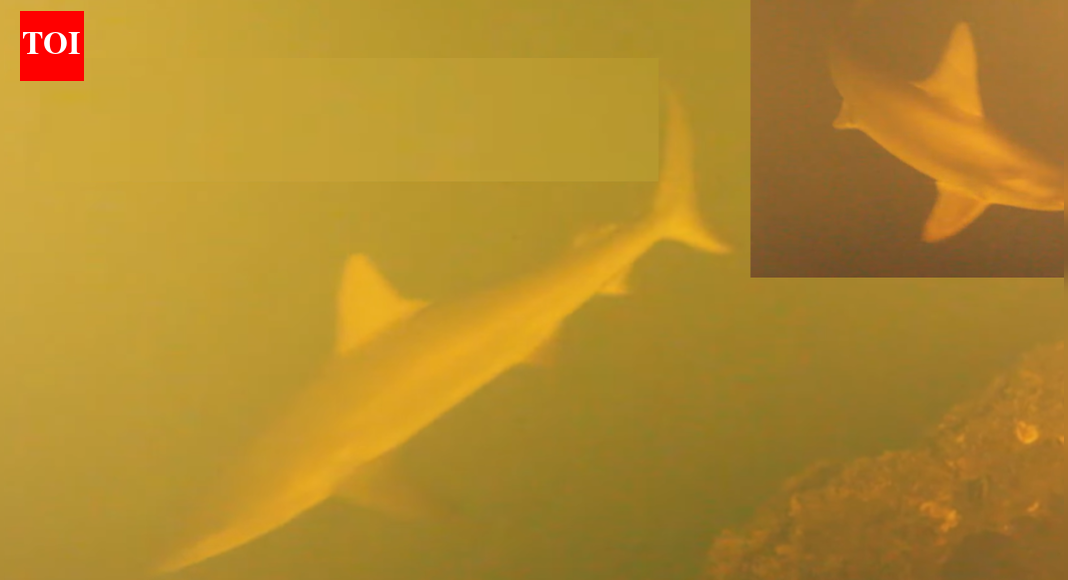
In 2015, a scientific expedition to one of the most volatile underwater volcanoes on Earth produced a finding few researchers expected to see on their monitors: sharks swimming calmly inside the crater. The discovery was made at Kavachi, a submarine volcano located near the Solomon Islands in the southwest Pacific Ocean. Known for frequent eruptions that eject lava, ash and highly acidic water, Kavachi is widely regarded as an environment where complex marine life should not be able to survive. Yet footage captured during the expedition showed hammerhead sharks, silky sharks and a stingray moving through the volcano’s interior, apparently unaffected by conditions considered hostile to most fish.
A routine mission, and an unexpected sight
The expedition was led by ocean engineer Brennan Phillips, who travelled to Kavachi with a team to investigate hydrothermal activity. At the time of their visit, the volcano was not actively erupting, allowing researchers to deploy instruments directly into the crater. Among those instruments was a deep-sea camera, lowered into the volcano to record conditions below the surface. After roughly an hour, the camera was retrieved and its footage reviewed. What the team saw surprised them immediately. “Not only were silky sharks spotted in the area, but hammerheads too,” Phillips said, adding that the animals appeared “completely unfazed” by the hot, acidic waters inside the volcano. The footage also captured a stingray, which the researchers speculated may have been sheltering inside a small cave-like feature within the caldera.
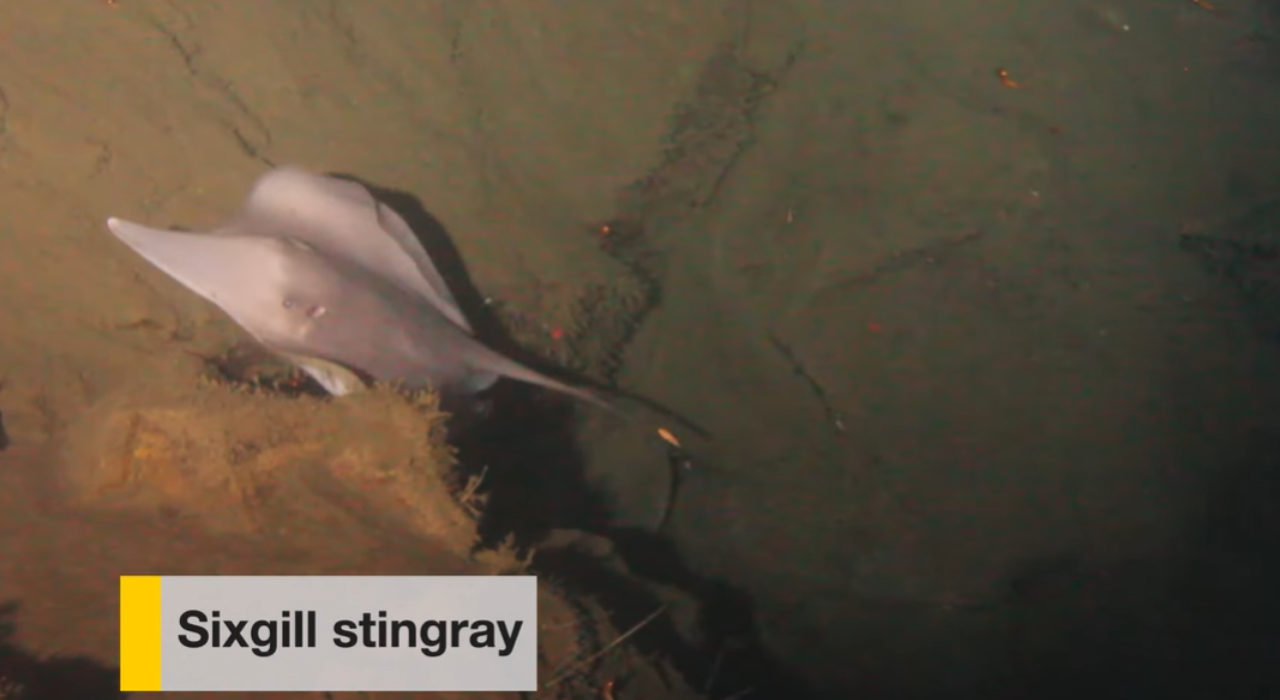
A stingray glides through Kavachi’s volcanic crater, filmed amid hot, acidic waters by deep-sea camera/ National Geographic Youtube
“This volcano conflicts with what we know”
Kavachi’s crater is a caldera, a large depression formed when a volcano’s magma chamber empties. During eruptions, the site releases superheated, acidic water, volcanic gases and rock fragments into the surrounding ocean. For Phillips, the presence of large marine predators inside such an environment ran counter to established assumptions. “The idea of there being large animals like sharks hanging out and living inside the caldera,this volcano conflicts with what we know about Kavachi,” he said. “Which is that it erupts, but when it’s erupting, there’s no way anything could live in there.”
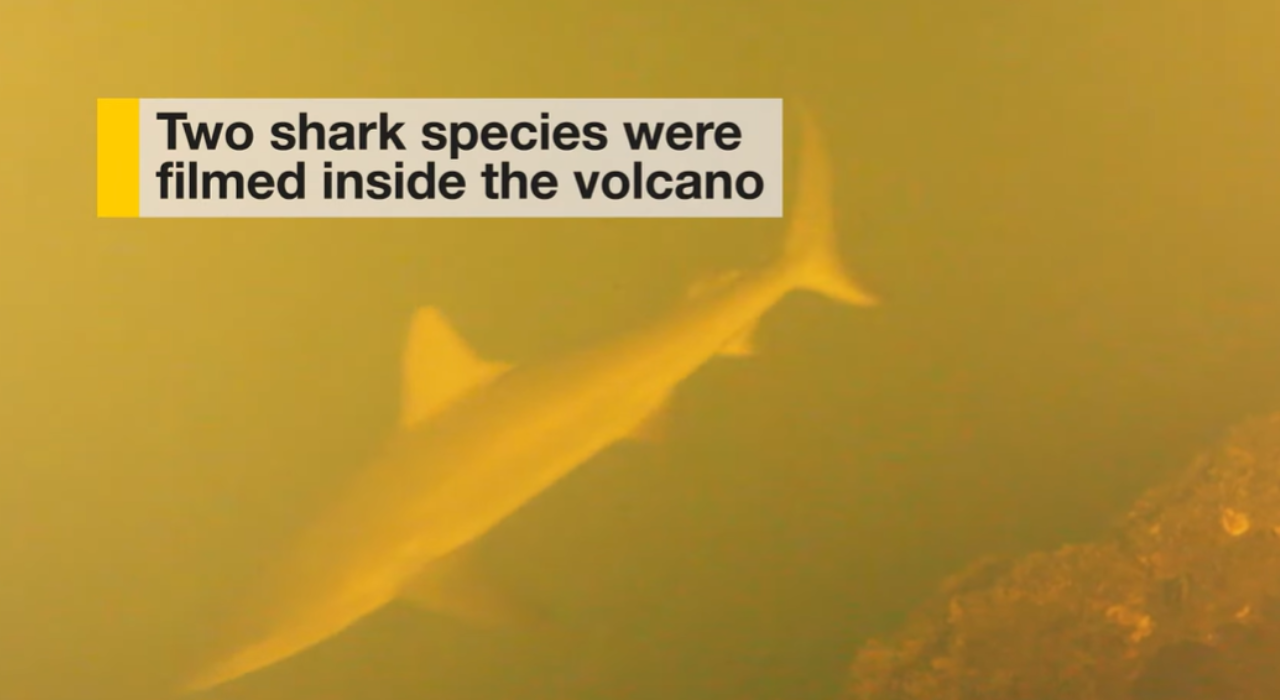
Hammerhead and silky sharks were found in Kavachi’s caldera, seemingly unfazed by heat, acidity, and eruptive risk/ Image: National Geographic Youtube
He added: “So to see large animals like this, that are living and could potentially die at any moment, it brings up lots of questions, do they leave? Do they have some sort of sign that it’s about to erupt? Do they blow up sky high in little bits?”
A volcano nicknamed ‘Sharkcano’
The footage was later released by National Geographic, where it quickly drew global attention. Kavachi became informally known as “Sharkcano”, a nickname that reflected both the surprise of the discovery and the extreme nature of the environment. Seven years after the original expedition, NASA satellite imagery captured Kavachi erupting again, showing the volcano sending lava, ash, sulphur and acidic water into the surrounding sea. The eruption followed earlier documented events in 2007 and 2014. It remains unknown whether the sharks and other animals seen in the crater survived these eruptions.
Returning with robots
Because of the danger posed by Kavachi’s eruptions, follow-up research relied on robotic equipment rather than human divers. Phillips later returned to the site with Alistair Grinham of the University of Queensland and Matthew Dunbabin of Queensland University of Technology, using low-cost robotic systems designed to withstand — and be sacrificed to — extreme conditions. Dunbabin explained the challenge of studying such an environment: “No matter how well-built your systems are or how much they cost, it is very unlikely they will survive an explosion.” The robots, small enough to fit into carry-on luggage, were treated as expendable. Sensors recorded surface pH drops, water temperatures up to ten degrees higher than normal, and confirmed that Kavachi is a strong greenhouse gas emitter. “One unexpected result was the eruption forced fresh material from the vent to be embedded into the robot itself,” Dunbabin said. “This means we have a unique way of collecting physical rock samples.”
Why sharks can survive, for now
Phillips acknowledged that, based on known biology, Kavachi should not support animal life beyond microorganisms. “There are a number of reasons why there shouldn’t be anything living in there except maybe bacteria,” he said. “It’s very hot and acidic. It’s very turbid. None of these things are good for fish.” Yet the sharks were observed “darting in and out between the clouds of the plume” during periods between eruptions. Whether the animals possess behavioural adaptations, heightened sensitivity to volcanic activity, or physiological tolerance to extreme conditions remains unresolved.
Experts have suggested that studying these sharks could help scientists understand how marine species respond to extreme environmental stress, including rising ocean temperatures. Some researchers have proposed that the sharks may have developed physiological adaptations that allow them to tolerate Kavachi’s hot, acidic conditions, though no definitive conclusions have yet been reached. As Phillips put it: “That’s a lingering question mark.” Go to Source