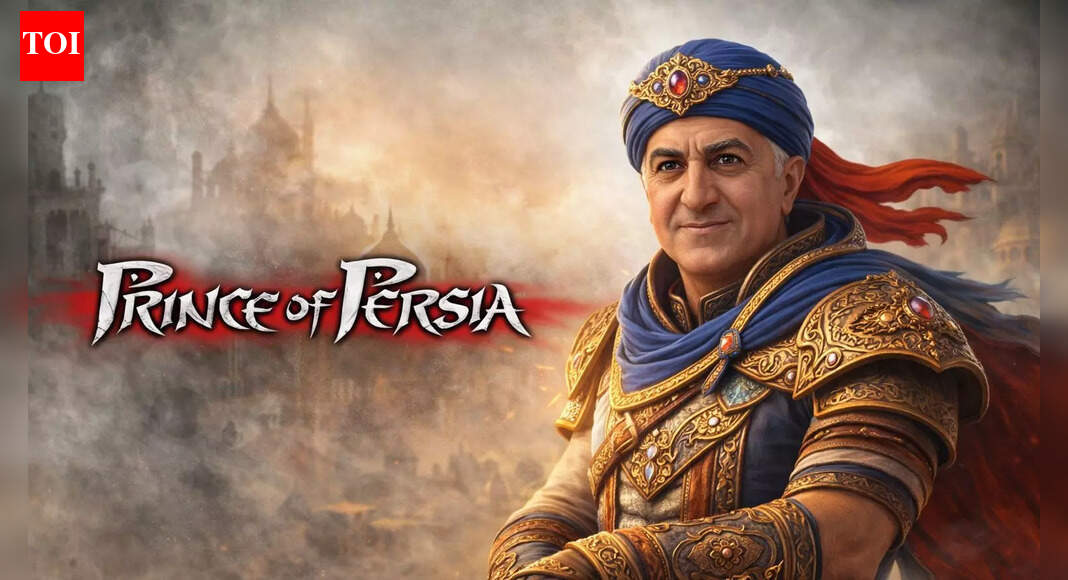

Frederick Forsyth, in Icon, explains a cold, vital truth about nations and what holds them together: “An icon. Not a religious painting, but a symbol. He stands for something. All nations need something, some person or symbol, to which they can cleave, which can give a disparate mass of varied people a sense of identity and thus of unity. Without a unifying symbol, people drift into internecine feuds… To achieve unity by volition, there must be that symbol.”Later, Forsyth sharpens the warning: “But if he is destroyed? It’s back to chaos. Even civil war… Unless one could introduce into the equation another and a better icon.”In Forsyth’s fiction, the icon turns out to be Prince Kent, resurrected as the Tsar of All Russias. And in an irony history seems to relish, Iran is now looking at a former monarch’s son as a possible icon of its own. With the Ayatollah’s authority under sustained pressure, the Iranian question has shifted. It is no longer confined to regime change or reform. It is the deeper, more dangerous question Forsyth posed decades ago.If an icon falls, what replaces it? For some, that answer has begun to sound like Reza Pahlavi, the exiled son of Iran’s last shah.Who is Reza Pahlavi?Reza Pahlavi was born into a future that assumed permanence. Born in Tehran in 1960, he was raised as heir to the Peacock Throne, educated by private tutors, and prepared for monarchy as destiny rather than possibility. The Pahlavi state rested on continuity. Succession was taken for granted.That assumption ended abruptly in 1979.As the revolution gathered force, Pahlavi was in the United States training as a fighter pilot. Within weeks, the monarchy collapsed, the court dissolved, and the political system that had governed Iran for decades ceased to exist. The crown prince never returned to a country that had abolished the very idea he embodied.Why did he leave?History overtook inheritance.The revolution dismantled the monarchy outright. Power, citizenship, property, and legitimacy disappeared in a single stroke. Exile followed as a condition of survival. His father drifted between countries, increasingly isolated, before dying in Egypt. The family scattered. Personal tragedy compounded political collapse.Reza Pahlavi settled in the United States, studied political science, married, and raised a family. For years, he avoided positioning himself as an alternative leader, aware of Iran’s unresolved and deeply divided memory of its monarchical past.What happened after Iran got rid of the last shah?Iran did not transition into a pluralist republic.The Islamic Republic concentrated authority in clerical institutions and rooted legitimacy in religious guardianship. Over time, dissent narrowed, civil society contracted, and elections functioned within strict ideological boundaries. Women’s autonomy became a permanent battleground. Foreign policy hardened into defiance as identity.The revolution promised justice and dignity. The system that followed prioritised endurance and control.For decades, the Ayatollah functioned as Iran’s central icon. Not merely a political leader, but the embodiment of moral authority and revolutionary legitimacy. That icon once bound a fractured society together. Today, belief has thinned. Fear remains. Loyalty does not.Why are people clamouring for Reza Pahlavi’s return?Because when symbols lose force, memory becomes political.In recent waves of unrest, chants invoking the Pahlavi name have resurfaced inside Iran. Often they function less as calls for monarchical restoration than as acts of rejection. A way of signalling that clerical authority no longer defines Iranian identity.International reporting has repeatedly noted this phenomenon. Coverage in the Financial Times has described Pahlavi “positioning himself once more as a potential leader” amid widespread anti-regime protests, urging demonstrators to coordinate despite communication blackouts. The Guardian has reported that some supporters interpret street chants as an implicit endorsement of Pahlavi as a unifying figure, even as it cautions that such slogans do not amount to consensus for monarchy. Other outlets have observed that his name has returned to public discourse because of the absence of any visible, organised alternative leadership inside Iran.Pahlavi himself has adjusted his tone with the moment. When asked in earlier protest cycles whether he saw himself as a leader, he stressed restraint, saying change must come from within Iran. More recently, he has spoken openly about a transitional role. On June 23, 2025, at a press conference in Paris, he said he was prepared to help guide a transitional phase if the Islamic Republic collapsed, while rejecting the idea of personal restoration. “This is not about restoring the past,” he said. “It’s about securing a democratic future for all Iranians.”He has repeatedly framed the end state as a choice for the people, arguing for a national referendum to determine Iran’s future political system. In this telling, monarchy and republic are options to be decided, not imposed.The doubts that remainIcons unite by being legible. They also divide by carrying history.Reza Pahlavi embodies both. For some Iranians, his name signals continuity with a secular, pre-theocratic Iran. For others, it recalls censorship, secret police, and unelected rule. Decades in exile complicate credibility. Distance reshapes trust.There is also a deeper anxiety. Iran has already replaced one unelected authority with another once before. That memory has not faded. Many Iranians fear substitution without transformation, even when democratic language is used sincerely.The chants, then, may reveal less about what Iranians want next and more about what they refuse to accept any longer.Persia and the weight of civilisationThis debate carries a deeper civilisational undertone. Persia is not merely a modern nation-state. It is one of the world’s most ancient and influential civilisations. From the Achaemenids to the Safavids, Persia shaped ideas of governance, administration, culture, and empire long before modern ideologies emerged. Its identity predates monarchy, Islam, and republic alike.That long memory matters. It explains why Iranians often reach backwards when the present collapses. It explains why symbols resonate more powerfully than programmes. In a civilisation accustomed to thinking in centuries rather than election cycles, icons are anchors.Reza Pahlavi draws on that current whether he intends to or not. His name carries monarchy, but it also carries Persia. Not the clerical state. Not the revolutionary state. Something older and broader.The open questionReza Pahlavi may never return to Iran. He may never govern. He may never command enough trust to become more than a symbol. Yet his re-emergence in public imagination signals something unmistakable. Iran is searching for cohesion after the erosion of its ruling icon.Persia has survived empires, invasions, revolutions, and reinventions. It will survive this moment too.Will the Prince of Persia bring Iran into a new world? Time will tell. Go to Source