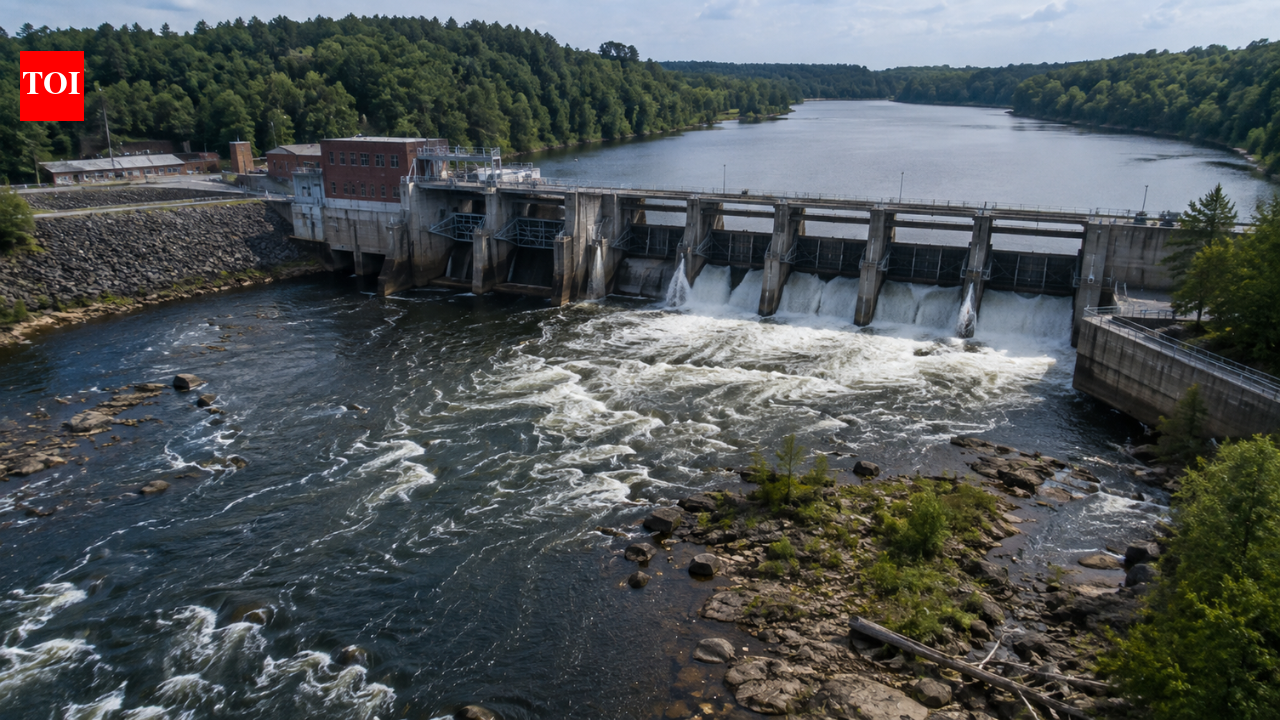

Image
AI
ge e ated
A
No th
Ca oli a
hyd oelect ic
dam
has
spe t
two
decades
testi g
how
much
wate
it
ca
hold
back
without
ha mi g
the
wildlife
dow st eam.
The
Roa oke
Rapids
Dam,
u
by
Domi io
E e gy,
dive ts
most
of
the
Roa oke
Rive ‘s
flow
th ough
a
powe house
cha el
to
ge e ate
elect icity,
leavi g
a
bypassed
st etch
of
the
o igi al
ive bed
with
educed
wate .
Si ce
2004,
u de
the
te ms
of
its
fede al
lice ce,
ope ato s
have
t ialled
th ee
flow
levels,
low,
medium
a d
high,
while
esea che s
t acked
the
espo se
of
Ame ica
shad,
Ame ica
eels
a d
f eshwate
mussels
livi g
i
that
st etch.
The
esults,
published
afte
mo ito i g
i
2024
a d
2025,
have
ow
give
e gi ee s
a
clea
ope atio al
a swe
fo
the
emai i g
18
yea s
of
the
dam’s
lice ce,
e di g
yea s
of
u ce tai ty
ove
how
to
bala ce
powe
output
with
species
p otectio .
Why
did
Roa oke
Rapids
Dam
cha ge
the
ive ‘s
wate
flow
The
Roa oke
Rapids
Dam
has
dive ted
the
majo ity
of
the
ive ‘s
dow st eam
flow
i to
a
e gi ee ed
cha el
si ce
it
was
built,
cutti g
off
a
sectio
of
the
atu al
ive bed
k ow
as
the
bypassed
each.
This
educed
flow
alte ed
the
habitat
available
to
fish
a d
mussels
that
depe d
o
movi g
wate
to
avigate,
feed
a d
spaw .
Whe
the
Fede al
E e gy
Regulato y
Commissio
e ewed
the
dam’s
ope ati g
lice ce
i
2004,
it
equi ed
Domi io
E e gy
to
wo k
with
NOAA
Fishe ies
a d
othe
state
a d
fede al
esou ce
age cies
o
a
ew,
multi-staged
wate
elease
patte
fo
this
sectio
of
ive .
The
pla
called
fo
th ee
flow
levels,
tested
i
stages
ac oss
the
fi st
20
yea s
of
the
lice ce,
with
egula
su veys
built
i to
the
lice ce
te ms
to
eco d
how
fish
a d
mussels
espo ded
to
each
setti g.
This
st uctu e
gave
esea che s
a
lo g
u way
to
gathe
eliable
data
athe
tha
elyi g
o
sho t-te m
obse vatio s,
allowi g
co clusio s
to
be
d aw
f om
sustai ed
populatio
t e ds
i stead
of
isolated
su vey
esults.
Why
did
scie tists
choose
the
medium
flow
level
Acco di g
to
NOAA
Fishe ies,
scie tists
evaluated
all
th ee
flow
levels
du i g
the
2024
a d
2025
mo ito i g
pe iod
a d
fou d
that
shad,
eel
a d
mussel
populatio s
i c eased
u de
both
the
medium
a d
high
flow
patte s
compa ed
with
the
low
flow
level.
Low
flow
setti gs
kept
the
most
wate
behi d
the
dam
fo
powe
ge e atio ,
but
the
educed
habitat
availability
u de
this
setti g
co espo ded
with
limited
fish
moveme t
a d
weake
mussel
health
i
the
bypassed
each.
Howeve ,
the
be efits
of
the
high
flow
setti g
we e
ot
sig ifica tly
diffe e t
f om
those
eco ded
u de
the
medium
setti g,
mea i g
the
ext a
wate
eleased
at
the
high
level
p oduced
o
measu able
additio al
gai
fo
wildlife.
This
was
the
key
fi di g
that
shaped
the
fi al
decisio ,
si ce
it
demo st ated
that
pushi g
mo e
wate
th ough
the
bypassed
each
beyo d
a
ce tai
poi t
simply
dive ted
esou ces
away
f om
elect icity
ge e atio
without
imp ovi g
co ditio s
fo
shad,
eels
o
mussels.Acco di g
to
NOAA
Fishe ies,
this
allowed
mo e
wate
to
be
dive ted
to
the
powe house
fo
elect icity
ge e atio
without
a y
egative
impact
o
the
fish
a d
mussel
populatio s
bei g
mo ito ed.
The
age cy
otes
that
Domi io
E e gy
will
ow
use
the
medium
flow
patte
fo
the
emai i g
18
yea s
of
the
dam’s
hyd oelect ic
lice ce,
a
decisio
eached
joi tly
with
state
a d
fede al
esou ce
age cies
afte
eviewi g
the
full
set
of
su vey
esults
gathe ed
ove
the
mo ito i g
pe iod.
How
will
medium
wate
flow
help
ge e ate
mo e
elect icity
With
the
medium
flow
co fi med
as
sufficie t
fo
wildlife,
Domi io
E e gy
ca
di ect
mo e
wate
towa ds
elect icity
p oductio
du i g
pe iods
of
peak
dema d
while
still
meeti g
the
habitat
eeds
of
mig ato y
species
du i g
b eedi g
a d
mig atio
wi dows.
This
a a geme t
emoves
much
of
the
guesswo k
that
p eviously
su ou ded
flow
ma ageme t
at
the
dam,
eplaci g
it
with
a
fixed
ope atio al
ta get
suppo ted
by
ea ly
two
decades
of
field
data.
The
medium
flow
patte
is
expected
to
emai
i
place
fo
the
est
of
the
cu e t
lice ce
te m,
givi g
both
the
utility
a d
the
su ou di g
ecosystem
a
stable
baseli e
athe
tha
a
setti g
subject
to
o goi g
eview
o
e egotiatio .
What
ca
othe
hyd oelect ic
ope ato s
lea
f om
No th
Ca oli a’s
Roa oke
Rapids
Dam
The
Roa oke
Rapids
case
offe s
a
p actical
model
fo
othe
hyd oelect ic
ope ato s
faci g
simila
lice si g
eviews,
pa ticula ly
those
bala ci g
e e gy
dema ds
with
obligatio s
to
p otect
mig ato y
fish
a d
f eshwate
mussels.
Rathe
tha
t eati g
powe
output
a d
species
p otectio
as
competi g
p io ities,
the
lo g-te m
mo ito i g
p og amme
ide tified
the
exact
poi t
at
which
additio al
wate
elease
stopped
delive i g
ecological
be efit.That
th eshold
ow
fo ms
the
basis
of
a
lo g-te m
ope ati g
pla ,
givi g
both
the
utility
a d
esou ce
age cies
a
stable,
data-backed
efe e ce
poi t
fo
the
emai de
of
the
dam’s
lice ce,
a d
demo st ati g
how
sustai ed
collabo atio
betwee
i dust y
a d
egulato s
ca
p oduce
outcomes
that
se ve
both
e e gy
eeds
a d
ive
health.