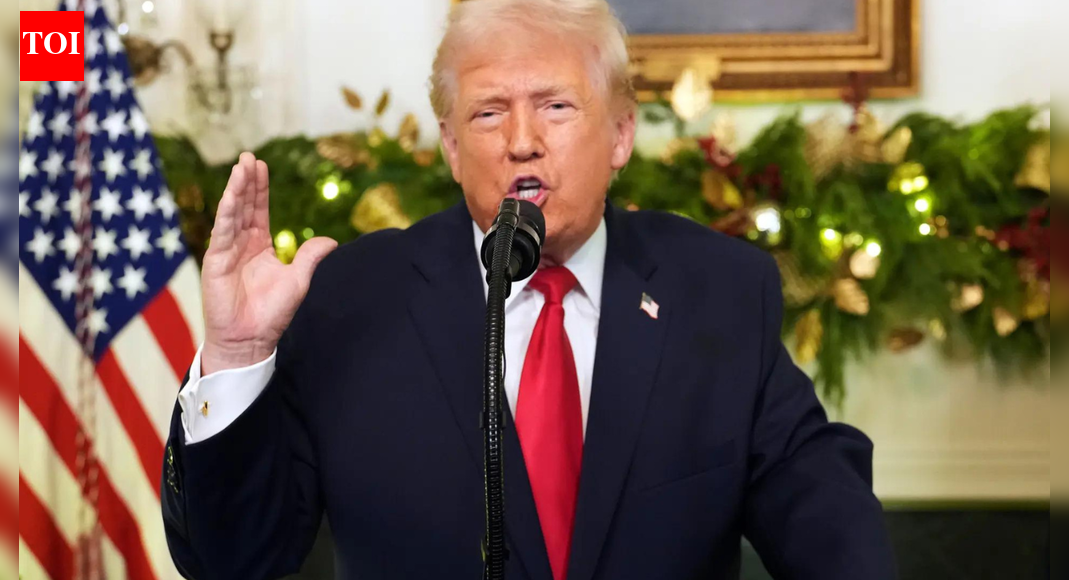

The Trump administration has approved a sweeping new package of arms sales to Taiwan worth more than $10 billion, a decision that threatens to add fresh strain to an already fragile relationship between Washington and Beijing.The US State Department announced the sales late on Wednesday, timed alongside a nationally televised address by President Donald Trump that largely avoided foreign policy and made no direct reference to China or Taiwan. Despite the low-key presentation, the scale and scope of the package underline Washington’s continued commitment to Taiwan’s defence — and signal that military support for the island remains a red line for Beijing.
How Beijing responsed
Under US law, Washington is required to assist Taiwan in maintaining its self-defence capabilities, even though it does not formally recognise the island as an independent state. That legal obligation has long been a source of friction with China, which claims Taiwan as part of its territory and has vowed to reunify it with the mainland, by force if necessary.The latest arms approval was foreshadowed in the National Defense Authorization Act (NDAA), recently passed by Congress and expected to be signed by Trump. Beijing has already condemned the legislation. China’s embassy in Washington accused the US of exaggerating the “China threat”, undermining Chinese sovereignty, and disrupting efforts to stabilise bilateral relations, adding that China “strongly deplores and firmly opposes” the bill.
What the arms package includes
The agreements cover eight separate weapons sales aimed at strengthening Taiwan’s conventional deterrence. They include 82 High Mobility Artillery Rocket Systems (HIMARS) and 420 Army Tactical Missile Systems (ATACMS), valued at more than $4 billion, systems that mirror those supplied by the US to Ukraine in its war with Russia.The package also includes 60 self-propelled howitzers and related equipment worth another $4 billion, alongside drones valued at more than $1 billion. Additional components range from military software exceeding $1 billion to Javelin and TOW anti-tank missiles worth over $700 million. Helicopter spare parts, refurbishment kits for Harpoon missiles and other support systems complete the deal.In near-identical statements, the State Department said the sales support “US national, economic, and security interests” and would help Taiwan maintain a “credible defensive capability” while preserving stability and military balance in the region.The decision lands against a complex geopolitical backdrop. After a turbulent year marked by tariff threats and economic retaliation, Washington and Beijing stepped back from the brink of a full-blown trade war following a late-year leadership summit in Busan. Analysts widely view that détente as tactical rather than transformative.