
Wednesday, July 29, 2026
34 C
New Delhi

NASA’s Voyager 1 left Earth in 1977; now its signal takes over 22 hours to reach us and it is still sending data

NASA’s Voyager 1 left Earth in 1977; now its signal takes over 22 hours to reach us and it is still sending data

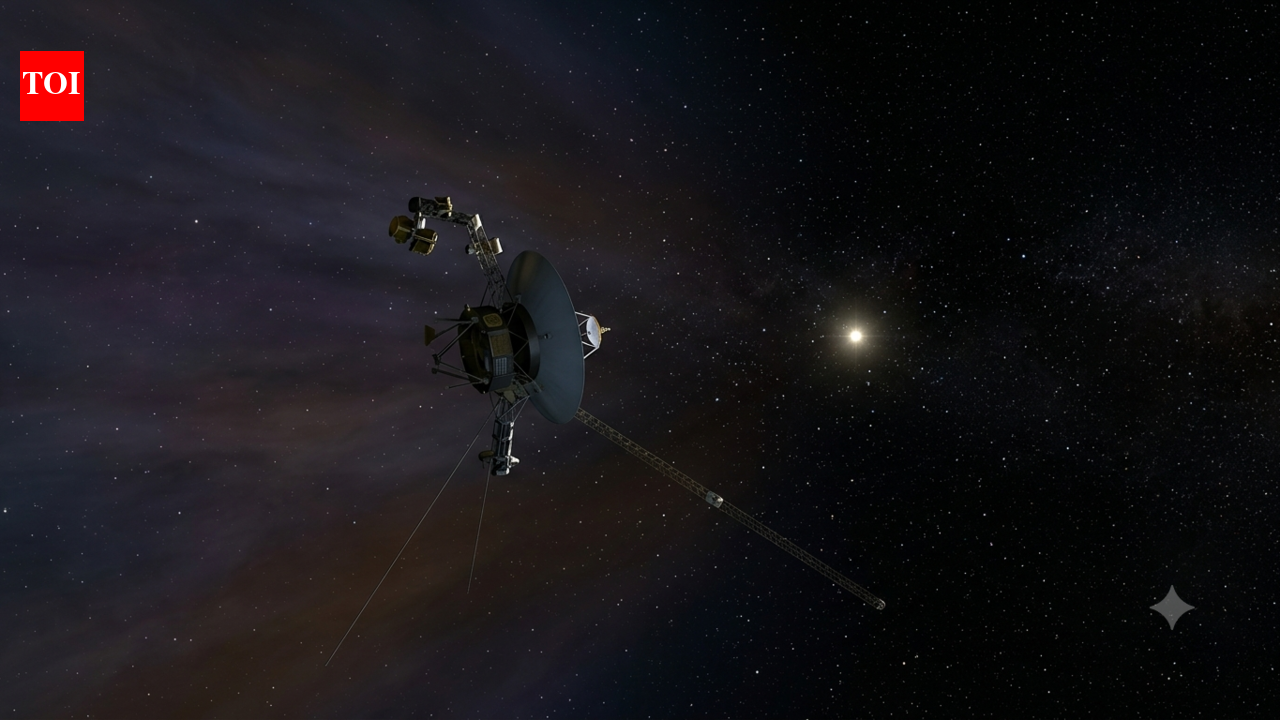
Representational photo of Voyager

When NASA launched Voyager 1 in September 1977, it was expected to explore the outer planets before continuing its journey into deep space. Nearly 49 years later, the spacecraft is still continues to send information back to Earth from about 25 billion kilometres away, making it the most distant human-made object ever built.The distance is difficult to imagine. Voyager 1 is now more than 170 times farther from the Sun than Earth is. Even light, which travels at around 300,000 kilometres every second, takes more than 22 hours to cover that distance.That also means talking to Voyager 1 is anything but quick. A command sent from Earth takes more than 22 hours to reach the spacecraft. Once Voyager 1 responds, the reply takes another 22 hours or more to get back. It means every exchange with the spacecraft takes almost two days.Because of the delay, NASA’s engineers cannot control the spacecraft in real time. They send commands, wait patiently, and only find out nearly two days later whether everything worked as planned.

Where no spacecraft reached before

In 2012, Voyager 1 made history by crossing the heliopause, the point where the Sun’s influence ends and the space between stars begins and became the first spacecraft to enter interstellar space. Although it is far beyond our solar system’s outer boundary, Voyager 1 has not stopped working. Two of its scientific instruments are still collecting information about the environment around the spacecraft. That data travels across billions of kilometres before reaching giant antennas on Earth, where scientists receive and study it.The signal is incredibly weak by the time it arrives. Even so, NASA is still able to detect it after its journey through space.
.

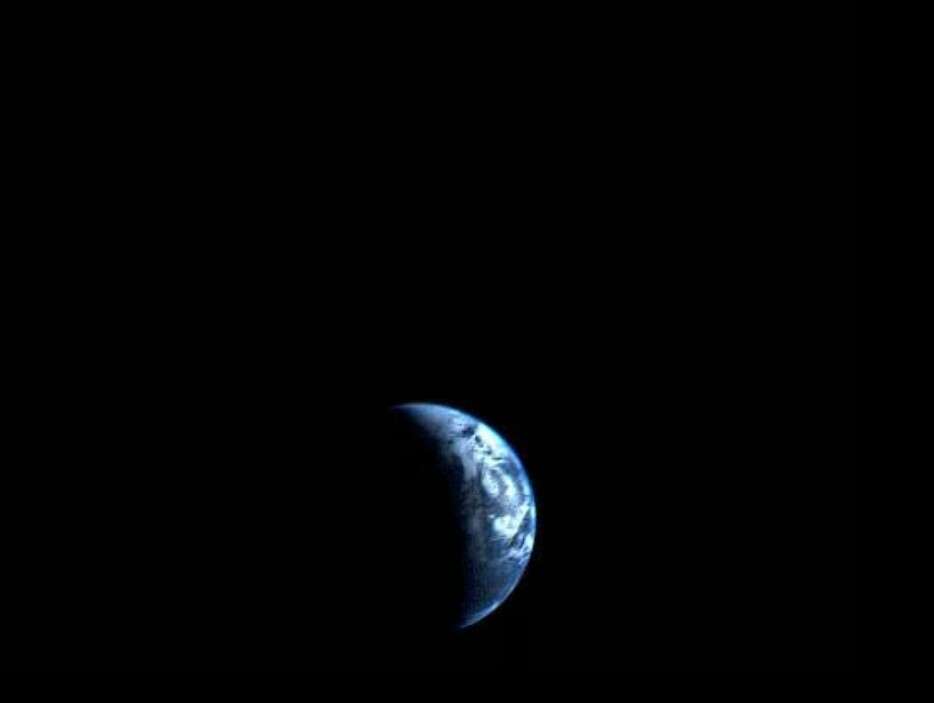
Earth’s picture taken by Voyager 1

What keeps Voyager going

One reason Voyager 1 has survived for so long is that it does not depend on sunlight for power. At such a great distance from the Sun, solar panels would not be useful anymore. Therefore, the spacecraft carries generators which have been powered by plutonium. The heat produced by them is converted into electricity, which Voyager 1 uses to keep operating even in the darkness of deep space.When Voyager 1 was launched, its power system produced about 470 watts of electricity. Today, that has fallen to around 230 watts. The amount of available power drops a little every year as the plutonium slowly decays.That may not sound like much electricity, but it has been enough to keep the spacecraft alive and sending messages across 25 billion kilometres.

NASA is making every watt count

The biggest challenge facing Voyager 1 today is not its distance from Earth but its shrinking power supply. To make electricity last as long as possible, NASA has been gradually switching off systems which are no longer needed. Over the years, scientists have powered off heaters and some scientific instruments so the spacecraft can continue sending data.In 2026, another detector was switched off to save power. NASA believes Voyager 1 may continue sending at least basic engineering data into the 2030s if the remaining power is managed carefully. However, as the years pass, more instruments will have to be turned off one by one.Voyager 1 is expected to reach another historic milestone around November 2026. By then, it will be about one light-day away from Earth. That means even a signal travelling at the speed of light will take a full 24 hours to reach the spacecraft. Go to Source


Hot this week

Scientists uncover how Moken sea nomads see underwater like dolphins

Image: Wikipedia For most people, opening their eyes underwater turns the world into a blur. The human eye is designed to focus light passing through air, and once submerged, much of that focusing power is lost. Read More

In 2001, scientists released beetles to fight an invasive tree. Years later, an endangered bird had lost 94% of its habitat along one western...

The breeding grounds of the Southwestern Willow Flycatcher stretch across thousands of kilometres of rivers and streams in the American Southwest, yet much of its habitat has long been difficult to assess in a consistent way. Read More

Amelia Dimoldenberg: I wouldn’t invite Andy Burnham on Chicken Shop Date – but I’d love a chat

Noor Nanji Culture correspondent 58 minutes ago Amelia Dimoldenberg is the queen of the deadpan silence. Read More

Mercedes-AMG E 53 Hybrid video review

The all-new Nissan Tekton enters one of India’s most competitive SUV segments, taking on rivals like the Hyundai Creta, Kia Seltos, Maruti Grand Vitara and more. Read More

Mercedes-AMG E53 Hybrid 4MATIC+ review: Current Affair

The Mercedes-AMG E53 Hybrid 4MATIC+ arrives at a time when performance cars are being asked to do more than simply go fast. Read More

Topics

Scientists uncover how Moken sea nomads see underwater like dolphins

Image: Wikipedia For most people, opening their eyes underwater turns the world into a blur. The human eye is designed to focus light passing through air, and once submerged, much of that focusing power is lost. Read More

In 2001, scientists released beetles to fight an invasive tree. Years later, an endangered bird had lost 94% of its habitat along one western...

The breeding grounds of the Southwestern Willow Flycatcher stretch across thousands of kilometres of rivers and streams in the American Southwest, yet much of its habitat has long been difficult to assess in a consistent way. Read More

Amelia Dimoldenberg: I wouldn’t invite Andy Burnham on Chicken Shop Date – but I’d love a chat

Noor Nanji Culture correspondent 58 minutes ago Amelia Dimoldenberg is the queen of the deadpan silence. Read More

Mercedes-AMG E 53 Hybrid video review

The all-new Nissan Tekton enters one of India’s most competitive SUV segments, taking on rivals like the Hyundai Creta, Kia Seltos, Maruti Grand Vitara and more. Read More

Mercedes-AMG E53 Hybrid 4MATIC+ review: Current Affair

The Mercedes-AMG E53 Hybrid 4MATIC+ arrives at a time when performance cars are being asked to do more than simply go fast. Read More

Aanand L Rai reveals why he chose not to be part of ‘Tumbbad 2’

Aanand L Rai reveals why he chose not to be part of ‘Tumbbad 2’: ‘Wo kahani jitni khoobsurat hoke wahaan pahuchi hui thi, main uske aage nahi jana chahta tha’ Filmmaker Aanand L Rai has finally addressed why Read More

Michael B. Jordan praises David Jonsson as MCU’s Black Panther

Michael B. Jordan praised David Jonsson’s casting as the next Black Panther, saying he “can’t wait” to see the actor lead Wakanda’s next chapter.Image credit : (Instagram) Michael B. Read More

Famous Cricketers Who Engaged In Political Protests During Their Youth

Cricket is often viewed as a sport strictly bound by tradition, codes of conduct, and administrative neutrality. However, the history of the game reveals a recurring intersection between elite athletes and grassroots socio-political activism. Read More

Related Articles