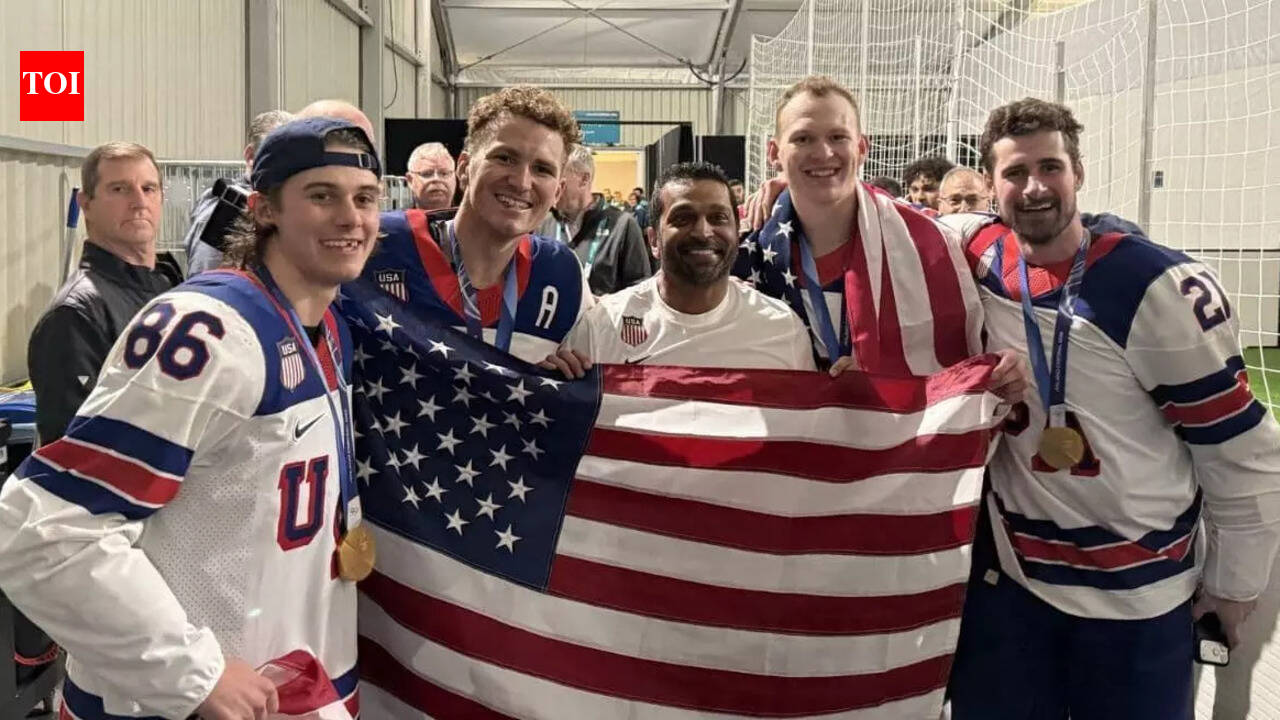


Kash Patel is the strangest Indian-American success story of his generation. Not because he runs the FBI. Plenty of Indian-origin figures now occupy the upper floors of American power. But because he got there without following the script that made those successes palatable, particularly for Indian-Americans.Over the years, it has emerged that Ivy Leagues were quietly de-ranking Indian applicants for being too studious, too narrow, not “well-rounded” enough. And yet today Kash Patel is one of the most unusual Indian-American figures around, though one could argue he is almost aggressively well-rounded as an American: he guzzles beer, appears on random podcasts, sells merchandise, flirted with conspiracy narratives before distancing himself from them, dates a country singer, and projects a public persona far removed from the model-minority stereotype. And he is in the news again, this time for celebrating inside the US Olympic hockey locker room after the country’s biggest triumph in the sport since the “Miracle on Ice,” when Team USA defeated the Soviet Union at the height of the Cold War. The match that triggered the controversy was itself historic and emotionally charged. The United States defeated Canada in a tense overtime final to win men’s Olympic hockey gold after decades, a victory steeped in rivalry and nationalism. US-Canada hockey contests have always carried symbolic weight because the sport sits at the core of Canadian identity while representing a powerful expression of American competitiveness. This particular victory came at a time of unusually sharp rhetoric between the two neighbours, with recent political taunts and economic tensions adding an unmistakable geopolitical undertone. In that sense, the celebration felt less like a routine sporting triumph and more like a moment of national assertion.
What’s the controversy
The backlash surrounding Patel is rooted almost entirely in optics and timing rather than legality.The videos of him cheering with players and briefly chugging beer surfaced on a day when US law-enforcement agencies were dealing with multiple high-pressure developments, including a shooting incident connected to a major political figure’s residence, security alerts affecting Americans abroad, and ongoing sensitive investigations. Critics argued that the image of the FBI director celebrating overseas during simultaneous crises created a perception problem, even though directors remain connected to secure communications regardless of location. He is known as a long-time hockey fan who plays recreationally himself and has been publicly associated with support for Team USA and NHL’s Washington Capitals (logical given DC base and past public appearances around them). You can safely phrase it generically as a devoted hockey fan without over-specifying.For supporters, the episode was a harmless moment of patriotic celebration. For critics, it reinforced a broader concern that Patel’s leadership style prioritises visibility and personal presence in ways that clash with the bureau’s traditionally restrained culture.
Why the match was politically charged
The political edge of the controversy cannot be separated from the nature of US-Canada hockey itself. Unlike most sporting rivalries, this one carries deep historical symbolism. Hockey functions almost as a national identity marker in Canada, while American victories over Canada often resonate as demonstrations of broader competitive dominance between two closely intertwined but unequal powers.Recent tensions between the two countries — ranging from trade disputes to unusually sharp political rhetoric — had already spilled into public discourse, making the Olympic final feel like more than a sporting contest. When the US prevailed in dramatic fashion, the celebration inevitably acquired nationalistic overtones that amplified scrutiny of any senior official seen visibly participating.
Patel’s other controversies
The locker-room episode fits into a broader pattern that has defined Patel’s tenure. Much of the criticism surrounding him has centred on optics rather than misconduct findings.Questions have repeatedly been raised about his travel practices, particularly trips that overlapped with personal engagements or leisure activities, even though the use of government aircraft is required for security reasons. Critics have also pointed to federal protection resources reportedly extended to his partner, an unusual arrangement by the standards of past FBI leadership.Inside the bureau, sections of career officials have remained uneasy with Patel’s highly political background and management approach. His aggressive push to investigate internal leaks, his emphasis on loyalty, and his confrontational public persona have created friction within an institution historically built on bureaucratic continuity and political neutrality.Taken together, these issues have produced a steady narrative of institutional discomfort that ensures even relatively minor public moments quickly escalate into national controversies.
Fealty to Trump
Patel’s relationship with Donald Trump is central to both his rise and the scrutiny surrounding him. He first gained national prominence during intense intelligence battles in Washington, where he became a key figure in efforts to challenge investigations linked to Trump’s presidency. His close alignment with Trump’s political worldview — including his combative rhetoric toward intelligence agencies and the media — set him apart from the traditional image of politically neutral law-enforcement leadership.To supporters, this loyalty represents ideological clarity and a willingness to challenge entrenched bureaucracies. To critics, it raises concerns about the politicisation of an institution historically designed to operate independently of partisan influence.
Flipping the Script – Minority on Ice
What truly sets Patel apart, however, is how completely he inverts the traditional Indian-American success template. For decades, the community’s rise in the United States followed a predictable formula: academic excellence, professional achievement in technical fields, political caution, and cultural restraint. Visibility was carefully managed and confrontation avoided. Patel represents the opposite trajectory. He entered public life through the rough edges of criminal defence, moved into fiercely partisan political battles, embraced ideological confrontation rather than consensus, and projected a public persona that is loud, culturally explicit, and unapologetically political. In doing so, he did not merely break the model-minority stereotype. He flipped it entirely — replacing the image of the quiet technocrat with that of a combative power player fully at ease inside America’s most polarised institutions.What makes the reaction even more revealing is how differently political leaders are usually treated when they publicly celebrate sport. Emmanuel Macron jumping onto the pitch after France’s World Cup triumph was framed as relatable leadership. Barack Obama filling out NCAA brackets became an annual ritual of presidential normalcy. British prime ministers routinely appear in football dressing rooms without controversy. In most democracies, proximity to sporting victory humanises power. With Patel, the same behaviour triggered institutional alarm. The difference lies not in the act itself but in who performed it: an immigrant-origin law-enforcement chief whose public persona already disrupts the expectations of restraint traditionally imposed on both FBI directors and Indian-American success stories.
The big picture
Kash Patel’s controversies ultimately reflect a deeper institutional and cultural tension.He leads an organisation built on norms of discretion, anonymity, and institutional distance while embodying a leadership style defined by visibility, political assertiveness, and social informality. That contrast ensures that actions considered routine for modern political figures attract far greater scrutiny when undertaken by the head of the FBI.At the same time, Patel’s trajectory signals a broader shift in the Indian-American narrative. For decades, success within the community was associated with technocratic excellence, low-profile professionalism, and careful cultural restraint. Patel represents a different archetype altogether: one that combines ethnic visibility, political combativeness, and unapologetic cultural confidence.In that sense, the controversy over a locker-room celebration is less about a single incident and more about a changing definition of immigrant power. Patel does not merely occupy elite American institutions. He looks entirely at ease wielding them — loudly, visibly, and without the quiet caution that once defined the model-minority script. Go to Source