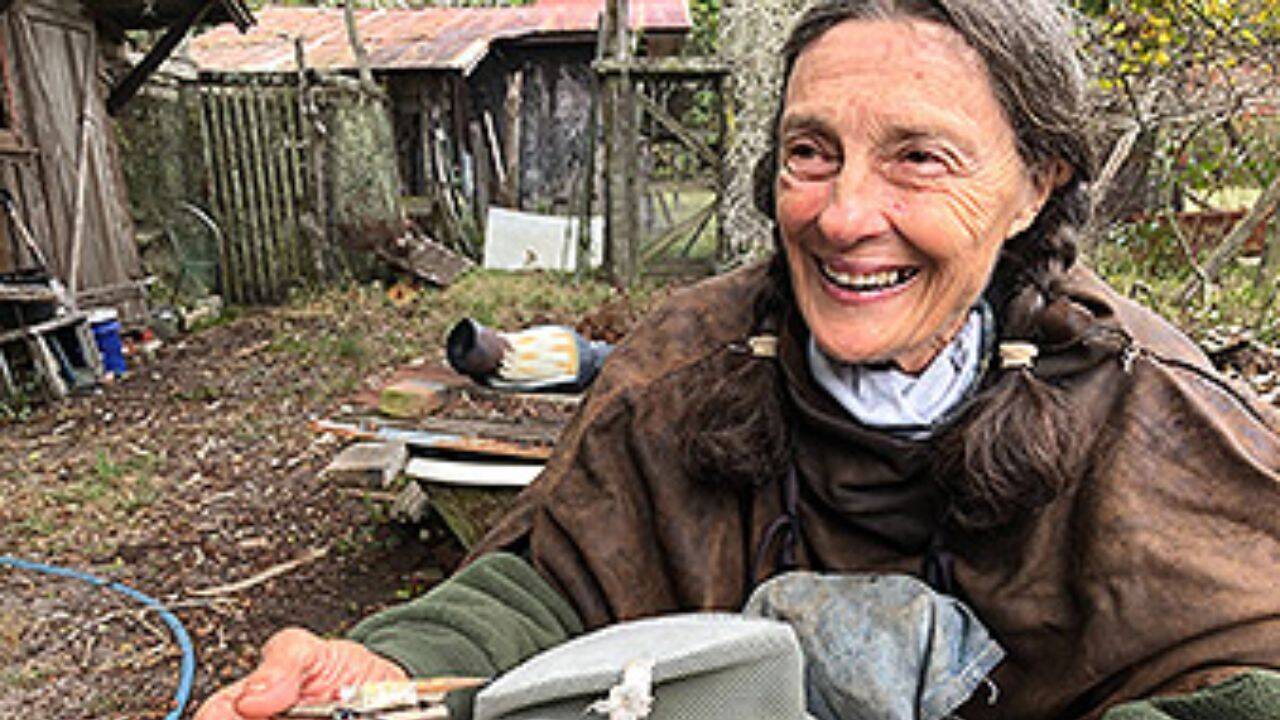

What would you do for the love of nature? Apparently, live on a remote island with no roads for 53 years, preserving it for the world. Every year, 84-year-old Carol Ruckdeschel walks along the beach on Cumberland Island, Georgia. Donning her white boots, hair in pigtail braids, she takes notes of her home in a field journal: spoonbills, sandwich terns, sea oats, moon snails, and more. Her morning has been the same for the past 5 decades and everyone knows.Ruckdeschel moved to Cumberland in 1973, and the ecologist and naturalist has been one of the only full-time residents on one of the Atlantic’s most remote and biodiverse barrier islands. She lives off the land and off the grid in an effort to preserve the wilderness for future travellers. Her research and fieldnotes are so thorough that they once inspired curators at the Smithsonian National Museum of Natural History to travel 700 miles south from Washington, D.C. to meet her in person, as per the BBC.
Cumberland: The remote island
Measuring more than 36,000 acres and located 18 miles north-east of Jacksonville, Florida, Cumberland is the largest and southernmost of the 14 barrier islands off Georgia’s Atlantic coast. It’s also among the least visited of the 10 National Seashores managed by the US National Park Service (NPS). The island has no paved roads, trash cans, stores or amenities. No cars are allowed on it and visitors bring what they need and take it back with them. But it is rich in biodiversity with seventeen miles of beaches lined with sand dunes where endangered shorebirds and four species of sea turtles nest.To help maintain the island’s wildness, a maximum of 300 visitors are permitted on the island every day. Every visit requires a reservation months in advance whether for taking the ferry, staying at the five campsites or at the sole inn on the island, Greyfield Inn.
A love for the wild
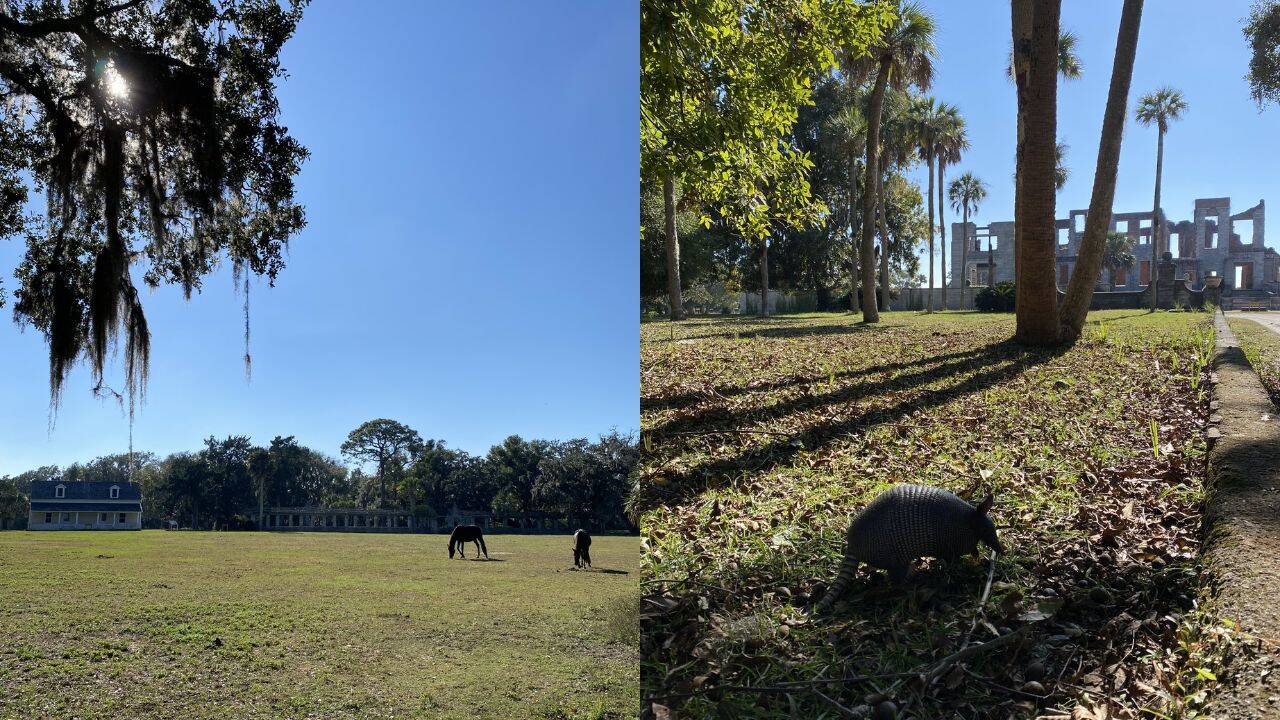
Cumberland is the largest and southernmost of the 14 barrier islands off Georgia’s Atlantic coast.
Unlike the elite who come to vacation on the island, Ruckdeschel’s arrival here wasn’t just for fun. She visited the island for the first time in 1960 as a 28-year-old biology researcher at Georgia State University. While she left, the island didn’t get out of her mind. “[I could] go walking off in the woods on the trails and be alone and hear silence,” she said to the BBC.Finally, in 1973, she left Atlanta and moved to Cumberland full-time taking a job as a caretaker at a friend’s family estate. The year before, the US government had designated the island as a protected National Seashore and began buying up all available parcels and plots and making deals with homeowners to transfer their properties to the park after they passed away. Over time, most of the island’s few residents passed away or left, leaving their heirs to use their properties as holiday homes.But in 1978, Ruckdeschel used up her savings to purchase one of the only structures the NPS hadn’t acquired yet, an abandoned wooden cabin on the island’s remote north end built by emancipated Black residents in the 1800s. During the next two years, she used driftwood and found materials to make it livable.Living away from the comforts and accessibility of civilisation is not easy, but the island is “priceless” to the biologist and she set out to learn everything about it. In the initial years, she learnt how to perform sea turtle surveys from a friend from a neighbouring island. She even monitored sea turtle hatches for the NPS, for a while.During her walks along the beach, she noticed that more and more dead sea turtles were washing up on shore. By completing a necropsy on each one, she discovered that many were drowning in shrimping trawlers and her findings led to a change in legislation and in net design. Over time, Ruckdeschel amassed one of the world’s largest collections of sea turtle skulls, shells and skeletal remains. For years, she housed them in the hand-hewn Cumberland Island Museum she built beside her house, with a lab, library and floor-to-ceiling shelving for the carefully catalogued specimens. This past autumn, Ruckdeschel transferred the collection to the NPS, and as of 2005, there are plans to display it at the Georgia Natural History Museum.
From the land, of the land
Surviving in the wilderness takes a lot, but Ruckdeschel is prepared. Along her cabin’s wood walls, rain barrels capture water for her outdoor shower. Her courtyard in the back is lined with scrap wood, stacked cooking pots, ceramic bathtubs where she cleans animal remains and five-gallon buckets. She also has a chicken coop outside. Interestingly, her place is just steps away from the First African Baptist Church where John F Kennedy Jr and Carolyn Bessette were wed in 1996.Ruckdeschel says it took years to develop her garden to the point that it could sustain her. “Everything over here that you need or want, you pay for one way or another,” Ruckdeschel says of life on the island. “I just happen to have paid in time.”Her meals on the island have ranged from boar, horse, possum, raccoon, armadillo and manta rays. She also grows grapefruit, lemon, loquat, tomatoes, okra, squash and other vegetables on her own. While she may make a rare visit to the mainland for groceries, for the most part she lives off the island itself.Over the decades she has lived here, people have tried to touch the land in the disguise of development. People have sought approval for expanded van tours, swapped parcels of land to allow for new development and even threatened to build a commercial spaceport on the mainland. But she has fought it all.Currently, she is fighting an arrangement between the NPS and wealthy landowners that would allow for the construction of new homes on the island. She’s also watching a pending NPS proposal that would raise the daily visitor limit on Cumberland from 300 to 750, expanding the presence of e‑bikes, and even developing concessions and new facilities. To her, these plans indicate “potential devastation.”Even at 84, she won’t stop fighting to protect her island home. “Without being aware of it, I slipped into this conservation mode,” she said. “I didn’t want to spend my time doing that. I just wanted to learn the island.”Today, Carol Ruckdeschel is better known as the ‘wildest woman in America’ or the ‘Jane Goodall of sea turtles.” Go to Source