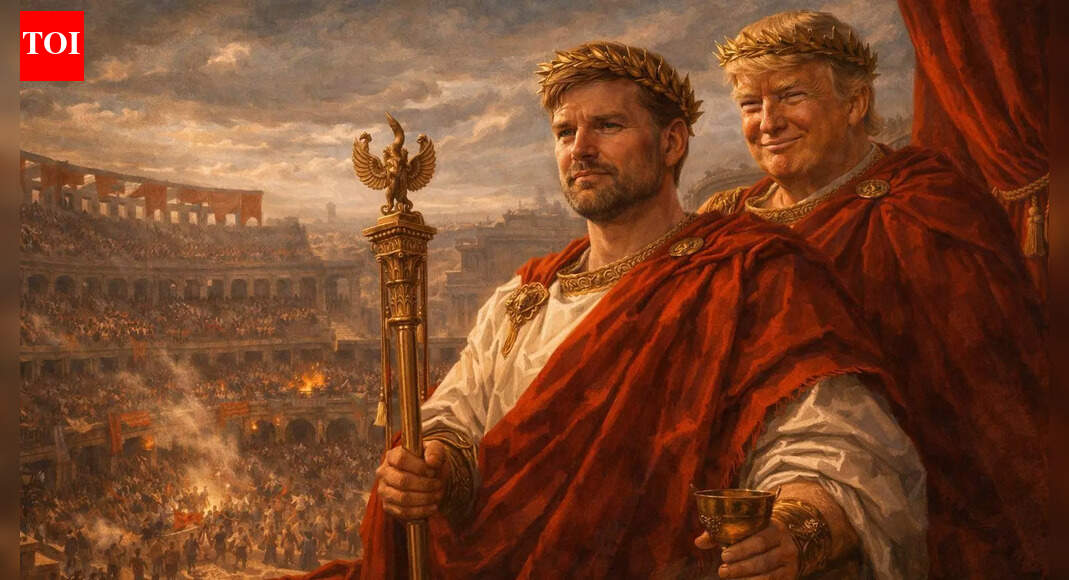

Sallust, the Roman historian and protégé of Julius Caesar, once warned of what happens to empires after the enemy is vanquished. Writing in Bellum Catilinae, he observed: “After the destruction of Carthage, when fear of a rival had been removed, fortune began to grow cruel. All the evils that prosperity fosters luxury, greed, arrogance flourished. For before that time, fear of the enemy had kept the state sound. When that fear was gone, pleasure and pride entered, and with them decay.”It is hard not to think of that passage a year after MAGA sauntered back into the White House. With Democrats weakened by their own internecine battles over identity, ideology, and leadership, the Republican coalition now finds itself confronting a similar danger. That Democratic weakness did not emerge in a vacuum. Over the past decade, the party allowed its most radical cultural positions to harden into doctrine, turning questions of gender identity, trans activism, and woke language into moral absolutes rather than contested policy debates. What began as a politics of inclusion increasingly felt like a politics of compulsion, alienating working-class voters, moderates, and even traditional liberals who felt policed rather than represented. By the time voters pushed back, Democrats had lost both the narrative and the electorate.Not electoral defeat, then, but internal decomposition now looms as MAGA’s central threat. Carthage is gone. And the fight has turned inward.Perhaps this was always inevitable. Donald Trump, an auteur of political instinct and stream-of-consciousness prophecy, foreshadowed it as early as 2017. “You are going to win so much,” he told supporters, “that you are going to get tired of winning.” MAGA, it turns out, may actually be tired of winning.That exhaustion burst into public view at Turning Point USA’s AmericaFest in Phoenix. Ostensibly convened to honour the slain conservative activist Charlie Kirk, the summit instead became a theatre of factional warfare. Nicki Minaj’s cameo barely registered as the main attraction. What mattered was the spectacle of a movement no longer united by opposition, now forced to argue with itself.Ben Shapiro accused fellow conservatives of cowardice and moral collapse. Tucker Carlson mocked the very idea of red lines. Steve Bannon denounced Shapiro as a cancer. Megyn Kelly returned fire. Candace Owens pushed conspiracy theories. Nick Fuentes loomed as an uninvited spectre. Vivek Ramaswamy challenged racial nationalism head-on. And Vice President JD Vance hovered uneasily, attempting to hold the coalition together.The scene resembled a WWE pay-per-view more than a political conference. The comparison is fitting. Trump remains the first WWE Hall of Famer to become President of the United States. Under those lights, MAGA’s rivalries stopped pretending to be philosophical disagreements. They became personal, racial, ideological, and existential. Winning had been easy. Succession will not be. So here’s a look at the battles now tearing through MAGA.
Who is an American?
The first fault line at the heart of the movement is an ironic one: the question of who counts as American. For years, liberal commentators dismissed MAGA as a fringe project, casually branding it “white supremacist,” a label so overused during the Peak Woke years that it lost analytical meaning. But within MAGA itself, the question has returned with force. In recent weeks, the phrase “Heritage American” has surfaced repeatedly, though it means different things to different people. For some, it refers to descendants of early European settlers, a bloodline-based claim to ownership of the country. For others, it describes anyone who buys into the American creed, regardless of ancestry. This latter view has been championed most forcefully by Vivek Ramaswamy, who has found himself the target of hostility from vocal nativists within MAGA.That hostility has been embodied by Nick Fuentes and his followers, who argue for a vision of America rooted in shared ancestry, religion, and race. Fuentes imagines a “true America” defined by lineage rather than belief, a worldview that has earned rebukes from mainstream conservatives but persistent oxygen in MAGA media ecosystems. His recent platforming by Tucker Carlson reignited this fault line.At AmericaFest, Ramaswamy and others took aim at pedigree-based patriotism, ridiculing the idea that citizenship could be inherited like property. They warned that blood-and-soil thinking would shrink the movement into irrelevance. America, they argued, was an idea, not an ethnicity.
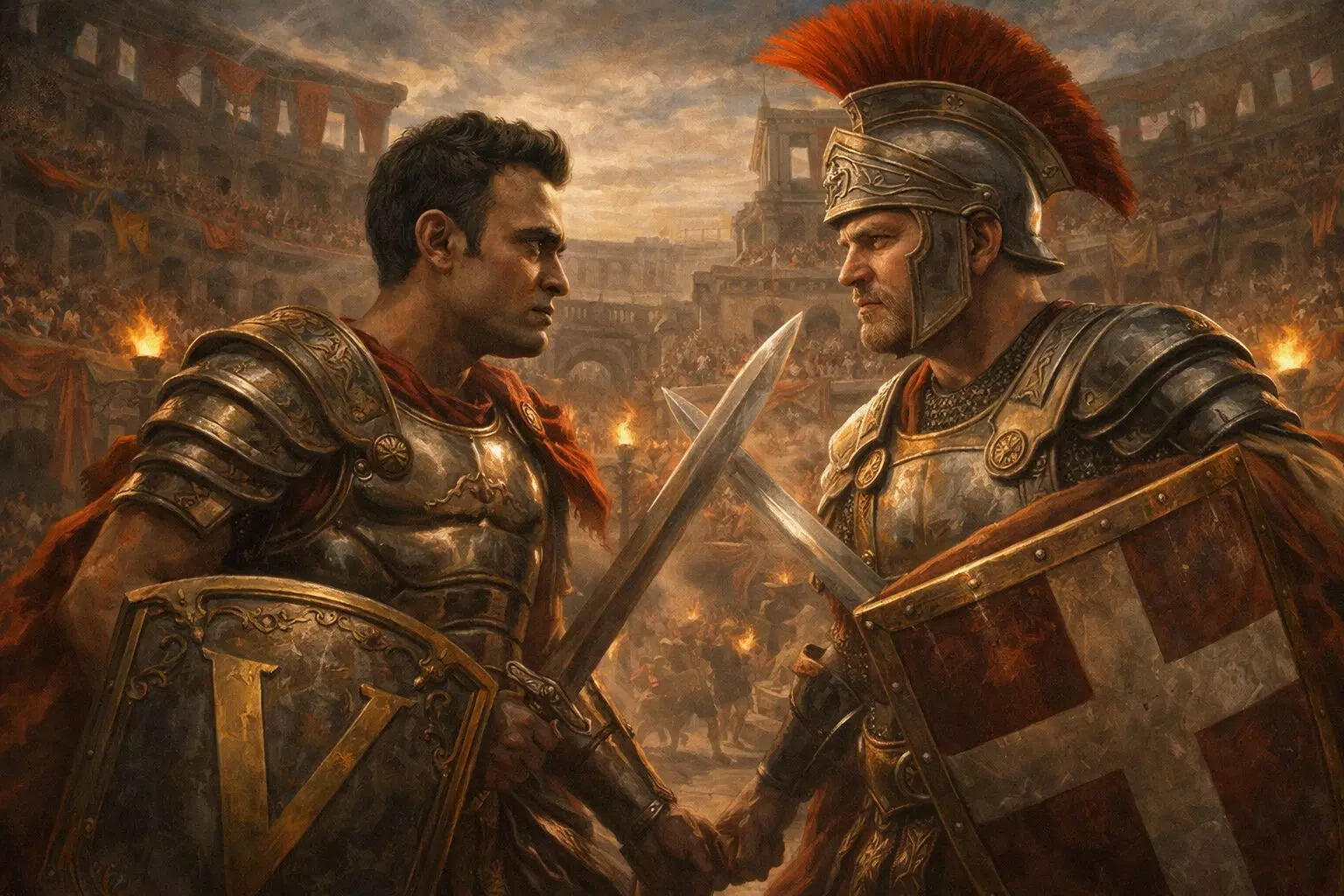
JD Vance, widely seen as Trump’s heir apparent, attempted to thread the needle. In public addresses, he insisted the tent was wide open. He framed loyalty to country as the only meaningful test of belonging, echoing Ramaswamy’s civic nationalism while carefully avoiding a frontal assault on MAGA’s nativist wing.Yet the tension was unmistakable. At earlier Turning Point campus events, young conservatives had described themselves as “100% Americans,” a euphemism for racial purity that mirrored Fuentes’s rhetoric. This undercurrent sat uneasily alongside speeches celebrating diversity and merit. One faction looked to 1776. Another quietly pined for a mythic white Christian republic.Even long-standing conservative figures felt the shock. Dinesh D’Souza, once paraded as evidence of the GOP’s inclusivity, became the target of racist abuse online. When a troll sneered that he was “not American” and “worthless,” the episode punctured a carefully maintained illusion. For decades, Republicans could point to figures like D’Souza or Nikki Haley as proof of tolerance. That veneer cracked quickly.The question remained unresolved. Ramaswamy argued for civic patriotism. Fuentes’s faction clung to ancestral purity. Vance tried to keep both in play. The big tent that once held Trump’s coalition together now looked dangerously stretched. The movement’s soul was no longer a settled matter.
MAGA vs racism

Those identity debates soon gave way to something darker. For all the talk of unity, MAGA’s leaders were forced to confront an uncomfortable reality: parts of the base were indulging openly in bigotry.For Jewish Americans, the warning signs were impossible to ignore. Anti-Semitic conspiracy theories crept into MAGA discourse, amplified by social media and figures like Fuentes. At AmericaFest, questions about Israel and Jews became flashpoints. Ben Shapiro publicly condemned Tucker Carlson for interviewing Fuentes and criticised fellow conservatives for refusing to confront what they were normalising.Yet the dominant response within MAGA was defensive. Many dismissed the controversy as a media fabrication designed to divide Republicans. Calls to confront extremism were framed as purity tests. The message was consistent: yes, fringe actors exist, but talking about them only helps the left.In practice, this translated into a collective shrug. Leaders pointed to economic revival and border security as higher priorities, framing concerns about racism as distractions. Even Ramaswamy cautioned against importing victimhood culture from the left into conservative politics. Unity, above all else, was the demand.Privately, discomfort lingered. Some Republican figures admitted unease with the slurs circulating in MAGA spaces but declined to confront them publicly. Jewish conservatives noted the awkward choice between ignoring anti-Semitism and fracturing the coalition. Others observed how quickly the party celebrated Indian-American appointees, only to fall silent when Indian-born conservatives were attacked. Inclusivity was proclaimed from the stage, even as prejudice thrived beneath it.MAGA’s response to internal bigotry thus became a mix of deflection and delay: insisting the tent remains big, while hoping the reckoning can be postponed.
JD Vance tries to keep the show running
Amid the chaos, JD Vance emerged as the movement’s would-be stabiliser. Since Trump’s return to power, Vance has been widely viewed as the anointed successor. Turning Point’s leadership openly endorsed him for 2028, and Trump himself has praised him effusively. But inheriting the movement also means inheriting its contradictions.At AmericaFest, Vance played peacemaker in chief. Every appearance was calibrated to reassure a fractious audience. When he took the stage, his rhetoric was inclusive but tactical. He spoke of open debate, rejected calls for de-platforming, and reiterated his promise of a wide tent.At the same time, he wrapped that inclusivity in familiar MAGA themes. He praised Trump’s accomplishments, invoked faith and family, and reaffirmed support for tariffs and immigration enforcement. Economic nationalists heard toughness. Evangelicals heard reverence. Moderates heard restraint. His message was a carefully assembled coalition in miniature.When pressed on sensitive issues, Vance leaned into ambiguity. Asked about conspiratorial rhetoric, he called for understanding and moving on. Questioned about foreign policy, he framed alliances strictly in terms of American interest. He echoed Trump’s insistence that the greatest threats to the nation are internal, while avoiding any explicit endorsement of racial grievance.The strategy was obvious. Vance sought to be everything to everyone, postponing hard choices in the name of cohesion. It is a familiar political move, and a risky one. A coalition held together by postponement eventually demands decisions, not reassurance. Sallust’s warning looms over the moment. In old empires, victory often bred decay. Trump conquered the battlefield. Now comes the harder task: governing the aftermath, disciplining allies, and defining what the victory was for. Rome did not fall when Carthage stood across the sea. Rome began to rot when Carthage was gone. Go to Source