
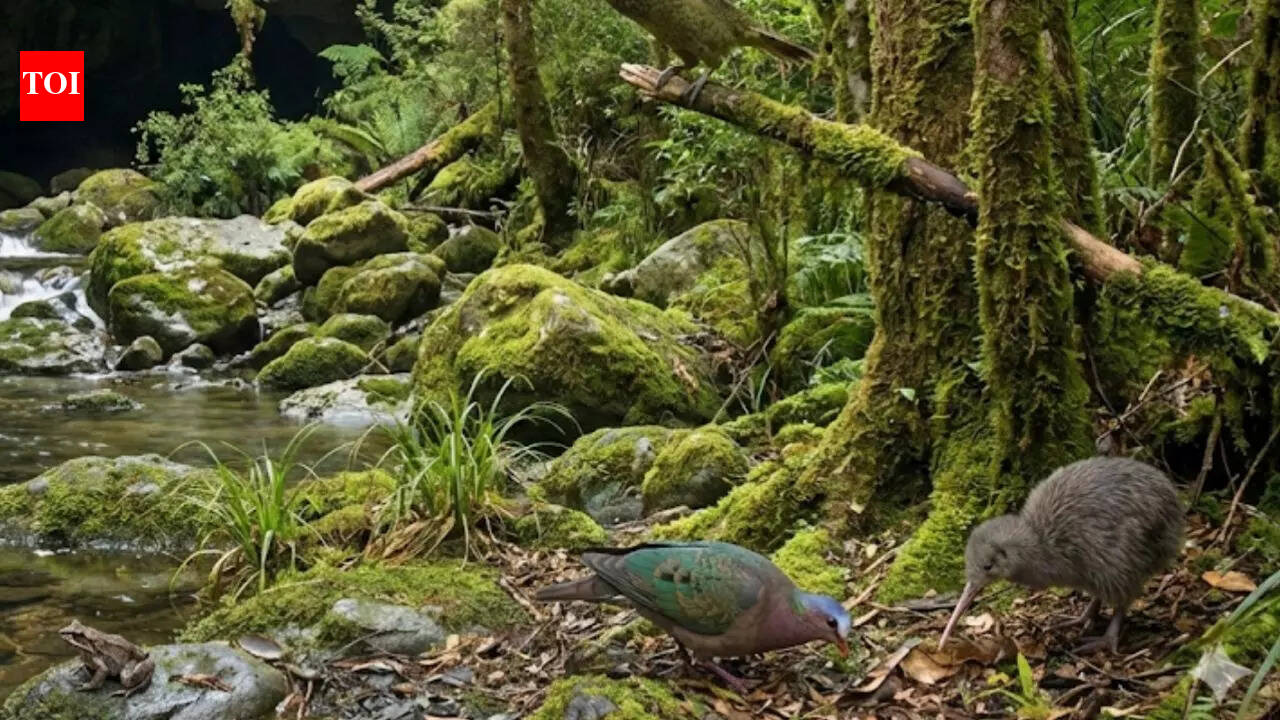

Source: Canterbury Museum
For a long time, New Zealand’s ancient past felt incomplete. Bits and pieces here and there. A few fossils. Large gaps. Now, a cave near Waitomo on the North Island has quietly changed that picture. Inside it, scientists have uncovered the remains of wildlife that lived around one million years ago. It feels like stumbling into a forgotten chapter or maybe a whole missing book. The fossils suggest Aotearoa once supported ecosystems very different from what we see today. Dense forests. Shifting climates. Violent eruptions. Long before humans ever arrived, nature was already reshaping life here in dramatic ways.
Budget 2026
The oldest cave in New Zealand reveals precisely dated ancient wildlife
The cave itself is part of the surprise. Researchers say it appears to be the oldest known cave yet found on New Zealand’s North Island. That alone raised eyebrows.What made it so valuable, though, was timing. The fossils were trapped between two layers of volcanic ash. One from an eruption roughly 1.55 million years ago. Another from a massive blast around 1 million years ago. That sandwich of ash gave scientists something rare. Precise dates. Most ash from eruptions gets washed away over time. And inside, the remains of at least 12 bird species and four frog species were waiting.
Ancient New Zealand wildlife reveals cycles of extinction and renewal
The fossils offer a glimpse of New Zealand as it looked long before people. Experts say it seems the country’s wildlife was already going through cycles of loss and renewal. Species disappearing. According to the research, published in Alcheringa, titled The first Early Pleistocene (ca 1 Ma) fossil terrestrial vertebrate fauna from a cave in New Zealand reveals substantial avifaunal turnover in the last million years, as many as a third to half of species may have gone extinct in the million years before humans arrived. That’s a striking number.Associate Professor Trevor Worthy from Flinders University says this was a completely different avifauna. Not just older versions of modern birds. A distinct community that didn’t make it through the next stretch of time. It suggests extinction wasn’t an exception back then. It was part of the rhythm.
Volcanic eruptions and climate shifts drove ancient extinctions
So what caused all this turnover? The evidence points to nature itself. Rapid climate shifts. Repeated volcanic eruptions. Some of them are enormous. One eruption, around a million years ago, reportedly covered much of the North Island in metres of ash. Forests would have vanished. Food sources are gone. Habitats were erased almost overnight.Dr Paul Scofield from Canterbury Museum describes it as a kind of reset. Forests are turning to shrubland. Then back again. Birds forced to adapt or vanish. It’s not hard to imagine how brutal that would have been.
Ancient Kākāpō ancestor hints at lost bird diversity
One of the most intriguing discoveries is a new parrot species named Strigops insulaborealis. It’s an ancient relative of today’s Kākāpō, the heavy, flightless parrot that has become a symbol of conservation in New Zealand. This ancestor appears different. Lighter build. Weaker legs. Researchers say it might have been able to fly. Or at least fly better than its modern descendant.That idea alone is fascinating. The Kākāpō we know today feels almost prehistoric already. Seeing it as the result of long-term adaptation, rather than a strange outlier, reframes its story. The cave also revealed an extinct ancestor of the Takahē and a pigeon closely related to Australian bronzewing pigeons. Subtle hints of how connected ecosystems once were. Go to Source

