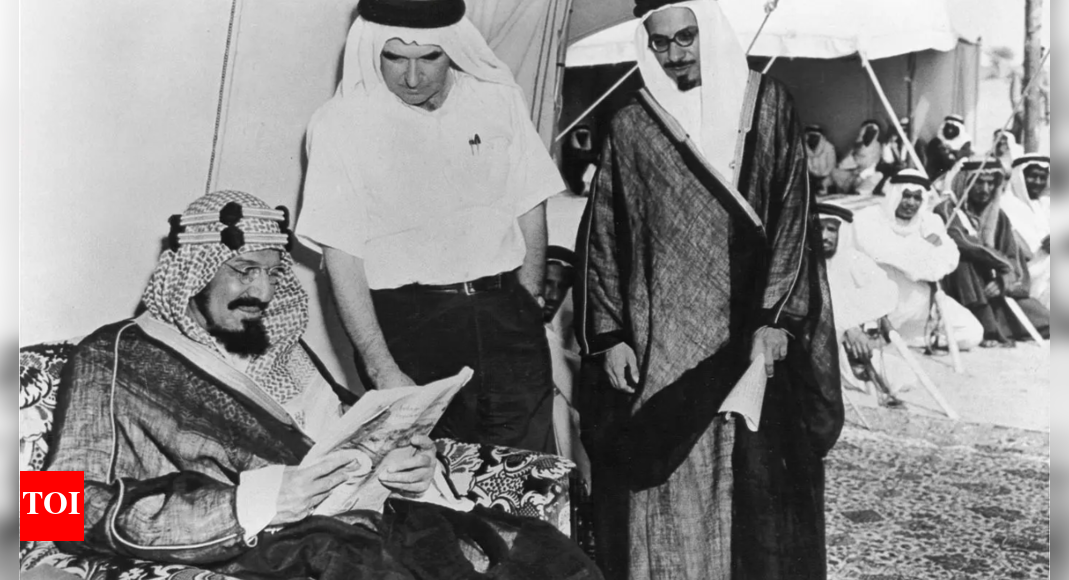

King Abdulaziz: The visionary founder who united Saudi Arabia and laid the groundwork for its modern success/Image: SPA
King Abdulaziz bin Abdulrahman Al Saud, the founder of modern Saudi Arabia, was not only a unifier of tribes and territories but also a statesman of deep intellect, cultural appreciation, and enduring strategic foresight. As the Kingdom commemorates its 95th National Day, his legacy continues to be studied, not just in the context of nation-building, but also for the values and systems he rooted in Saudi society — education, governance, diplomacy, and cultural development.
King Abdulaziz and the foundations of national progress
King Abdulaziz began shaping the modern Saudi state by focusing on infrastructure and basic services that could support a unified nation. Under his leadership:
- Roads and communication systems were built to improve connectivity across the vast Arabian Peninsula.
- Modern technology was introduced gradually, setting the stage for later advancements.
- Essential sectors like healthcare, agriculture, and education received early attention, creating the groundwork for national development.
Despite never traveling beyond the Arab world, King Abdulaziz displayed a deep understanding of international relations. He met with numerous foreign leaders and diplomats, earning their admiration for his:
- Direct and candid communication style, which avoided diplomatic formality.
- Unshakable personal integrity, regardless of whether he was addressing a tribal leader or a global statesman.
- Consistency in honoring commitments, contributing to his reputation as a trustworthy and principled leader.
The monarch also placed significant importance on education and intellectual growth. Even during the nation’s unification phase, he emphasized that the future of the Kingdom would depend on an educated and responsible generation. In a notable 1931 address to students, he remarked that “knowledge without action is like a tree without fruit,” urging youth to pursue excellence and take pride in their contributions to society.King Abdulaziz’s personal dedication to knowledge was evident in his:
- Private library of over 3,000 books, including rare and significant Arabic and Islamic law texts.
- Efforts to print and distribute books at his own expense, making them accessible to libraries and institutions.
- Hosting of scholarly sessions at his palace after each Hajj season, where religious and intellectual discussions were held with scholars and dignitaries.
Recognizing the importance of spreading knowledge across society, he also played a key role in developing the publishing sector:
- Regulations for publications were introduced in 1928 and 1939, helping shape the legal foundation for press freedom and responsibility.
- Printing press imports were exempted from customs duties, encouraging the growth of local publishing industries.
- The Umm Al-Qura government press, established in Makkah, became a central institution. It published official documents, school materials, and newspapers, and is credited with sparking an intellectual renaissance in the Kingdom.
During his reign, around 100 books were printed and distributed, totaling over 100,000 copies, with some translated into non-Arabic languages — a remarkable output for a newly unified nation.
King Abdulaziz’s diplomatic reputation and enduring legacy
Throughout his reign, King Abdulaziz left a lasting impression on observers both within the Arab world and abroad. His unique combination of humility, strength, and clarity of vision resonated with foreign dignitaries, regional leaders, and his own people.Admiration from foreign observersBritish explorer and political advisor John Philby, who spent years in the Arabian Peninsula, described King Abdulaziz as a leader of rare vision and resilience. Philby highlighted his determination not just to build a nation, but to ground it in faith, social order, and lasting institutions.Similarly, American diplomats visiting Saudi Arabia during the 1930s and 1940s noted his commanding presence and strategic thinking. Despite his simple lifestyle, they were impressed by his diplomatic skill, hospitality, and the loyalty he inspired across tribal and regional divides. Reports sent to Washington emphasized his ability to negotiate firmly yet respectfully, underscoring his role as a statesman of global interest.Regional recognition in the Arab worldIn the Arab world, King Abdulaziz was recognized as a restorer of dignity and stability. During a time when much of the region was under colonial strain, his success in uniting diverse tribes into one sovereign state was hailed as a rare and transformative achievement.Arab intellectuals and leaders saw in him a protector of Islamic identity and a model of regional leadership. His success in state-building was viewed as not only political but deeply cultural and religious in essence.Cultural legacy and poetic tributesIn Saudi Arabia, poets preserved the memory of King Abdulaziz through verses that celebrated his qualities:
- Courage in battle
- Generosity to his people
- Justice in governance
- Wisdom in decision-making
These poems, often recited in traditional gatherings, served both as cultural records and as tributes to a leader who restored order after years of conflict.Testimonials from international statesmenWorld leaders who met King Abdulaziz during his later years often commented on the blend of humility and authority that defined his persona. Though physically imposing and visibly marked by past battles, he spoke with measured clarity and purpose.His reputation for keeping promises and honoring diplomatic agreements became a cornerstone of his international legacy. Whether engaging with neighboring rulers or Western governments, his word was viewed as binding — a quality that set him apart on the world stage.Words that outlive deedsCustodian of the Two Holy Mosques, King Salman bin Abdulaziz, once noted that King Abdulaziz’s legacy extends beyond his political victories and includes the humanitarian and intellectual character he embodied.Today, as Saudis mark their National Day, the legacy of King Abdulaziz is not confined to state institutions or historical chronicles. It lives on in the memories of those who met him, the writings of those who studied him, and the testimonies of people who saw in him a leader destined to shape history. Go to Source