
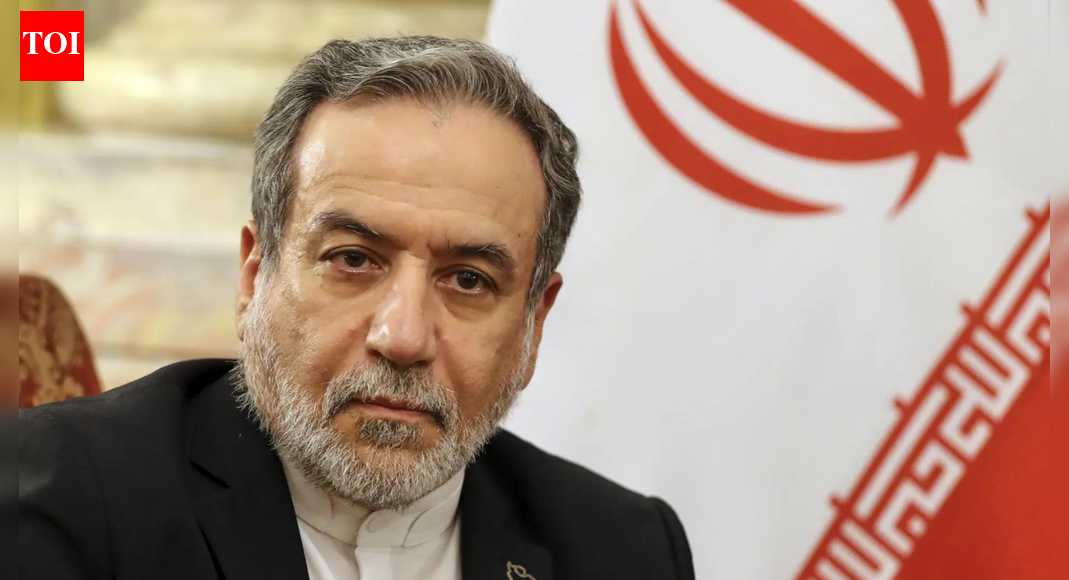

File photo: Iran’s foreign minister Abbas Araghchi (Picture credit: AP)
Iran’s foreign minister on Friday accused the United States and Israel of actively fuelling the growing protest movement in the country, while dismissing the likelihood of direct foreign military intervention despite US warnings over crackdowns on demonstrators..Speaking during a visit to Lebanon, Iranian foreign minister Abbas Araghchi said the protests were being influenced by foreign actors.“This is what the Americans and Israelis have stated, that they are directly intervening in the protests in Iran,” Araghchi said. He alleged that the two countries were attempting to escalate the unrest. “They are trying to transform the peaceful protests into divisive and violent ones,” he added.Araghchi also played down fears of a foreign military response, despite repeated threats from US President Donald Trump. “Regarding the possibility of seeing military intervention against Iran, we believe there is a low possibility of this because their previous attempts were total failures,” he said, as quoted by news agency AFP.His remarks come as Iran braces for a harsher crackdown on protests that erupted late last month over the country’s deteriorating economy and the collapse of its currency, and have since evolved into the most serious challenge to the Islamic Republic in several years. According to the US-based Human Rights Activists News Agency, at least 62 people have been killed and more than 2,300 detained so far, reported news agency AP.Iranian authorities have openly signalled a tough response. Supreme Leader Ayatollah Ali Khamenei on Friday dismissed Trump’s support for the protesters, accusing him of having hands “stained with the blood of Iranians”, as per AP. State media has repeatedly referred to demonstrators as ‘terrorists’, setting the stage for a violent crackdown.Iran’s judiciary chief Gholamhossein Mohseni-Ejei warned that punishment for protesters would be “decisive, maximum and without any legal leniency”. Iranian state media has also alleged that “terrorist agents” linked to the US and Israel were behind acts of arson and violence during demonstrations.According to analysts cited by AP, the unrest intensified after calls by Iran’s exiled former crown prince, Reza Pahlavi, for people to take to the streets. Following overnight protests earlier this week, Iranian authorities imposed a nationwide internet and international phone blackout, cutting the country off from the outside world. Activists say the blackout has made it harder to assess the scale of the protests and may have provided cover for security forces to act more forcefully.Trump has repeatedly warned Tehran that the United States would “come to the rescue” of protesters if they were violently suppressed. In recent interviews, Trump reiterated that Iran had been warned strongly against killing peaceful demonstrators.

