
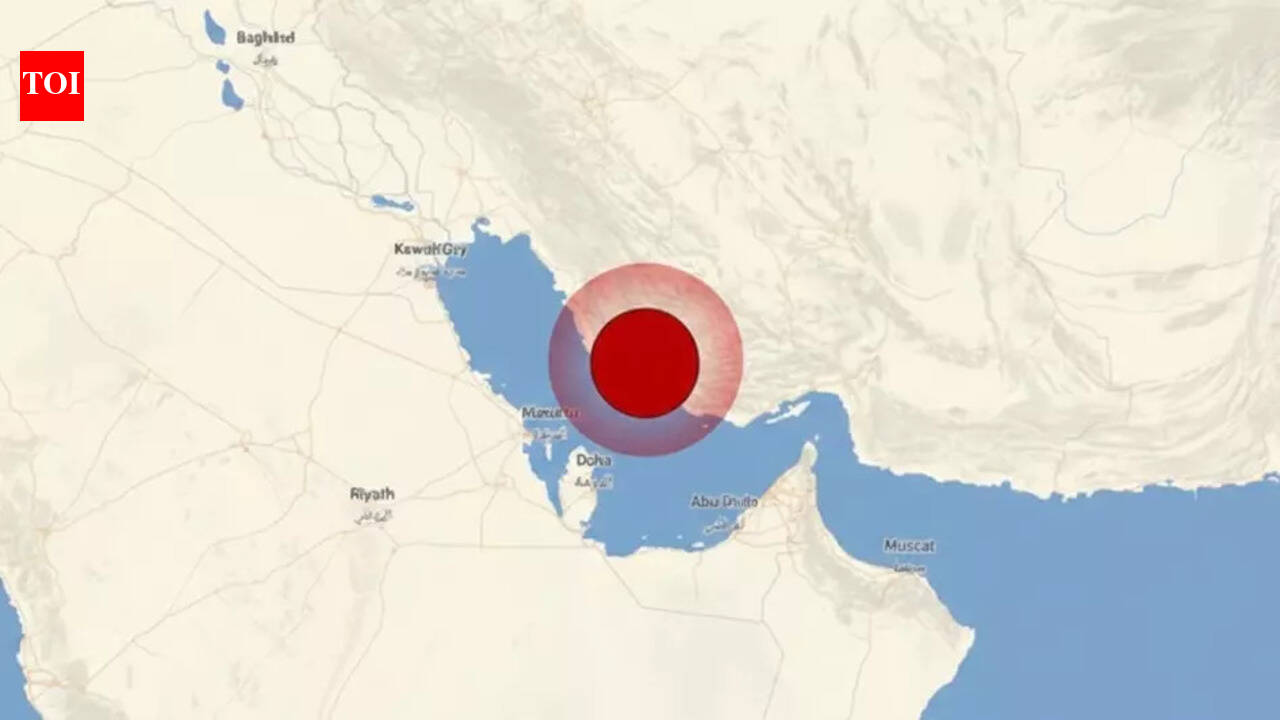


Strong 5.3 Earthquake Hits Iran on Feb 1 / Image: @ncmuae
A moderate earthquake measuring 5.3 on the Richter scale struck southern Iran on the morning of Sunday, February 1, 2026. The seismic event was recorded at 8:11 AM UAE time by the National Seismic Network, part of the National Center of Meteorology (NCM). While the magnitude was significant enough to be classified as a “moderate” quake, its location and depth played a crucial role in how the energy dispersed across the region. According to official data, the quake originated at a depth of 10 kilometers, a common depth for tectonic activity in the Iranian plateau, which often acts as a buffer for the neighboring Arabian Peninsula. Official statements from the Iranian Seismological Center and local provincial governors confirmed that there were no deaths or serious injuries resulting from the tremor.
Budget 2026
Reports from Mohr and nearby villages like Bidkhun and Akhand indicated only “cosmetic” damage. This included broken windows, objects falling from shelves, and minor hairline cracks in some older mud-brick structures. The shaking caused a brief moment of panic, with many people rushing out of their homes into open spaces, a standard safety protocol in earthquake-prone Iran.
UAE remained unaffected
Despite the tremor’s proximity, residents across the Emirates, from the high-rises of Dubai to the coastal areas of Ras Al Khaimah, did not feel any vibration. The National Center of Meteorology (NCM) issued a swift statement confirming that the earthquake had “no effect in the UAE.”
- Distance & Depth: The epicenter was located far enough across the Arabian Gulf that the seismic waves lost intensity before reaching UAE shores.
- Tectonic Shielding: The UAE sits on a relatively stable part of the Arabian Plate, which helps dampen the impact of quakes originating from the more active fault lines in Iran.
- Zero Aftershocks Felt: While southern Iran may experience minor aftershocks, the NCM has assured the public that these are unlikely to be felt within the country.
The UAE’s ability to stay calm during such events is largely due to the high-tech monitoring systems managed by the Ministry of Presidential Affairs. The NCM operates a sophisticated 24/7 National Seismic Network that can detect even the slightest underground shifts in real-time. This allows authorities to provide immediate and accurate information, preventing the spread of rumors or unnecessary panic.The NCM emphasized that their station monitors local and regional seismic activity around the clock to ensure that any potential threat, however small, is communicated to the public instantly.
Looking ahead
For the common resident, the “impact” was essentially non-existent. Morning routines, Sunday commutes, and weekend activities continued without interruption. Unlike previous years where larger quakes in Iran caused swaying chandeliers and brief evacuations in Sharjah or Dubai, this 5.3 magnitude event passed by unnoticed by the general public. It serves as a reminder of the region’s geography but also highlights the robustness of the UAE’s infrastructure and its advanced early-warning capabilities, ensuring that “business as usual” remains the status quo even when the earth shakes nearby.