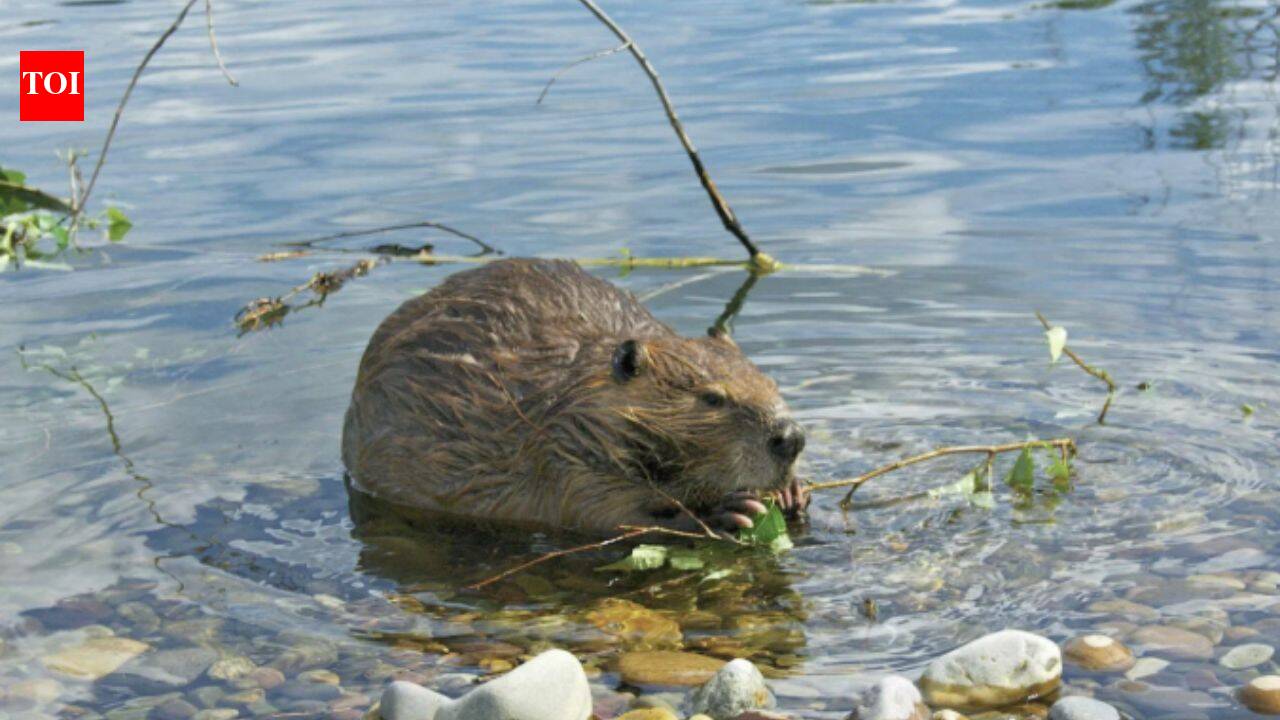

More than 40 years after the Mount St. Helens eruption buried a Washington river valley under volcanic sediment, 58 relocated beavers have helped restore the damaged landscape. (Representational AP photo)
More than four decades after the 1980 eruption of Mount St Helens, one family in the US state of Washington has watched a damaged landscape slowly come back to life. The change did not happen because of heavy machinery or large restoration projects. It happened with the help of beavers.For years, the land behind Mark Smith’s Eco Park Resort looked almost lifeless. Thick volcanic sediment covered the North Fork Toutle River after the eruption, making it difficult for plants, fish and wildlife to return. Smith and his family even called that part of their property the wasteland.But over the past five years, the return of nearly 60 beavers has transformed the area. Their dams, canals and lodges have created wetlands, deeper pools and new habitats that have allowed native plants and animals to return. According to Mongabay, the recovery could be reversed by a planned government project that might bury the restored habitat under more sediment.
Buried by volcanic ash
The eruption of Mount St Helens in 1980 sent huge amounts of volcanic ash, rock and mud into the North Fork Toutle River. Years later, the US Army Corps of Engineers built a Sediment Retention Structure (SRS) downstream to stop sediment from reaching the Columbia River and nearby communities. The structure was built in 1989 and later raised in 2013. While it helped reduce flood risks downstream, it also caused volcanic sediment to build up upstream, including along the Smith family’s land. After the structure was raised, the area changed dramatically.Smith runs the nearly 80-acre Eco Park Resort, located along the Spirit Lake Memorial Highway. Because it is one of the closest places to stay near Mount St. Helens, the resort often hosts scientists, restoration experts and researchers studying the area.Those visits eventually introduced Smith to experts working on beaver restoration projects across Cowlitz County.
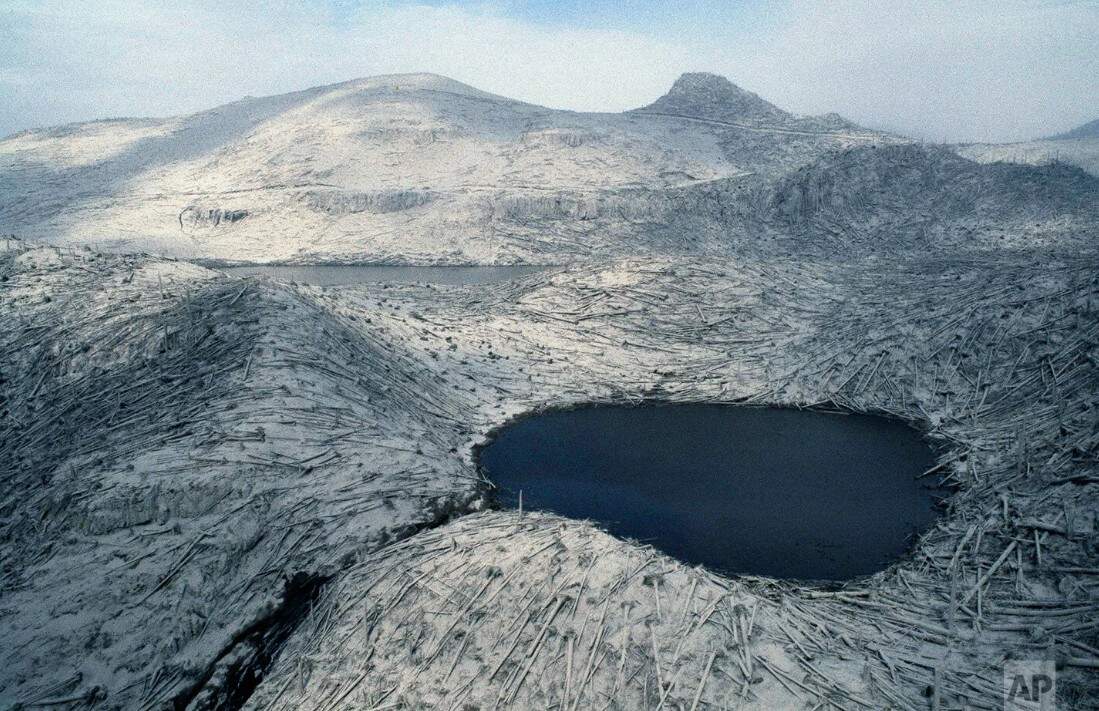
Denuded trees lay like matchsticks in the changed landscape around Mount St. Helens, Wash., shown two days after eruption, May 1980. (AP Photo)
The beavers
When conservation groups asked whether he would allow beavers to be released on his property, Smith agreed.In 2021, the property hosted a training programme organised with River Restoration Northwest. Scientists and restoration workers discussed how beavers act as ecosystem engineers, how to identify suitable habitat for them and how to build structures that encourage beavers to settle.After receiving approval from the state, natural resource experts from the Cascade Tribe, Cascade Forest Conservancy, Columbia Fish Recovery Group and the Cowlitz Indian Tribe began relocating beavers to the property.
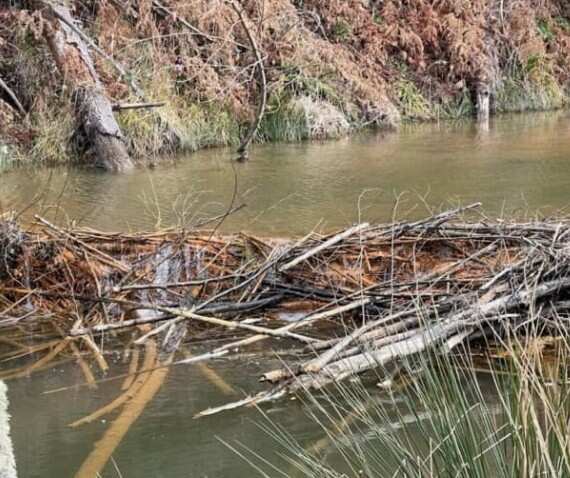
This dam was built on the North Fork Toutle River by the beavers released on the Smiths’ property. (Picture: Mark Smith, Mongbay.com)
The transformation
Over the last five years, Mark and Dawn Smith, along with their daughters Cheyenne and Kristin and Kristin’s children, have helped relocate 58 beavers to Eco Park Resort.Some stayed on the property, while others spread through connected waterways and settled on nearby land.The impact was quickly visible. The beavers built dams that slowed the flow of water. They dug canals that spread across the landscape, creating what Smith described as ‘honeycombs’ of connected waterways. Existing ponds became deeper, while new wetlands formed where there had once been dry volcanic sediment.Native vegetation also began returning. Smith said willow and alder trees started growing again in places that had remained buried under sediment for years.As the wetlands expanded, more wildlife followed. Ducks, geese, deer and elk gradually returned to the property. The ponds created by the beavers also became nursery areas for fish, including rainbow trout, Chinook salmon and coho salmon.
Restoration at risk
Earlier this year, the US Army Corps of Engineers announced plans to raise the spillway crest of the Sediment Retention Structure by another 10 feet.In a statement to Mongabay, the agency said the work is needed to reduce flood risks for downstream communities.”If left unmanaged, that sediment could raise riverbeds, reduce river capacity, and increase the likelihood of flooding to homes, farms, roads, businesses, and public infrastructure,” the statement said.Smith believes the project could undo years of restoration work. He said more sediment would bury the wetlands created by the beavers and damage habitat used by native fish, and argues that the structure blocks fish movement along the river.Smith said he plans to file a lawsuit against the US Army Corps of Engineers, arguing that nature-based solutions such as beaver restoration should play a greater role in managing sediment while protecting communities from floods. Go to Source