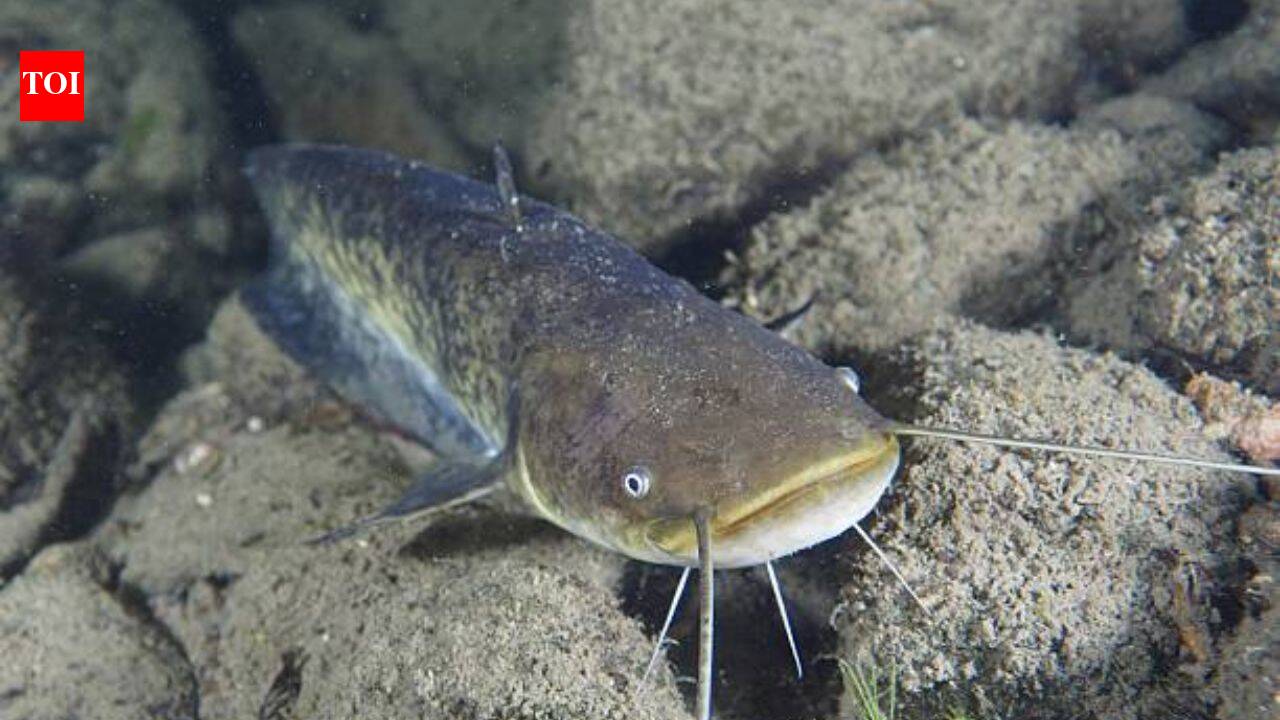

German biologist and recreational fisherman Roland Lorkowsky released thousands of juvenile Wels catfish into Spain’s Ebro River in 1974. His goal was simple and positive: to create a world-class sport fishery by introducing one of Europe’s biggest freshwater fish. But today, the Wels catfish has become one of the dominant predators in many Spanish waterways. While they swim as the ultimate trophy catch for the sport fishermen, for conservationists these swimmers pose an ecological threat.
Europe’s freshwater king
The Wels catfish is the largest freshwater fish native to Europe. It can grow to more than 8 feet (2.5 meters) in length, with exceptional individuals reportedly exceeding 9 feet and weighing more than 440 pounds (200 kilograms). Its enormous size, long lifespan and ability to thrive in a wide range of habitats have made it one of the continent’s most successful freshwater predators.The species is also a fantastic feeder, consuming almost anything it can swallow. Its diet includes fish, crayfish, frogs, water birds and even small mammals that venture too close to the water’s edge. Adult fish are estimated to consume around 5 per cent of their body weight every day. In its native habitat, where the animal is both fished and farmed for food, the wels catfish is not considered a problem species. There, populations appear to have remained relatively stable for decades, with little evidence of excessive predation on other native fish.Over the past five decades, the Wels catfish has spread throughout much of the Ebro basin and into other Spanish rivers and reservoirs. They have established self-sustaining populations that wildlife managers now consider virtually impossible to eliminate. Here, these aquatic invaders have targeted endangered and commercially important migratory fish, such as Allis shad and Atlantic salmon, whose European populations are already in serious decline.Carlos Fernández Delgado, a zoology professor at the University of Córdoba, has described the species as an “ecological time bomb” because native freshwater ecosystems did not evolve alongside a predator of this size. Native fish evolved without a predator capable of reaching such enormous size, leaving many vulnerable to predation alongside existing pressures such as pollution and habitat loss.Although Spanish law prohibits releasing or transporting the species, experts say eradication is no longer realistic. Its size, rapid reproduction and the complexity of river systems make complete removal virtually impossible.50 years since a bucket of juvenile fish was emptied into a reservoir, the Wels catfish continues to dominate water it was never supposed to swim in.
Heading upstream
Ecological shifts driven by climate change, including warming temperatures and changes in precipitation patterns, could create even more favourable conditions for the wels catfish to spread, scientists say.“Climate change affects species differently, with some alien species potentially having much larger distribution gains compared to natives,” said Rob Britton, a fish ecologist specialising in invasive species at Bournemouth University, in the U.K., to National Geographic.There is evidence that the wels catfish, which need water temperatures of at least 68 degrees Fahrenheit for their annual spawning, are colonising previously uninhabited rivers in Belgium and the Netherlands as those water bodies warm.“We forecast that the catfish, which is abundant in the main stem of the Ebro,” the river where they were first introduced, “will spread considerably upstream,” said Emili García-Berthou, an aquatic ecologist at the University of Girona in Spain.Solutions to this problem remain scant, as many do not see it as one. With a vibrant catch-and-release angling business built up around the wels catfish, primarily in Spain and Italy, there appears to be little appetite among governments and fisheries to remove the fish. Go to Source