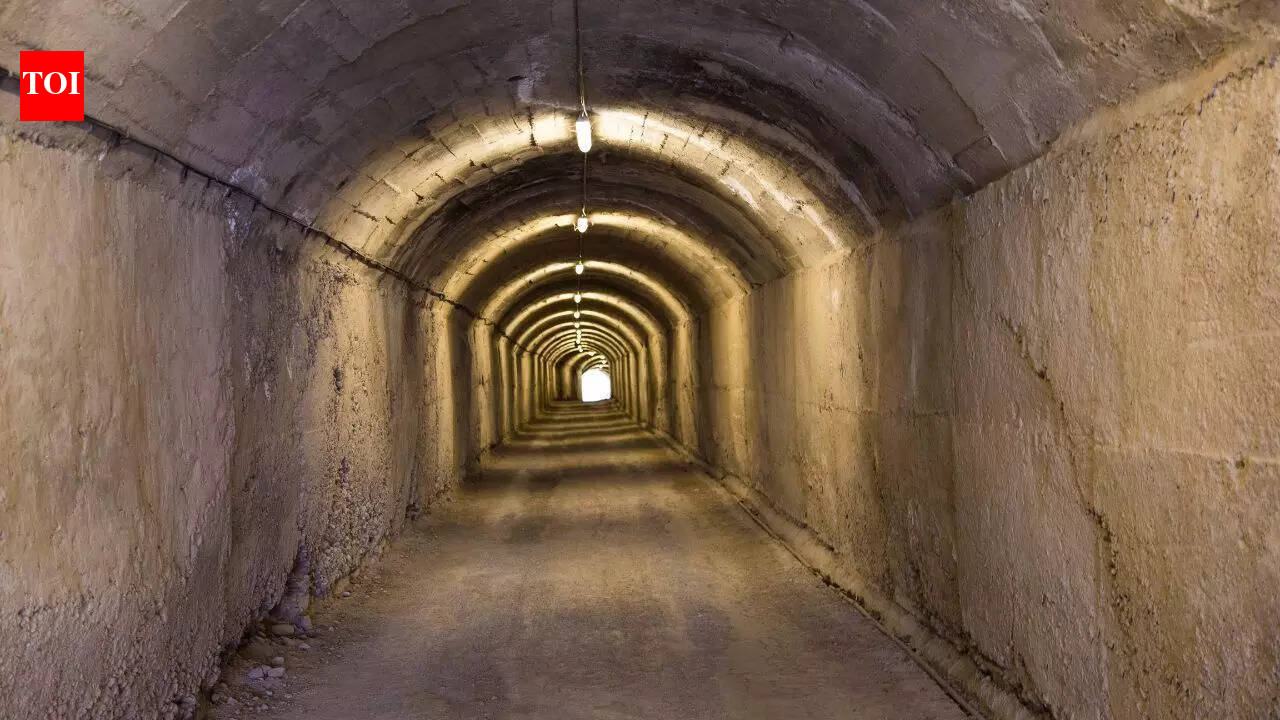

How Switzerland became the world’s most nuclear bunker-ready nation (Image source: Canva)
Switzerland is often associated with mountains, neutrality, and peaceful cities. Yet beneath many homes, schools, hospitals, and public buildings lies a vast hidden network of nuclear shelters. According to the reports by The Guardian, Switzerland has more nuclear bunkers per person than any other country in the world. This is not a recent development or a reaction to one single conflict. Instead, it is the result of decades of planning shaped by war fears, civil defence laws, and a national belief in preparedness. Even today, most residents live within minutes of a shelter designed to protect them during a nuclear or major military attack.
Israel attacks Iran
Understanding why Switzerland built this system requires looking at its Cold War history, its unique laws, and how those bunkers are still maintained and used in modern times.
How Cold War fears pushed Switzerland to build a nationwide bunker network
According to reports, Switzerland’s bunker system grew rapidly during the Cold War. Even though the country stayed neutral, it was surrounded by NATO and Warsaw Pact countries. Swiss authorities feared that any large European war could spill across borders. Nuclear weapons testing and rising tensions during the 1950s and 1960s increased public concern.In response, Switzerland focused on civil defence. The idea was simple. Even if the country couldn’t stop a nuclear war, it could still keep its people safe. Government planners thought that shelters that could withstand blast pressure, radiation, and fallout were necessary for survival. For decades, this way of thinking shaped national policy.
The 1963 law that made nuclear shelters mandatory in Switzerland
The legal system in Switzerland is one of the main reasons it has so many bunkers. Switzerland passed a civil protection law in 1963 that said everyone had to be able to get to a nuclear shelter. According to The Guardian, this law required new homes to have shelters or for local governments to build shared ones nearby.Builders who could not include a shelter had to pay into a public shelter fund. This ensured that even city residents without private bunkers still had a designated place during emergencies. Over time, this law created a nationwide network of shelters linked directly to population numbers.
How many bunkers exist in Switzerland today
Switzerland has around 9 million shelter spaces for a population of roughly 8.8 million people. This means there is technically a shelter space for almost every resident. Reports say that no other country has this much coverage.These shelters can be anything from big bunkers that people share under schools and public buildings to small, strong rooms in private homes. Many of them have air filters, thick concrete walls, emergency toilets, and sealed doors that are meant to keep radiation out.
Why Switzerland never removed its bunkers
After the Soviet Union fell apart, a lot of countries took down or stopped using Cold War shelters. Switzerland, on the other hand, did not. The Guardian reports that Swiss authorities continued maintaining the system even after the 1990s.Officials argued that threats did not disappear; they only changed. Nuclear accidents, terrorism, and new geopolitical tensions kept the shelters relevant. The cost of maintaining them was also lower than rebuilding from scratch if the need returned.
How the bunkers are used in peacetime
Most Swiss bunkers are not empty. According to reports, many are used as storage rooms, wine cellars, archives, or emergency supply spaces. However, they must remain usable as shelters. Owners are required to keep key features intact, including ventilation systems and reinforced doors.Local governments check shelters on a regular basis to make sure they are safe. In some places, evacuation drills still tell people how to get to shelters.
Renewed attention after global conflicts
Swiss bunkers are back in the news because of recent events around the world. The Guardian notes that after Russia invaded Ukraine, interest in shelters increased. Some residents checked their assigned bunker locations for the first time in years.The Swiss government reassured the public that the shelter system remains operational. Officials also reviewed emergency plans and supply readiness as part of broader civil protection efforts.
Switzerland’s approach compared to other countries
Unlike Switzerland, many European countries rely on evacuation plans rather than shelter systems. Reports explain that Switzerland’s geography, political culture, and federal structure allowed it to invest heavily in localised protection.Swiss defence planning focuses on decentralisation. Instead of large national shelters, protection is spread across thousands of small locations. This lowers the chance of too many people being in one place at once and makes it easier to get to in an emergency.
What the bunker system reveals about Swiss society
Switzerland’s network of shelters shows how the whole country thinks. The Swiss government is based on being ready, taking responsibility in your own area, and making plans for the future. Reports say that people don’t see the bunker system as a way to panic, but as a useful safety measure.Some critics say that Cold War-era shelters aren’t useful anymore, but Swiss officials still see them as a form of insurance. The shelters might never be used during a nuclear attack, but knowing they are there can make you feel better when things are uncertain.
A system built to endure
Switzerland’s nuclear bunker network is the result of decades of policy, law, and public cooperation. According to reports, it stands as a rare example of a country maintaining large-scale civil defence infrastructure long after the Cold War ended.The bunkers are not symbols of fear alone. They represent a national decision to prioritise civilian protection in worst-case scenarios. Switzerland’s underground shelters are always ready, built into everyday life, and waiting for the day when they are needed. Go to Source