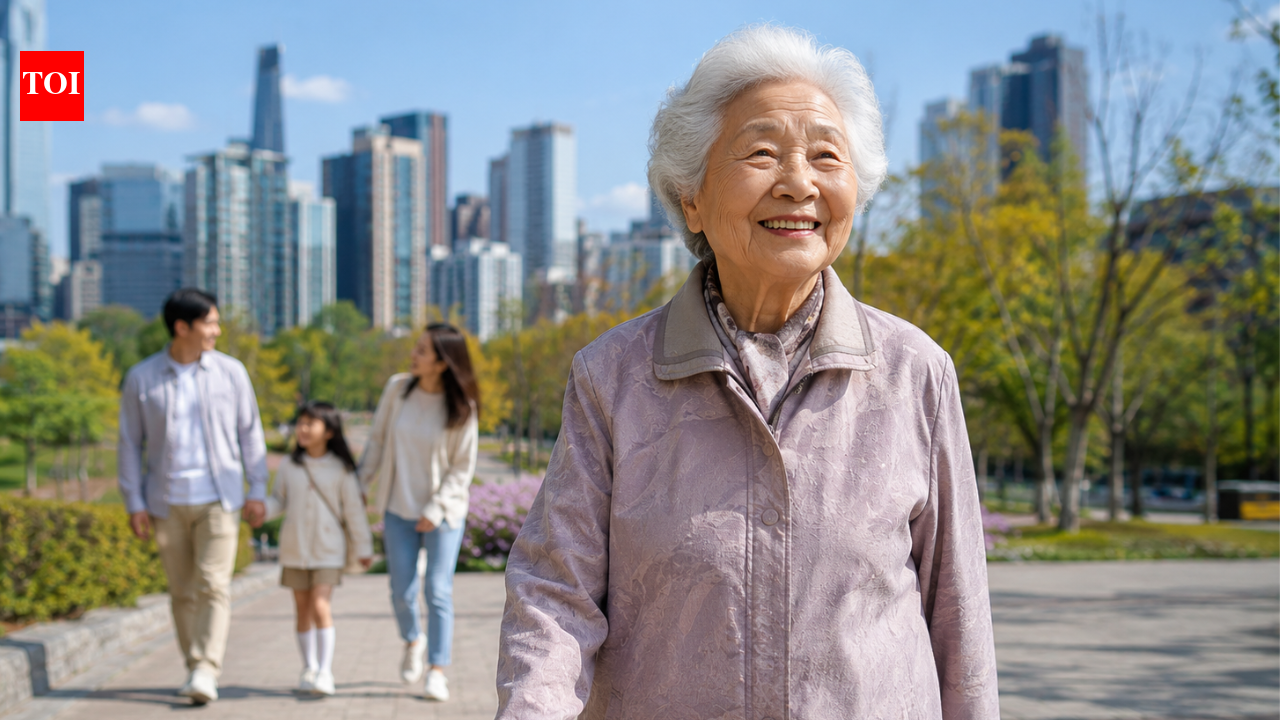


For decades, scientists believed that an average life expectancy of 90 years was a distant milestone that no country would reach anytime soon. Then a landmark study published in The Lancet challenged that assumption. Researchers projected that South Korean women born in 2030 could live an average of 90.8 years, making them the first population in recorded history expected to surpass the 90-year barrier. The finding not only placed South Korea ahead of traditional longevity leaders such as Japan but also suggested that improvements in healthcare, nutrition and public health could push human lifespan further than many experts once thought possible.
The Lancet study behind South Korea’s longevity milestone
The prediction comes from a major study published in The Lancet in 2017 by an international team led by Professor Majid Ezzati of Imperial College London. The researchers analysed future life expectancy across 35 industrialised countries using a sophisticated forecasting approach known as a Bayesian model ensemble, which combined the outputs of 21 separate statistical models.Their results suggested that South Korean women born in 2030 would have an average life expectancy of approximately 90.8 years. According to the study, there was a 57% probability that the country’s female life expectancy would exceed the 90-year threshold by 2030. The researchers also found a 90% probability that South Korean women would surpass 86.7 years, which at the time represented the highest female life expectancy ever recorded anywhere in the world.
Why South Korean women are living longer
The researchers did not attribute South Korea’s longevity gains to any single factor. Instead, they identified a combination of social, economic and healthcare improvements that have transformed the country’s public health landscape over the past several decades.Professor Ezzati and his colleagues pointed to improvements in childhood nutrition, broad access to healthcare, lower rates of obesity compared with many Western nations, lower average blood pressure levels and rapid adoption of medical technologies. Together, these factors have reduced mortality across multiple age groups and helped more people survive into old age.One of South Korea’s biggest advantages has been its National Health Insurance Service, which provides near-universal healthcare coverage. Unlike some countries where health outcomes vary sharply by income, many of South Korea’s health improvements have been distributed relatively evenly across society, allowing larger portions of the population to benefit.
A remarkable rise in just one generation
South Korea’s transformation has been extraordinarily rapid by historical standards.In the mid-1980s, female life expectancy in South Korea was around 73 years. By 2010, it had climbed above 84 years. The Lancet projection suggested another substantial increase by 2030, potentially adding more than six additional years within two decades.Researchers attribute the earlier gains largely to reductions in infant mortality, infectious diseases and deaths linked to poor nutrition. As living standards improved, the country invested heavily in public health infrastructure, vaccination programmes and maternal healthcare.More recently, improvements have come from delaying deaths caused by chronic illnesses such as heart disease, stroke and certain cancers. Advances in treatment, screening and prevention have allowed more South Koreans to live longer and healthier lives.
Breaking the 90-year barrier
One reason the study became so widely discussed is that it challenged conventional thinking about the limits of human longevity.Commenting on the findings, Professor Ezzati said that many researchers had previously believed life expectancy would never exceed 90 years on average. The study suggested otherwise.”As recently as the turn of the century, many researchers believed that life expectancy would never surpass 90 years,” Ezzati said when the study was released.The researchers argued that continued improvements in healthcare, disease prevention and living standards could keep pushing life expectancy upward, even in countries that already enjoy some of the longest lifespans in the world.Their findings suggested that the often-discussed 90-year ceiling was not a biological limit but rather a milestone that could eventually be surpassed.If South Korean women do become the first population to live beyond 90 years on average, the implications will extend far beyond demographic record books.Longer lifespans generally mean larger elderly populations, increased demand for healthcare services and greater pressure on pension and social care systems. Governments may need to rethink retirement ages, workforce participation and the design of healthcare infrastructure.South Korea is already facing many of these challenges. The country has one of the world’s lowest fertility rates and one of the fastest-ageing populations, creating a demographic shift that policymakers are closely monitoring.At the same time, longer lives can also mean more years spent in good health, greater economic participation by older adults and improved quality of life.
Is South Korea still on track?
The 90-year figure remains a projection rather than a confirmed outcome. Since the study was published, the COVID-19 pandemic temporarily disrupted life expectancy trends in many countries, although South Korea experienced a relatively modest impact compared with several Western nations.Recent data continue to place South Korea among the world’s longest-lived populations, with female life expectancy already reaching levels that would have ranked among the highest ever recorded just a decade ago.Whether South Korean women cross the 90-year threshold exactly in 2030 or a few years later remains uncertain. What appears increasingly clear, however, is that the country has become the leading contender to achieve a milestone that once seemed impossible. Go to Source