
PC: Discover Wildlife
Sixty metres beneath one of southern Africa’s driest landscapes lies a world that seems strangely detached from everything above it. The surface of the Kalahari Desert is defined by heat, sparse vegetation and long stretches of rocky ground, yet hidden underneath part of this vast region is a body of water so large that it took decades to understand its true scale. Known as Dragon’s Breath Cave, the site appears almost ordinary from above. There is no dramatic entrance and little to suggest that a massive flooded cavern waits below. Only after descending through a narrow opening does the desert give way to an underground lake hundreds of metres deep, inhabited by rare creatures that have spent countless generations adapting to darkness.
How Dragon’s Breath Cave formed beneath the desert
Dragon’s Breath Cave lies in Namibia’s Otjozondjupa region, roughly 46 kilometres north of Grootfontein. The entrance is surprisingly modest: a rocky hole in the ground surrounded by scrub and weathered stone. From there, the cave drops sharply for around 60 metres before reaching the water.The air rising from the shaft is unusually warm and damp. Under certain conditions, moisture condenses into mist that drifts from the opening, giving rise to the cave’s evocative name. It is easy to imagine how early visitors drew comparisons with the breath of a hidden creature, though the cave’s origins are entirely geological. Over immense periods of time, groundwater slowly dissolved layers of soluble rock beneath the surface. Cavities expanded, ceilings shifted and eventually an enormous chamber formed below the desert floor. Water gradually filled the void, creating the flooded system that exists today.
The discovery of Namibia’s underground giant
Although local communities were aware of openings in the area, the cave attracted international attention only in the 1980s. As reported by Discover Wildlife, South African explorer Roger Ellis encountered the site during an expedition in 1986 and returned the following year with cavers and technical divers to investigate it properly.The descent was difficult. The route involved steep drops, narrow ledges and awkward passages before the team finally reached the lake. What they found surprised them: an underground water surface covering roughly two hectares, an area comparable to two football pitches.Yet even then, the lake refused to reveal its full dimensions. The water appeared to descend endlessly into darkness, and the technology of the time could not determine where the bottom lay.
How an underwater robot solved a decades-old mystery
For years, estimates varied widely. Divers pushed their equipment and endurance to increasing limits, descending farther with each expedition.In 2015, an exploration team reached a depth of around 132 metres. That alone represented an extraordinary technical achievement, though it still left a significant question unanswered. The lake extended much deeper.The breakthrough came several years later when Stone Aerospace brought an autonomous underwater vehicle known as Sunfish to the cave. Equipped with advanced sonar mapping systems, the robotic explorer travelled through the submerged passages and surveyed areas inaccessible to human divers.The results changed scientific understanding of Dragon’s Breath Cave. The lake was measured at around 264 metres deep, making it one of the deepest known underground lakes on Earth and widely regarded as the largest by volume.
Why Dragon’s Breath remains one of the hardest caves to explore
Despite advances in technology, Dragon’s Breath is not a place that yields its secrets easily.Simply reaching the water requires hauling heavy diving equipment down the steep entrance shaft. The underwater environment is equally unforgiving. There is no natural light at all. Beyond the reach of a diver’s lamp lies complete darkness, accompanied by immense water pressure and long decompression schedules needed to return safely to the surface.Even highly experienced cave divers spend years preparing for expeditions of this kind. A single exploration dive can last many hours, with much of that time devoted not to searching but to slowly ascending and allowing the body to adjust.A 2023 expedition demonstrated just how demanding the cave remains. Divers spent around nine hours underwater while exploring previously uncharted areas of the system, reaching depths close to 160 metres.
Life in permanent darkness
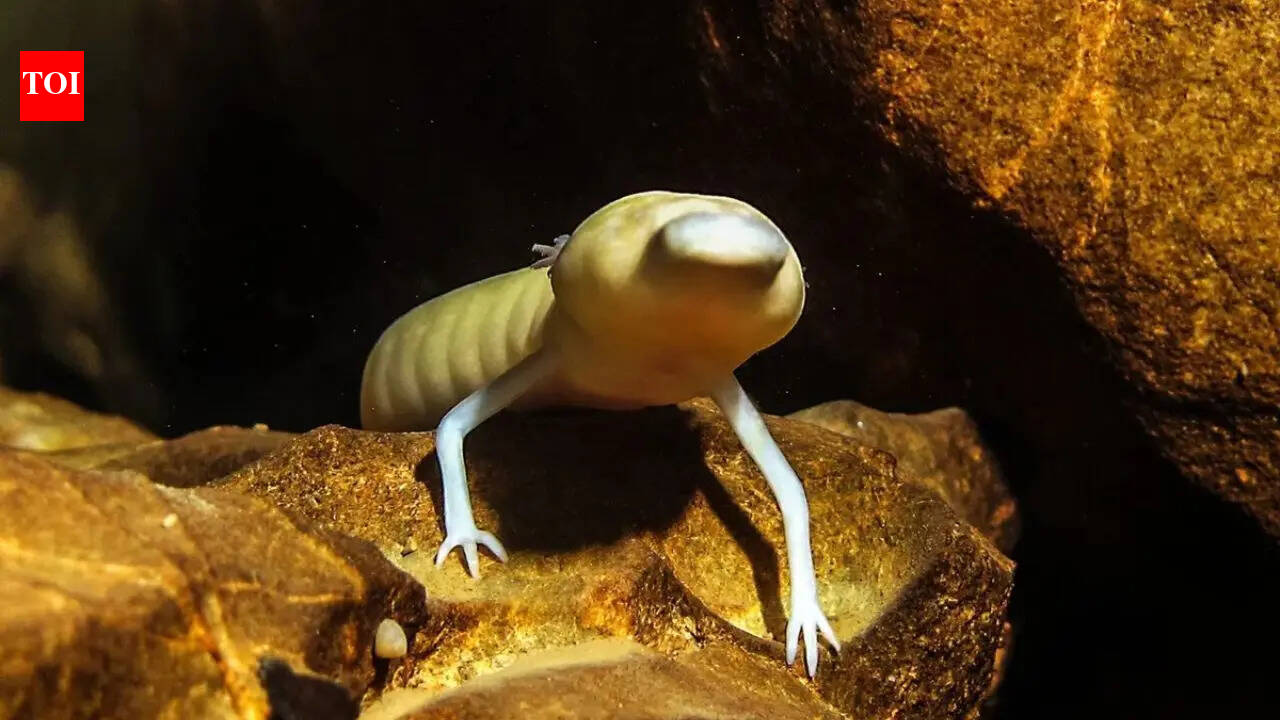
Perhaps the most remarkable aspect of Dragon’s Breath Cave is not its size but the creatures that inhabit it.The lake exists in total darkness. Sunlight never reaches the water, temperatures remain stable and food is scarce. Yet life has adapted in unusual ways.Among the cave’s best-known inhabitants is the blind golden cave catfish. Isolated from surface rivers for an immense span of time, the species gradually lost the need for eyesight. Instead, it relies on highly developed sensory systems to navigate through the still waters.The cave is also home to a rare white prawn species that lacks pigmentation and eyesight. Its scientific name loosely translates as “spirit of the dragon”, a reference to the cave where it evolved and remains confined.These animals are found nowhere else on Earth. Their entire existence depends on the fragile ecosystem hidden beneath the desert. Go to Source