
AI image
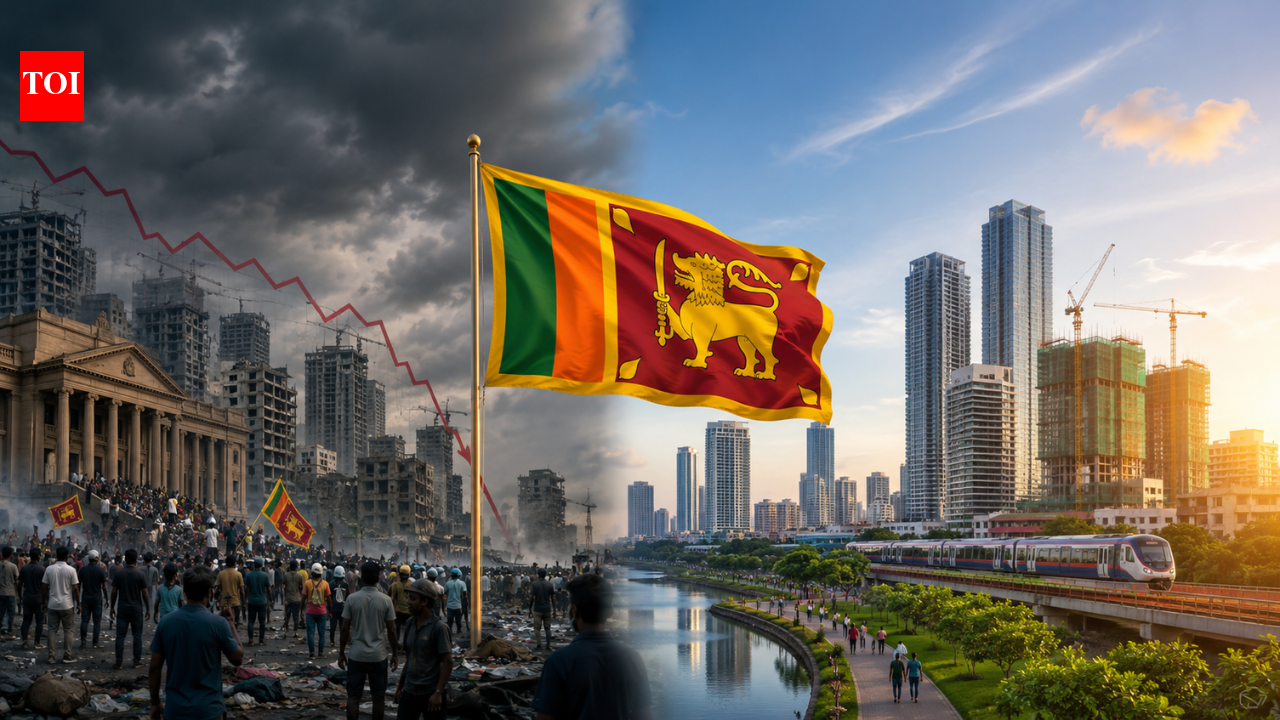
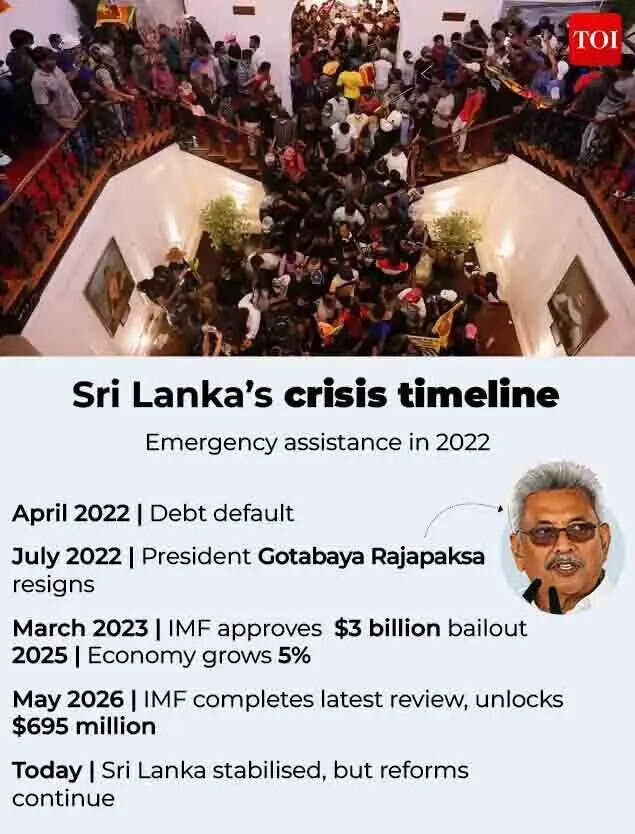
In the summer of 2022, Sri Lanka became a symbol of economic collapse.Fuel stations ran dry. Long queues stretched for kilometres. Power cuts lasted for hours. Inflation surged, foreign exchange reserves evaporated and the country defaulted on its external debt for the first time in its history.The crisis triggered political upheaval, culminating in the resignation of then-president Gotabaya Rajapaksa as protesters stormed government buildings in Colombo.Three years later, the scenes of chaos have largely disappeared.
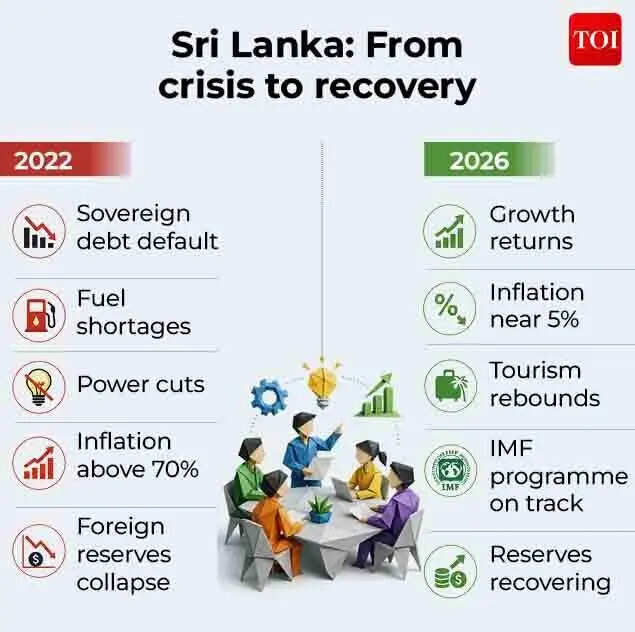
Fuel is available. Inflation has fallen sharply. Economic growth has returned. Tourist arrivals have recovered and foreign reserves have improved. International lenders now describe Sri Lanka as one of the more successful examples of economic stabilisation under an International Monetary Fund-backed programme.But has Sri Lanka truly recovered?The answer depends on how recovery is defined. The country has undoubtedly moved away from the brink of collapse. Yet many of the structural weaknesses that contributed to the crisis remain unresolved, while poverty, public debt and investment challenges continue to weigh on the economy.
From collapse to stabilisation
Sri Lanka’s crisis was years in the making.Heavy borrowing, weak tax revenues, declining foreign exchange earnings and policy mistakes left the economy vulnerable. The Covid-19 pandemic devastated tourism, one of the country’s main sources of foreign currency. The war in Ukraine pushed up global commodity prices, worsening fuel and food shortages.By April 2022, Sri Lanka had suspended repayment of its foreign debt and entered a full-blown balance-of-payments crisis.The turnaround since then has been remarkable.Supported by a $3 billion IMF Extended Fund Facility approved in March 2023, Sri Lanka embarked on a painful programme of fiscal reforms, tax increases, debt restructuring and monetary tightening.According to the IMF, programme implementation has remained broadly strong. In May 2026, the Fund completed the fifth and sixth reviews of Sri Lanka’s reform programme, unlocking a further $695 million in financing and bringing total disbursements to around $2.4 billion.The IMF noted that most reform targets had been achieved and that the gains from the programme had strengthened the country’s resilience against new shocks.Economic growth has also returned.
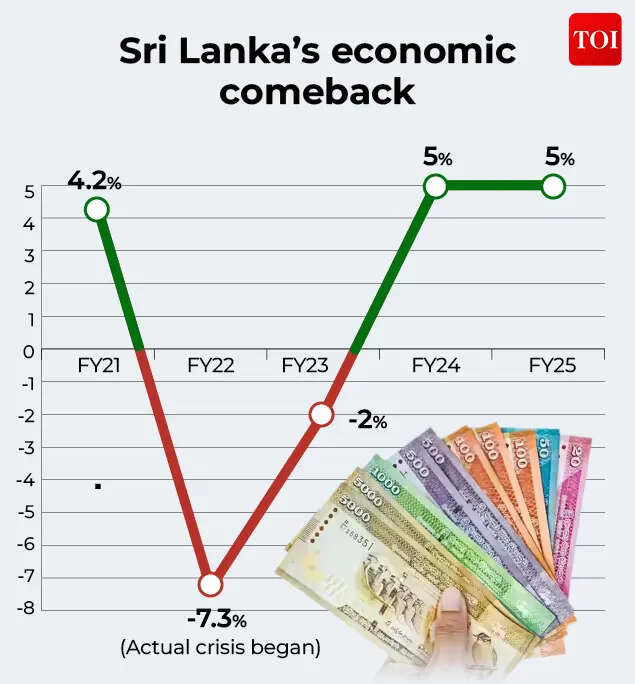
After years of contraction, Sri Lanka’s economy expanded by 5% in 2025, according to IMF data. While growth is expected to moderate, international institutions continue to forecast expansion.The World Bank’s June 2026 Global Economic Prospects report projects growth of 3.6% in 2026, 3.8% in 2027 and 3.9% in 2028. The Asian Development Bank (ADB) is slightly more optimistic, forecasting growth of 4% in 2026 and 4.2% in 2027.The country’s foreign exchange position has improved significantly as well. IMF projections show gross official reserves rising from $6.8 billion in 2025 to around $8.6 billion in 2026 and nearly $14 billion by 2028.
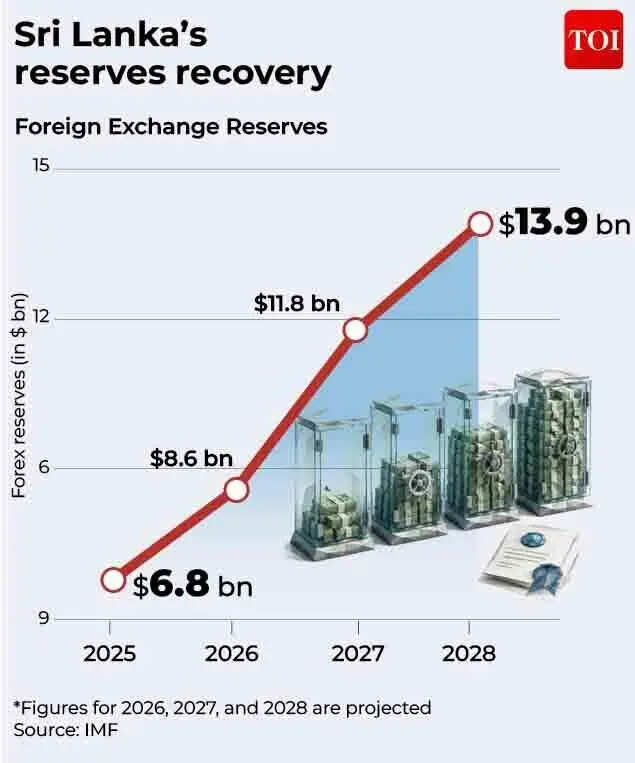
For a country that once had reserves barely sufficient to pay for a few weeks of imports, the improvement is substantial.
Inflation has been tamed
Perhaps the most visible sign of stabilisation has been the decline in inflation.During the peak of the crisis, consumer prices surged at rates exceeding 70%, eroding household incomes and pushing millions into hardship.Today, inflation has largely returned to manageable levels.According to IMF projections, average inflation is expected to remain around 5% over the medium term, broadly consistent with price stability.The stabilisation of prices has helped restore consumer confidence and allowed businesses to plan with greater certainty.It has also reduced pressure on household budgets, though many Sri Lankans continue to face a significantly higher cost of living than before the crisis.
Tourism is booming again
Tourism, one of the sectors hardest hit during the crisis, has emerged as one of the clearest signs of Sri Lanka’s recovery.The collapse of tourism revenue during the Covid-19 pandemic was a major factor behind the country’s foreign exchange shortage. Four years later, visitor numbers are rebounding strongly.According to data from the Sri Lanka Tourism Development Authority (SLTDA), the country recorded its highest-ever international tourist arrivals for the month of May in 2026, welcoming 145,745 visitors.That represented a 9.65% increase from the 132,919 arrivals recorded in May 2025 despite geopolitical tensions in the Middle East, higher travel costs and disruptions to some international air routes.
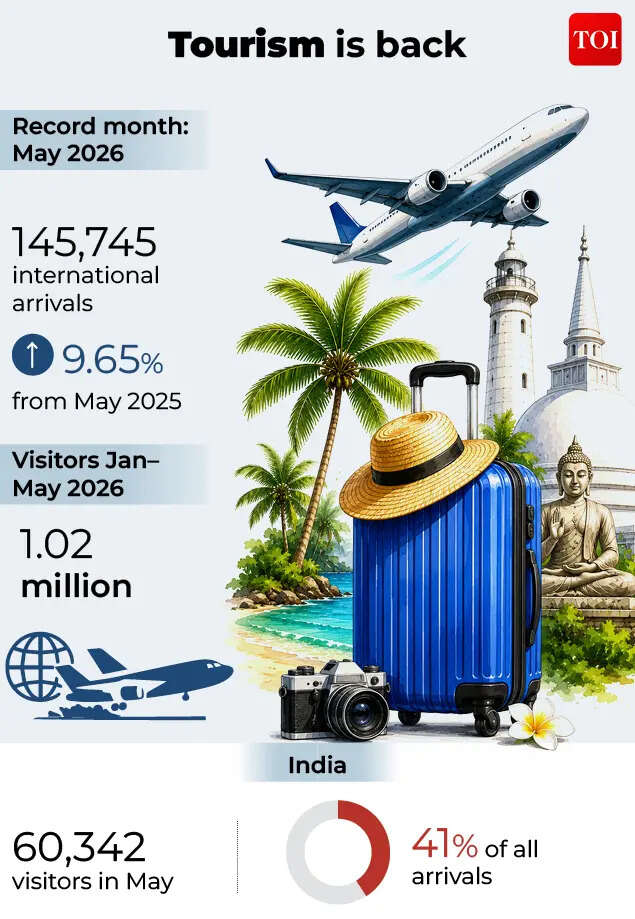
Sri Lanka crossed the one-million visitor mark during the first five months of 2026, receiving 1.02 million international arrivals between January and May. The rebound has been supported by improved connectivity, policy measures aimed at attracting visitors and growing confidence among international travellers.India has emerged as Sri Lanka’s largest source market by a considerable margin. According to SLTDA data, Indian travellers accounted for 60,342 arrivals in May alone, representing around 41% of all visitors to the island.The United Kingdom, Germany, France, China, Australia, the Maldives, the United States, Bangladesh and Russia were among other major source markets.The revival of tourism is particularly important because the sector remains one of Sri Lanka’s most significant earners of foreign exchange.Stronger tourism receipts have helped support reserves, generate employment and improve business activity across hotels, transport services, restaurants and small enterprises that depend on visitor spending.However, economists caution that tourism alone cannot sustain long-term growth. While the sector’s recovery has provided an important boost, broader reforms and investment will still be required to strengthen the economy’s foundations and reduce vulnerability to future external shocks.
Recovery remains incomplete
Despite the positive indicators, international institutions caution against declaring victory too soon.In its October 2025 Sri Lanka Development Update, the World Bank argued that the recovery remains “uneven and incomplete.”The institution noted that Sri Lanka’s economic output remained below 2018 levels despite the recent rebound. Poverty, while declining, remained roughly twice as high as before the crisis.Many households have yet to recover incomes lost during the economic collapse. The World Bank also warned that an additional 10% of the population remains only marginally above the poverty line, making them vulnerable to future economic shocks.Food insecurity and malnutrition continue to affect some of the most vulnerable groups.The labour market has also been slow to recover, with many families still struggling to rebuild livelihoods disrupted during the crisis.
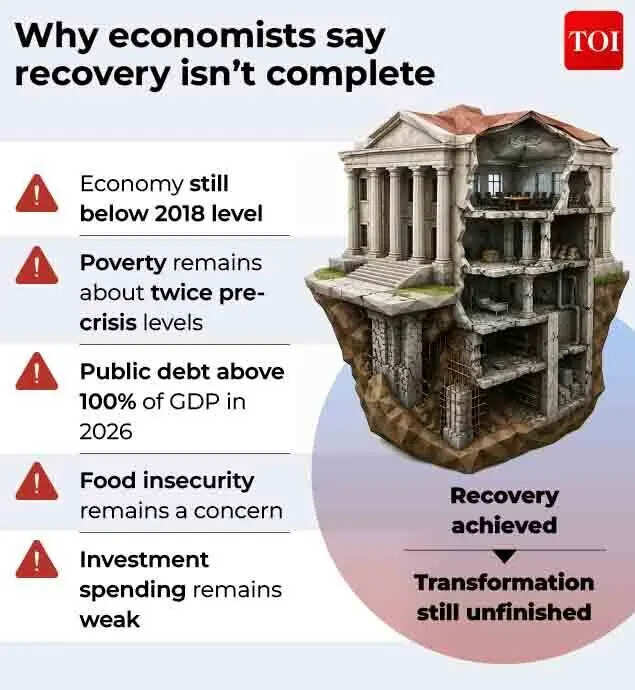
These realities highlight an important distinction: macroeconomic stabilisation does not automatically translate into broad-based prosperity.
Debt remains a major burden
The debt problem that helped trigger the crisis has not disappeared.Sri Lanka has made substantial progress in restructuring its external obligations and securing agreements with creditors.However, debt levels remain elevated.According to IMF projections, public debt will still exceed 100% of GDP in 2026 before gradually declining over subsequent years.While this is an improvement from crisis levels, it remains high by international standards.The IMF has repeatedly stressed that debt sustainability risks remain significant and that continued fiscal discipline will be necessary to maintain investor confidence.The government has committed to achieving a primary budget surplus and strengthening revenue collection through tax reforms.These measures are essential for long-term stability but remain politically sensitive, particularly as households continue to face economic pressures.
The investment challenge
One of the biggest questions facing Sri Lanka is whether it can generate enough investment to sustain long-term growth.According to the ADB, public investment has consistently fallen short of government targets.Capital spending averaged only around 3% of GDP between 2022 and 2025, substantially below the 5-6% levels originally budgeted.In 2024, actual capital expenditure amounted to just 2.6% of GDP, less than half the government’s planned allocation.The reasons are both financial and institutional.Higher-than-expected interest payments have squeezed fiscal space, while revenue collection has repeatedly fallen below expectations. At the same time, project implementation has often been delayed by procurement bottlenecks, land acquisition issues and administrative inefficiencies.The ADB argues that these weaknesses are limiting Sri Lanka’s growth potential.”Persistent under-investment constrains potential growth,” the bank warned, noting that transport, energy and water infrastructure require significant upgrades if the country is to maintain momentum.The institution has called for stronger project planning, streamlined procurement systems, better monitoring mechanisms and greater participation from private investors through public-private partnerships.Without such reforms, Sri Lanka risks returning to a pattern of low investment and weak productivity growth.
New risks are emerging
While the immediate crisis has passed, new vulnerabilities remain.The IMF has identified geopolitical instability and climate-related shocks as important risks to the country’s outlook.The conflict in the Middle East has increased uncertainty surrounding global energy prices and tourism flows. Higher oil prices could worsen Sri Lanka’s trade balance and place renewed pressure on inflation.The country has also been dealing with the economic impact of Cyclone Ditwah, which caused significant damage to infrastructure and communities.According to IMF assessments, these developments could slow growth to around 3% in 2026.The Fund nevertheless believes that the reforms implemented since 2023 have strengthened Sri Lanka’s ability to absorb such shocks.
India’s role in Sri Lanka’s recovery
No account of Sri Lanka’s recovery would be complete without acknowledging India’s role during the crisis.As international financing dried up in 2022, India emerged as Sri Lanka’s most important emergency partner.According to Thilina Panduwawala, writing in the Journal of Indo-Pacific Affairs, India effectively became “Sri Lanka’s lender of last resort” during the crisis, stepping in with financial support at a time when Colombo had lost access to most international financing sources.
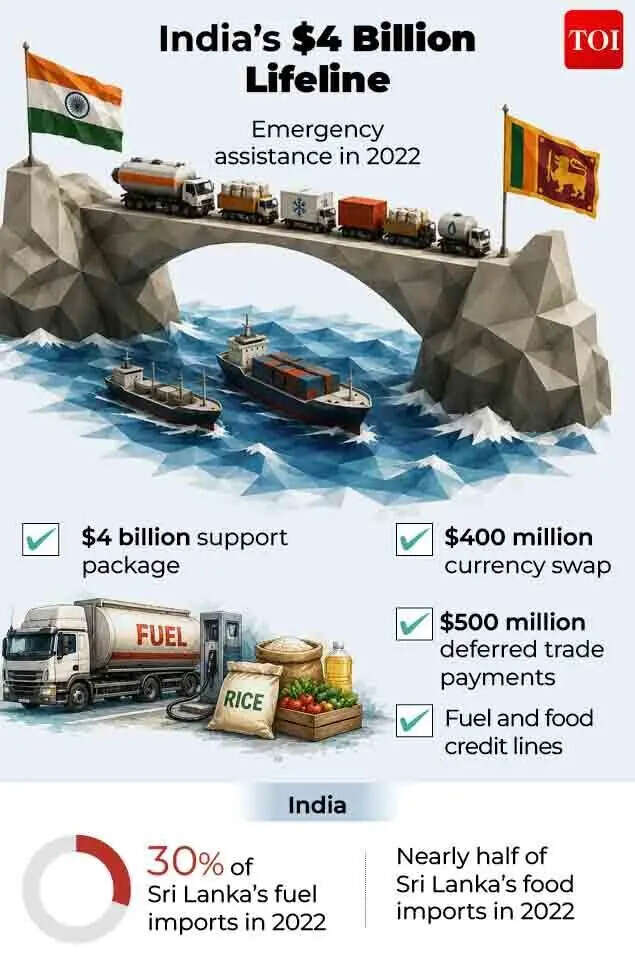
India provided approximately $4 billion in assistance during the crisis year alone — equivalent to about 5% of Sri Lanka’s pre-crisis GDP.The support package included a $400 million currency swap through the Reserve Bank of India’s SAARC facility, deferred trade payments worth roughly $500 million and multiple credit lines that enabled Sri Lanka to continue importing essential goods.The assistance helped keep fuel, food and medicine flowing at a time when foreign reserves had nearly collapsed.Fuel imports from India rose sharply, increasing from around $447 million in 2019 to more than $1.1 billion in 2022. India supplied roughly 30% of Sri Lanka’s fuel imports during the crisis year.Food imports from India also increased substantially, accounting for nearly half of Sri Lanka’s food imports in 2022.Analysts argue that India’s intervention helped Sri Lanka avoid defaulting on obligations to multilateral institutions such as the IMF and World Bank, preserving access to future international assistance.India also played an important diplomatic role during debt restructuring negotiations.In his analysis, Panduwawala noted that “India fully capitalised on Sri Lanka’s 2022 economic crisis to expand its Neighbourhood First Policy and demonstrate its capacity to mobilise significant financial resources swiftly.” He argued that New Delhi’s support not only helped stabilise Sri Lanka but also strengthened India’s diplomatic influence in the Indian Ocean region.It was among the first creditors to provide financing assurances required for IMF programme approval and later worked alongside Japan and France in coordinating creditor discussions.Beyond emergency support, Indian investments have expanded in strategic sectors including ports, logistics, renewable energy and petroleum infrastructure.The crisis has therefore not only deepened economic ties between the two countries but also strengthened India’s position as a key development partner in Sri Lanka’s recovery.Beyond emergency support, Indian investments have expanded in strategic sectors including ports, logistics, renewable energy and petroleum infrastructure. Panduwawala noted that “the goodwill generated by India’s support facilitated Indian investments in Sri Lanka’s strategic sectors and advanced several bilateral initiatives aimed at increasing economic integration.”
Has Sri Lanka recovered?
Three years after the worst economic crisis in its modern history, Sri Lanka has undoubtedly made significant progress.The economy is growing again. Inflation has been brought under control. Foreign reserves have recovered. Debt restructuring is nearing completion. International institutions broadly agree that the stabilisation programme has delivered results.Yet recovery remains a work in progress.
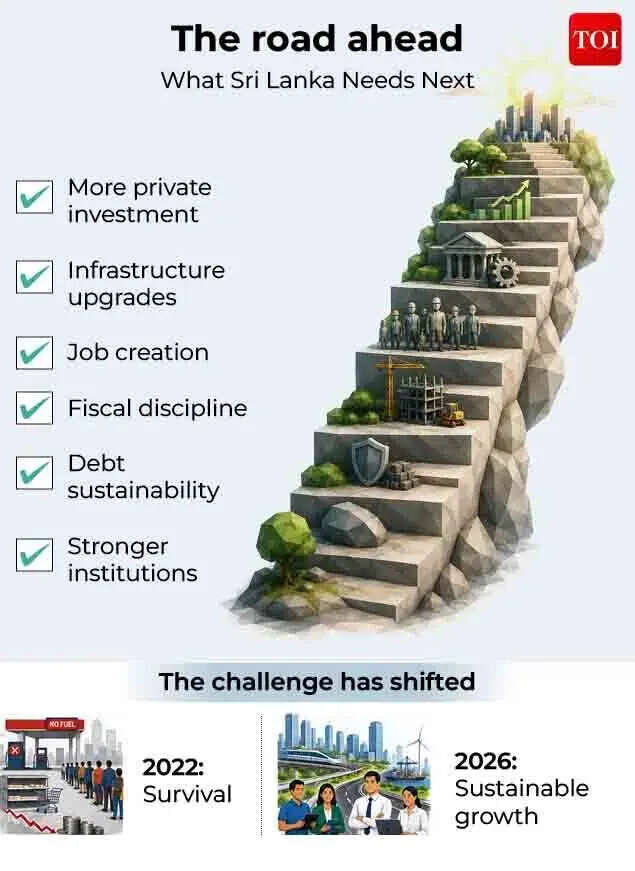
Economic output has still not fully regained lost ground. Poverty remains elevated. Public debt is high. Investment levels remain inadequate. Growth forecasts, while positive, are modest compared with the pace needed to rapidly improve living standards.As the World Bank, IMF and ADB have all emphasised, the next phase of Sri Lanka’s journey will depend less on emergency stabilisation and more on structural reforms, stronger institutions, private-sector investment and job creation.Three years ago, the challenge was survival.Today, the challenge is transformation.Sri Lanka may have emerged from the brink of collapse. Whether it can convert that hard-won stability into lasting and inclusive prosperity remains the defining question of its post-crisis future. Go to Source