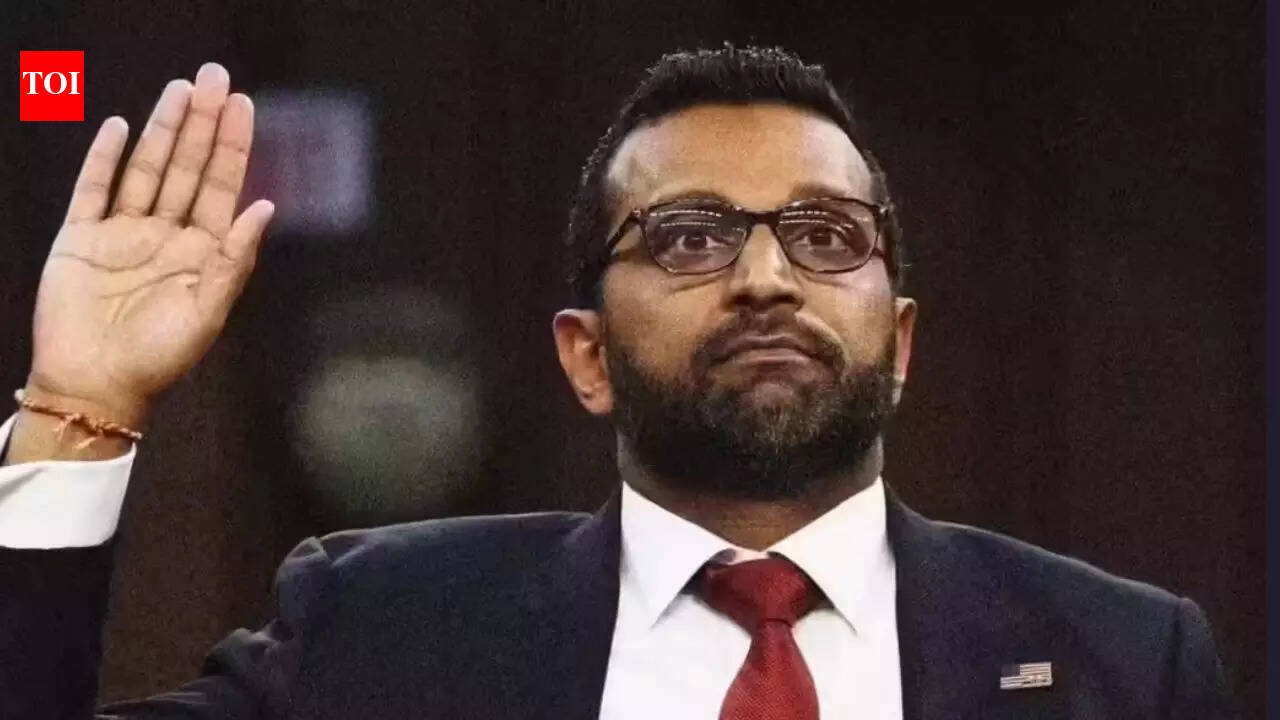

The fatal shooting of 37-year-old intensive care nurse Alex Pretti, a concealed-carry permit holder, during a federal immigration enforcement operation in Minneapolis has reignited a long-simmering debate over gun ownership, protest regulations, and police authority in the United States.Pretti, who worked as an ICU nurse at a Minneapolis Veterans Affairs hospital and was legally carrying a firearm under state law, was killed on January 24 amid protests linked to aggressive federal immigration enforcement actions in the city.At the centre of the controversy is a statement by FBI Director Kash Patel, who said people cannot bring firearms, especially with multiple magazines, to protests. Legal experts, however, say the claim oversimplifies, and in Minnesota’s case, misstates the law.
What happened in Minneapolis?
Pretti was shot dead on January 24 during a protest-related incident on Nicollet Avenue in south Minneapolis. Federal officials alleged that because he was carrying a handgun and ammunition, he posed a threat to law enforcement. The Trump administration went further, suggesting Pretti planned to assassinate officers, a claim not supported by video footage released so far.Multiple videos show that Pretti was not pointing a gun at officers, and in some footage, appears to have already been disarmed shortly before he was shot. At the time, he was reportedly holding a phone and assisting a woman who had been pushed to the ground by an agent.
Kash Patel’s claim and why it’s contentious
A day after the shooting, Patel said on Fox News: “You cannot bring a firearm loaded with multiple magazines to any sort of protest that you want. It’s that simple.”He later clarified that law enforcement was not targeting peaceful protesters or lawful gun owners, only those who incite violence or break the law.
Kash Patel: “You cannot bring a firearm loaded with multiple magazines to any sort of protest that you want. It’s that simple. You don’t have the right to break the law and incite violence.”
pic.twitter.com/wyQ79ZnYUI
— The Bulwark (@BulwarkOnline) January 25, 2026
According to PolitiFact, a US-based fact-checking website, which consulted 13 legal experts, there was broad agreement that Patel’s statement does not reflect Minnesota law and presents a misleading picture of gun rights at protests.
Are guns legally allowed at protests in the US?
The short answer: it depends on the state. There is no nationwide ban on firearms at protests or demonstrations. Instead, laws vary significantly across states.Minnesota:There is no law banning firearms at protests.Individuals with a valid concealed carry permit, like Pretti, are legally allowed to carry firearms at public demonstrations.Failing to carry a permit or ID is only a petty misdemeanour, punishable by a fine of up to USD 25, and is not a crime.Other states:According to data compiled by the gun-control group Giffords:11 states and Washington, DC ban concealed carry at protests.11 states and DC ban open carry at protests.Seven states and DC ban both.Several states also allow permitless carry, meaning people can legally carry firearms at protests without any permit at all.Legal experts also noted that no state explicitly bans carrying extra ammunition or magazines, another point raised by Patel.
What about interfering with law enforcement?
Even in states where firearms are allowed at protests, gun rights are not absolute.Experts say individuals can be lawfully stopped or arrested if they:Threaten officersPhysically interfere with law enforcement operationsObstruct or lie to police during official dutiesHowever, based on currently available footage, experts say there is no clear evidence that Pretti crossed this line, though investigations are currently underway.As one legal scholar put it, peacefully observing or filming police activity is not the same as criminal obstruction.
What do courts and the Supreme Court say?
Recent court rulings have generally strengthened public carry rights:New York State Rifle & Pistol Association v. Bruen (2022):The Supreme Court ruled that Americans have a constitutional right to carry firearms in public for self-defense, without showing a “special need.”States can still ban guns in “sensitive places” like schools or government buildings — but whether protests qualify as such places remains contested.Courts are split:The Fourth Circuit upheld Maryland’s ban on guns near demonstrations.The Ninth Circuit struck down similar restrictions, increasing the likelihood of Supreme Court intervention.A pending case, Wolford v. Lopez, could further clarify whether states can restrict firearms in publicly accessible private spaces, a ruling that may have implications for protests.
Why the Pretti case matters nationally
The shooting has become a flashpoint not just over police conduct, but over how far Second Amendment protections extend during political demonstrations.Gun-rights groups argue that allowing firearms at protests is consistent with both historical practice and constitutional law. Critics counter that armed demonstrations increase the risk of escalation — particularly during tense encounters with law enforcement.What legal experts largely agree on, however, is this: blanket claims that guns are illegal at protests are incorrect, and public officials must be precise when invoking the law, especially in cases involving lethal force.Kash Patel’s statement contains a partial truth, some states do ban firearms at protests. But it ignores the legal reality in Minnesota, where Alex Pretti was legally allowed to carry a gun at a protest.That disconnect between rhetoric and law is why fact-checkers rated the claim “Mostly False”, and why the debate over guns, protests, and police power is far from settled. Go to Source