


For most of human history, reproduction was governed by necessity rather than desire. Children were insurance against disease, labour shortages and early death. Large families were common not because people dreamed of them, but because survival demanded redundancy. The poor reproduced because they had little else. The wealthy, protected by land, inheritance and social order, tended to limit family size because continuity was already assured.In the early 21st century, that logic has inverted in a way that feels counter-intuitive and faintly disturbing. Across much of the world, ordinary people are quietly opting out of parenthood or stopping at one child. Cities are expensive, work is relentless, childcare is punishing and women, finally able to choose, increasingly decide that motherhood must compete with autonomy, health and economic survival. At the same time, a small group of billionaires has begun moving decisively in the opposite direction. They are not merely having children. They are expanding their biological footprint deliberately, sometimes publicly and sometimes through legal and technological workarounds that allow reproduction to be scaled.Elon Musk warns repeatedly that civilisation faces demographic collapse. Pavel Durov has reframed sperm donation as a public good. In a US courtroom, a Chinese tech billionaire calmly explained his plan to father dozens of children via American surrogates so that his sons could one day inherit and run his business empire. These cases are not about family values in any traditional sense. They reveal how power, when combined with technology, begins to see reproduction as strategy rather than intimacy.
How demographic anxiety looks from the top
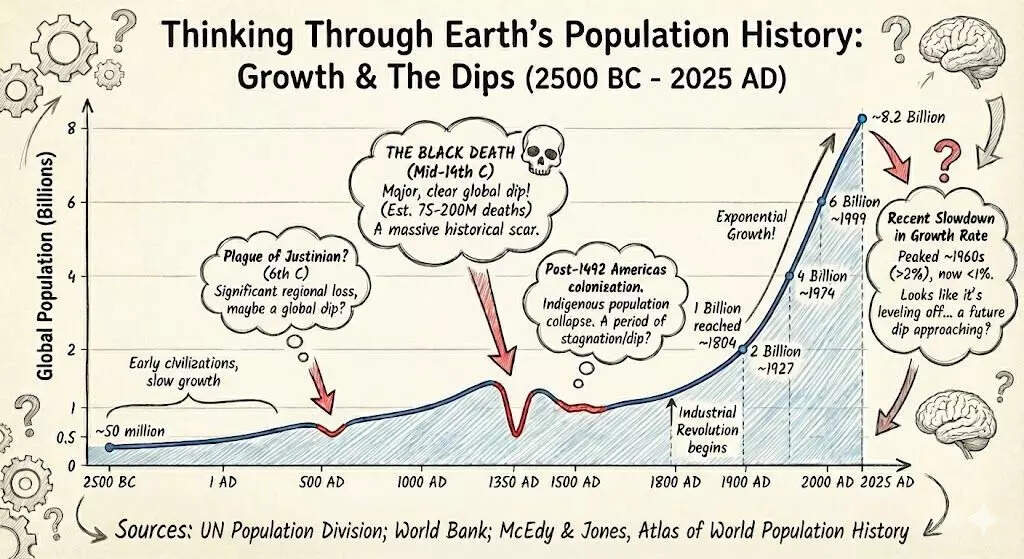
Globally, fertility rates are falling almost everywhere. This is not primarily the result of ideology or cultural decay, but of material reality. Housing costs have soared, work has expanded into evenings and weekends, and the infrastructure that once supported family life has eroded. For many couples, the decision to have fewer children is not ideological at all. It is pragmatic.Demographers tend to describe this shift as a transition rather than a crisis. As societies become wealthier and more educated, family size falls. Women delay childbirth or opt out entirely. Populations age and stabilise. These trends are slow, structural and difficult to reverse through exhortation alone.For a subset of billionaire technologists, however, falling birth rates are framed very differently. Their language is apocalyptic. They speak of civilisation, extinction and existential risk. The vocabulary is not borrowed from sociology or public policy, but from science fiction and Silicon Valley’s engineering culture. These are people accustomed to thinking in terms of systems failure and technological fixes. When they look at declining fertility, they do not see social exhaustion. They see a broken system in need of intervention.This framing matters because it shapes the solutions they imagine. Rather than asking how societies might make family life sustainable for ordinary people, the focus shifts to individual action by those with capacity. Reproduction becomes a responsibility of elites.
Elon Musk and the idea of reproductive leadership

Elon Musk is the most visible proponent of this worldview. He has repeatedly described population decline as the greatest threat facing humanity, placing it above climate change, war or economic instability. His concern is not abstract. His personal life reflects his beliefs. He has fathered a large number of children across multiple relationships, and he has shown no sign of slowing down.What is striking about Musk’s rhetoric is what it omits. He rarely speaks about childcare systems, parental leave, or the emotional and physical labour of raising children. He does not engage seriously with women’s experiences of pregnancy, childbirth or career disruption. Instead, reproduction is framed as duty, contribution and leadership. Great men must step forward where society falters.In this narrative, the problem is not that modern life makes parenthood exhausting and financially risky. The problem is that people lack conviction. Musk’s solution is not collective reform, but personal example. If enough capable individuals reproduce at scale, civilisation will be preserved.It is an argument that bypasses society entirely.
Pavel Durov and scalable parenthood
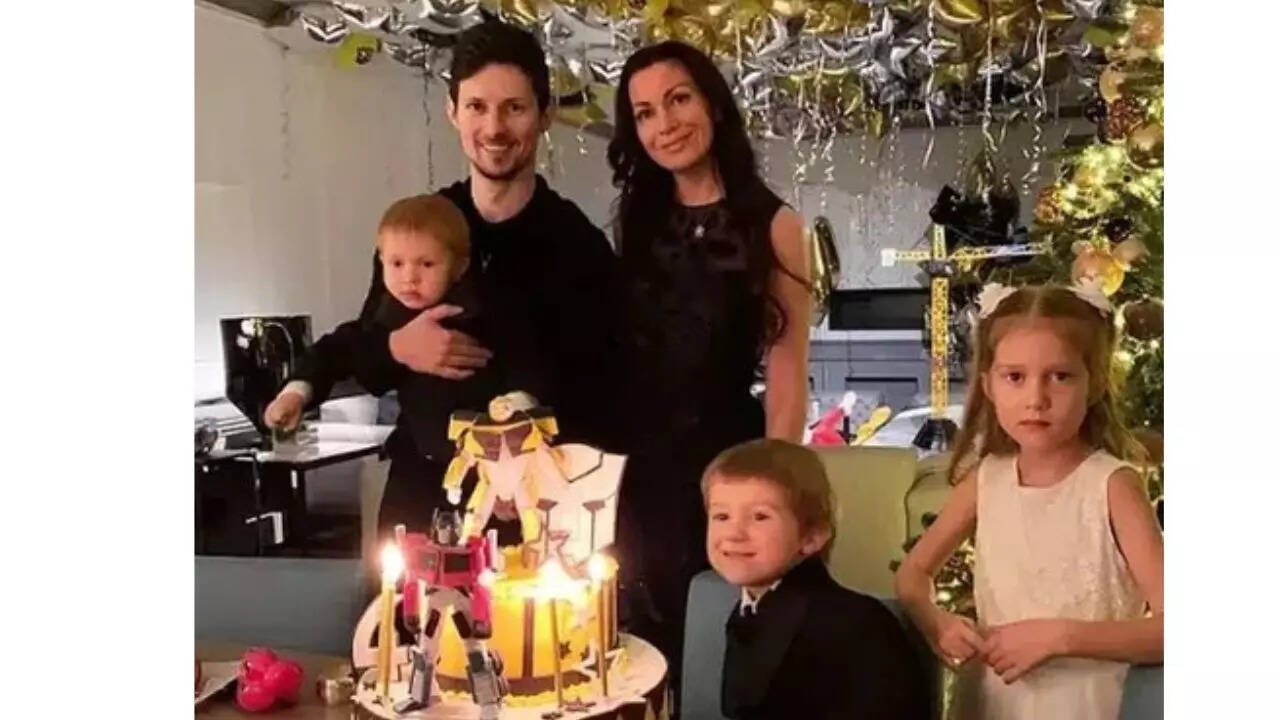
Pavel Durov takes the same logic and strips it of its remaining sentimentality. The Telegram founder has spoken openly about fathering over a hundred children through sperm donation, alongside children from his personal relationships. He has offered to fund IVF for women using his sperm and has promised that all his biological children will share his inheritance equally.This approach reframes parenthood in radically modern terms. There is no shared household, no daily presence, no expectation of emotional labour. Biology is separated from upbringing. Fatherhood becomes distributive rather than relational. Genes are spread at scale, while care is outsourced entirely.Durov presents this as civic duty, citing declining fertility and sperm quality. The rhetoric is calm and technocratic, but the implications are unsettling. Children become outcomes rather than relationships, and legacy becomes a matter of arithmetic rather than memory. What matters is not how a child is raised, but that the genetic line continues.This is reproduction designed for reach, not attachment.
The Chinese billionaire and the return of dynasties

If Musk represents ideological pronatalism and Durov represents scalable biology, the Chinese tech billionaire represents something older and more recognisable. In a Los Angeles courtroom, Xu Bo, a wealthy gaming entrepreneur, revealed that he had already fathered multiple children through US surrogates and planned to have many more. His stated aim was explicit. He wanted sons who could inherit and eventually run his business empire.China’s domestic constraints, including its recent history of birth control and intense social pressures, made such ambitions difficult to pursue at home. International surrogacy provided a solution. American legal frameworks designed to help infertile couples became tools for elite family construction. Citizenship was a byproduct. Parenthood became cross-border.What makes this case revealing is its lack of abstraction. Xu Bo did not speak about saving civilisation or demographic duty. He spoke about heirs, succession and control. Reproduction was not a philosophical act, but a corporate one. Family planning sounded uncomfortably like expansion strategy.This is where the billionaire fertility project sheds its futuristic language and reveals its feudal core. Technology does not abolish dynasties. It modernises them.
Surrogacy, IVF and the logistics of reproduction
Across these cases, the methods are remarkably similar. IVF, surrogacy and international legal arbitrage allow wealth to override biology, geography and regulation. Children can be commissioned across borders, timelines can be extended, and legal constraints can be navigated with enough money.The women who make this possible are rarely centred in these narratives. Surrogates and donors often come from economically weaker backgrounds, and while consent exists, it exists within asymmetry. Their labour is essential, but their futures remain peripheral to the story being told about legacy and survival.What began as compassionate technology designed to help people form families increasingly functions as infrastructure for elite reproduction. Parenthood becomes logistics rather than relationship.
Silicon Valley’s quiet fertility industry
Behind the high-profile figures lies a quieter ecosystem of belief and capital. Fertility and longevity start-ups promise extended reproductive windows, healthier embryos and improved outcomes. Venture funding flows freely. The language is reassuring and modern, full of references to choice, wellness and empowerment.Yet the underlying logic is unmistakable. Chance is inefficient. Nature is flawed. Selection is improvement. When applied to reproduction, this logic inevitably raises uncomfortable questions about whose lives are worth producing and under what conditions.The movement rarely names itself, but its echoes are familiar. It is eugenics without uniforms or slogans, sanitised by technology and softened by venture capital.
Why this makes people uneasy
The billionaire baby boom is not demographically significant. A few hundred children, even a few thousand, will not reverse global population trends. What makes the phenomenon unsettling is what it normalises.First, it collapses inequality into biology. When wealth allows people to reproduce more, later and with technological advantage, privilege compounds across generations in ways that go beyond education or inheritance. Opportunity becomes engineered.Second, it reframes women’s bodies as instruments in someone else’s future. Demographic anxiety is displaced onto reproduction, while male excess is celebrated as contribution. The burden of continuity remains unevenly distributed.Third, it misdiagnoses the underlying problem. People are not avoiding children because they lack moral conviction. They avoid children because the modern world makes parenting punishing. Billionaires bypassing that reality does nothing to fix it.Most revealing of all is how this movement imagines the future. Not as a shared social project shaped through policy, care and compromise, but as an inheritance problem to be solved privately by those with means.In a world where most people hesitate before bringing one child into an unstable future, the richest men on earth are busy ensuring that the future looks like them. That is not a demographic solution. It is a statement about power. Go to Source