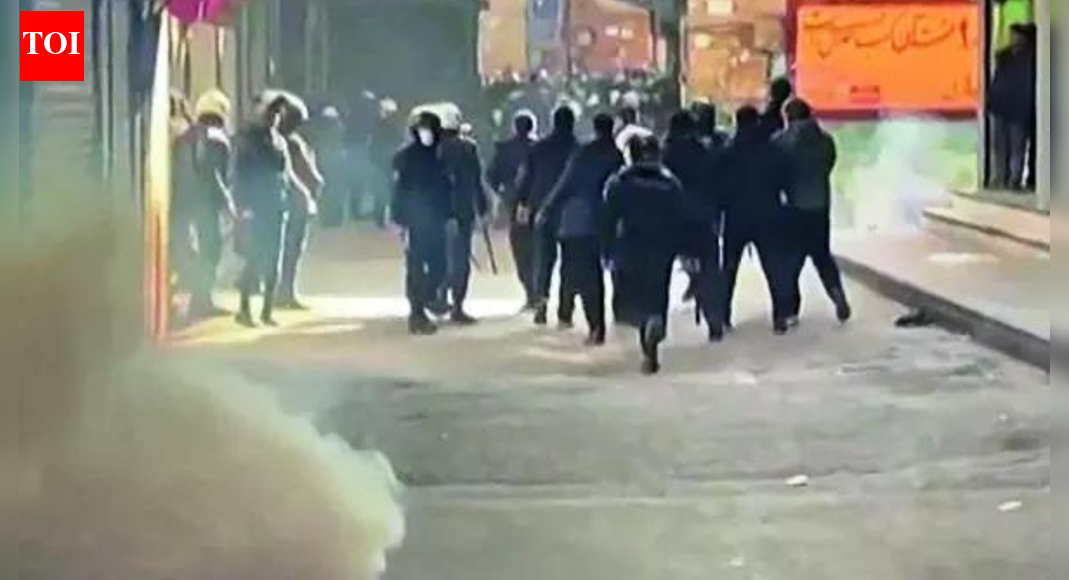

Facing protests sparked by a deepening economic crisis, Iran’s govt announced plans on Monday to provide most citizens with a monthly payment equivalent to around $7. The plan, according to the govt spokeswoman, Fatameh Mohajerani, is aimed at “preserving households’ purchasing power, controlling inflation, and ensuring food security.” But it will likely do little to ease the struggles of most Iranians, whose minimum needs cost upward of $200 a month.In Dec, economic pressures drove merchants, traders, and university students in many cities to stage protests, shutting down marketplaces and demonstrating on campuses. Over the past year, Iran’s currency has lost more than half its value against the dollar, and statistics show that inflation exceeded 42% in Dec alone.Shortly after protests broke out in Dec, govt replaced the central bank governor. Last week, govt reformed its currency exchange policy, which previously subsidised the imports of certain essential goods. In a statement on Sunday, the spokeswoman said that the $10 billion once spent annually to subsidise some imports would instead be used to pay Iranian citizens directly. The monthly payment would cover the equivalent of around 100 eggs, a kilogram of red meat, or a few kilograms of rice or chicken at current prices. The payments will be made to 80 million Iranians, the vast majority of the population, according to labour minister.