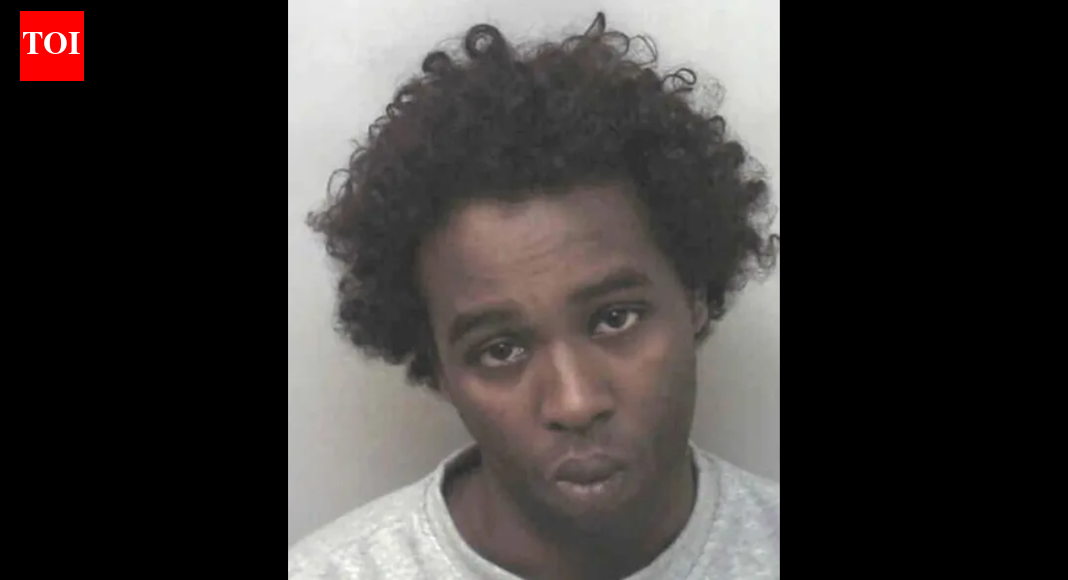


Fuad Awale requested compensation, saying long isolation in prison harmed his mental health and violated rights/ Image: Thames Valley Police
A convicted double murderer has been awarded £7,500 (around $10,100) in compensation, with taxpayers also covering more than £234,000 (approximately $316,000) in legal costs, after the UK High Court ruled that his treatment in prison breached his human rights.The payout was confirmed in correspondence from David Lammy, the Deputy Prime Minister and Justice Secretary, to Robert Jenrick, the Conservative Shadow Justice Secretary and former Cabinet minister, details of which were reported by The Daily Telegraph.The case centres on Fuad Awale, who was sentenced to life imprisonment in January 2013 after carrying out the execution-style shooting of two teenagers in Milton Keynes in 2011. Awale was 25 at the time he murdered Abdi Farah, 19, and Amin Ahmed Ismail, 18, shooting both men in the head during a dispute linked to drugs. He was given a minimum term of 38 years. Several years later, Awale received a further six-year sentence after threatening to kill a prison officer during a violent incident inside custody.
Close supervision and segregation
Following that hostage-taking incident in 2013, Awale was transferred to a Close Supervision Centre (CSC), a highly restrictive unit used to isolate prisoners assessed as posing the most serious risks to staff, inmates, or national security. A court heard that Awale and another prisoner ambushed a prison officer, threatened to kill him, and issued demands linked to extremist causes, including the release of radical cleric Abu Qatada. Prison assessments later concluded that Awale “held extremist beliefs”. While in the CSC system, Awale was denied association with other prisoners, a restriction prison authorities said was necessary due to security risks. The court was told that those risks included the presence of the so-called Death Before Dishonour anti-Muslim prison gang, as well as concerns about radicalisation. At one stage, Awale requested permission to associate with one of the killers of Fusilier Lee Rigby, the British soldier murdered in Woolwich in 2013 by Islamic extremists Michael Adebolajo and Michael Adebowale. That request was refused on counter-terrorism grounds. By March 2023, Awale had been unable to associate with any other inmates for an extended period. His legal team argued that the prolonged isolation had significantly damaged his mental health.
High Court ruling
In a judgment delivered in September 2024, the High Court ruled that Awale’s treatment in custody breached Article 8 of the European Convention on Human Rights, which protects the right to private and family life. By the time of the ruling, a series of events within the close supervision centre system meant Awale had been unable to associate with any other inmates since March 2023.Mrs Justice Ellenbogan concluded that the restrictions imposed on him went beyond what was justified, writing that “the degree of interference with the claimant’s private life which has resulted from his removal from association has been of some significance and duration”.The court awarded Awale £7,500 in damages and ordered that £234,000 in legal costs be paid from public funds. The decision was later raised in Parliament, triggering sharp political criticism.
Political reaction
Responding to the decision, Jenrick criticised both the outcome and the legal framework that allowed it.“It’s a sick joke that taxpayers are handing this man £7,500 in compensation and footing a legal bill of over £230,000,” he told The Telegraph.“This is a double murderer and extremist who took a prison officer hostage.“This is the reality of the ECHR: it prioritises the ‘rights’ of terrorists to associate with other extremists over the safety of our prison officers.”Jenrick went further, questioning whether Justice Secretary David Lammy would personally cover any compensation rather than relying on public funds if he intended to comply with the court’s ruling. He accused Lammy of placing the European Convention on Human Rights “above the interests of British people”.In posts on social media, Jenrick said the Government was “cowing to one of the most despicable terrorists in Britain” and called for emergency legislation to remove certain offenders from the scope of the Convention. Lammy rejected suggestions that the Government was capitulating to prisoners, while signalling unease about the implications of the ruling. In a letter sent to Jenrick on 29 December, he disclosed the previously unreported compensation figure, writing that the £7,500 payment “constitutes only a modest proportion of the overall settlement”.“This payment was mandated following a court judgment against the department, after we had defended the claim in line with the established policy of contesting all litigation brought by prisoners convicted of terrorist offences — a policy that has remained consistent under successive governments,” Lammy wrote.He added:“This Government will not be cowed by legal threats from prisoners.“The separation centre remains an essential operational tool to protect the public and other prisoners, and when dangerous radicalisers pose a risk, they will be placed in one.”Lammy said the Government remained committed to the European Convention on Human Rights, while stopping short of ruling out future changes.“Commitment does not mean complacency, however, and we must keep under review whether the application of the convention is acting as a barrier to us protecting national security.” Go to Source