
UAE’s Hope Probe Extended to 2028: What More Will We Learn About Mars?
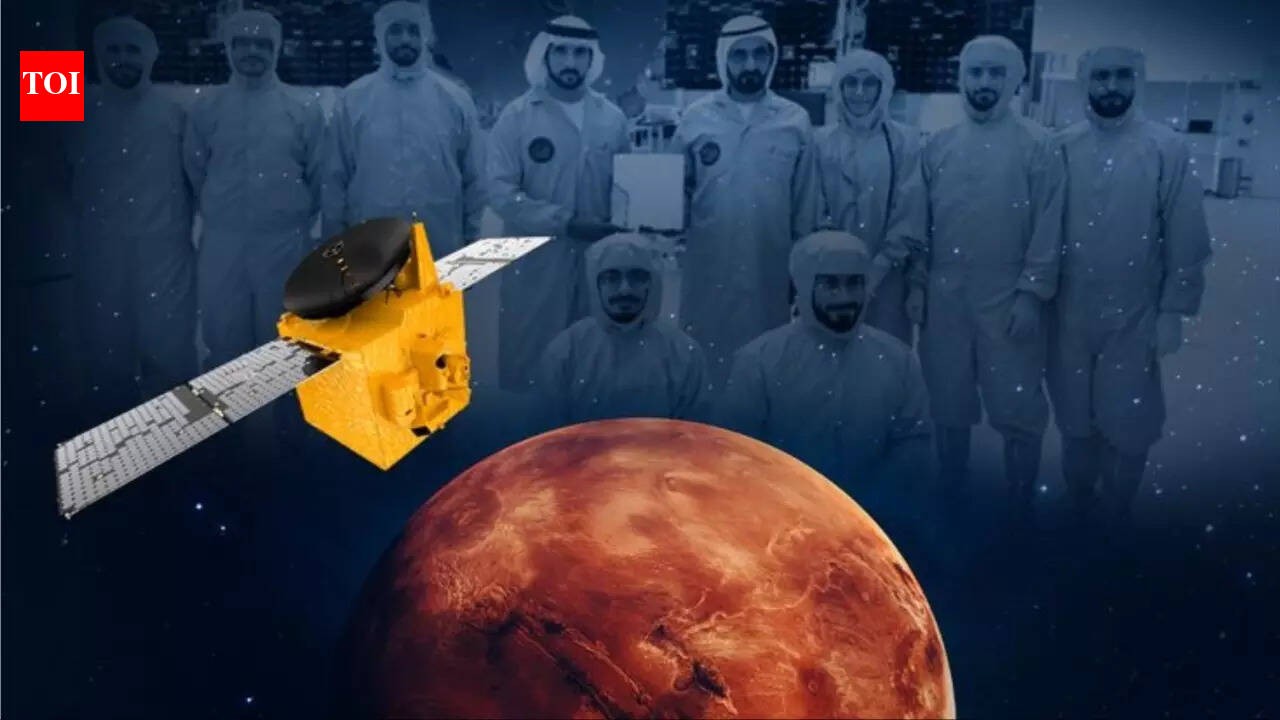
The United Arab Emirates Space Agency has announced a major extension of its Emirates Mars Mission (EMM), known widely as the Hope Probe, extending operations all the way through 2028, three years beyond its original mission timeline. The announcement was made by Dr Ahmad Belhoul Al Falasi, UAE Minister of Sports and Chairman of the Space Agency, at a press briefing in Dubai, with backing from Sheikh Hamdan bin Mohammed bin Rashid Al Maktoum, Crown Prince of Dubai and Chairman of the Space Council.Originally launched in 2020 and entering orbit around Mars in February 2021, the UAE’s Hope Probe was designed as a two-year mission to study Martian weather and atmospheric dynamics, in particular the interaction between its lower and upper atmosphere. However, after more than five years in orbit, the probe has far exceeded expectations by collecting around 10 terabytes of scientific data and contributing to groundbreaking research on Mars’ climate, auroras and its small moon Deimos.
What the extension for Emirates Mars Mission means for science and UAE space goals
Extending the mission to 2028 will allow scientists to continue observing seasonal and long-term changes in the Martian atmosphere, a key to understanding not only Mars but also comparative climate systems across planets. According to space officials, this extended phase will deepen humanity’s knowledge of planetary atmospheres, including how they evolve and respond to solar influences, which has implications for understanding Earth’s climate as well. The Hope Probe has already achieved rare feats, such as recording ultraviolet images of the interstellar object 3I/ATLAS in October 2025, only the third known interstellar object detected passing through our solar system, using its onboard instruments while positioned in Martian orbit.The mission’s success underscores the UAE’s growing role in global space research, with data shared widely among scientists at more than 200 institutions worldwide, enhancing collaborative research efforts beyond any single nation’s space program.
A strategic boost for UAE’s space ecosystem
The extension also reflects the UAE’s long-term strategic vision for its space sector. Leaders see the Mars mission not just as a scientific achievement but as a catalyst for national innovation, education and economic diversification. Since the mission began, the UAE’s space ecosystem has expanded rapidly, with growth in aerospace programs at universities, a tripling of space-related entities between 2020 and 2025 and increasing participation from the private sector. Officials have stated that extending the Hope mission maximises the return on the nation’s space investment and builds invaluable operational experience that will support future deep-space missions, such as the ambitious Emirates Mission to the Asteroid Belt scheduled to launch in 2028, which aims to explore multiple asteroids between Mars and Jupiter. Beyond pure science, the extended mission is also about inspiration and capacity-building. It has helped fuel interest in STEM (science, technology, engineering and mathematics) education across the UAE and the region, motivating thousands of students and young researchers to pursue careers in space and related fields.The Emirates Mars Mission marked a series of historic firsts. The UAE became the first Arab nation and only the fifth country overall to reach Mars, a milestone celebrated internationally. The extension signals that the UAE’s role on the interplanetary stage is more than symbolic; it is an active contributor to scientific discovery. In addition to ongoing data collection, the mission’s legacy continues to shape the UAE’s space strategy, accelerating investment, partnerships and research that position the country among the world’s emerging space powers by 2031, in line with broader national goals to diversify the economy and foster a knowledge-driven future. UAE extends its Emirates Mars Mission (Hope Probe) to 2028, three years beyond its initial plan.The probe has far exceeded expectations, collecting around 10 terabytes of data on the Martian atmosphere and climate. The mission contributes to international scientific research, with data shared across hundreds of institutions. The extension supports future deep-space plans, including the Asteroid Belt mission set for launch in 2028. It also boosts the UAE’s space ecosystem, inspiring education, innovation and global scientific leadership. Go to Source