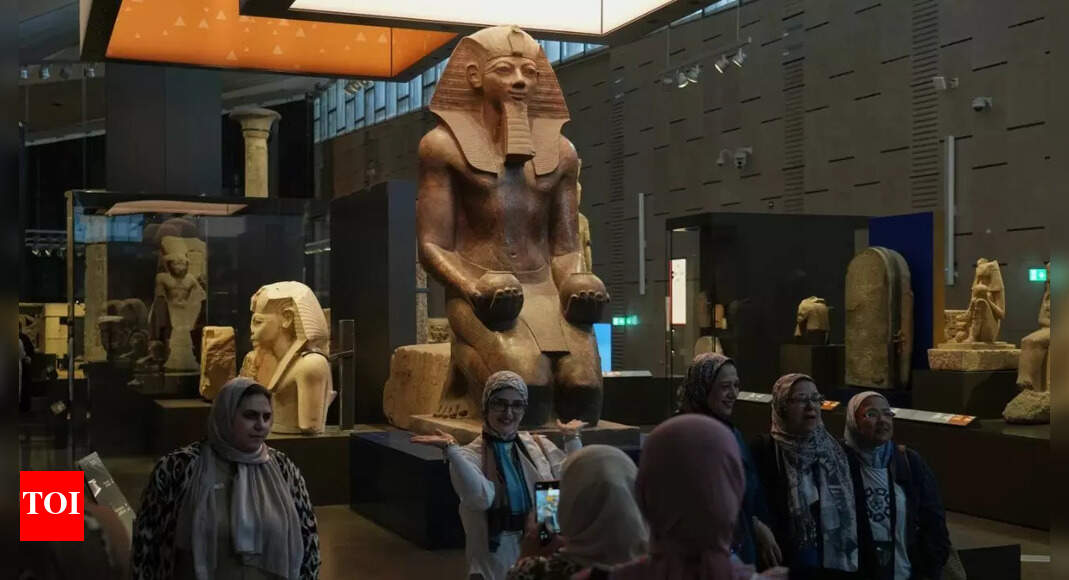

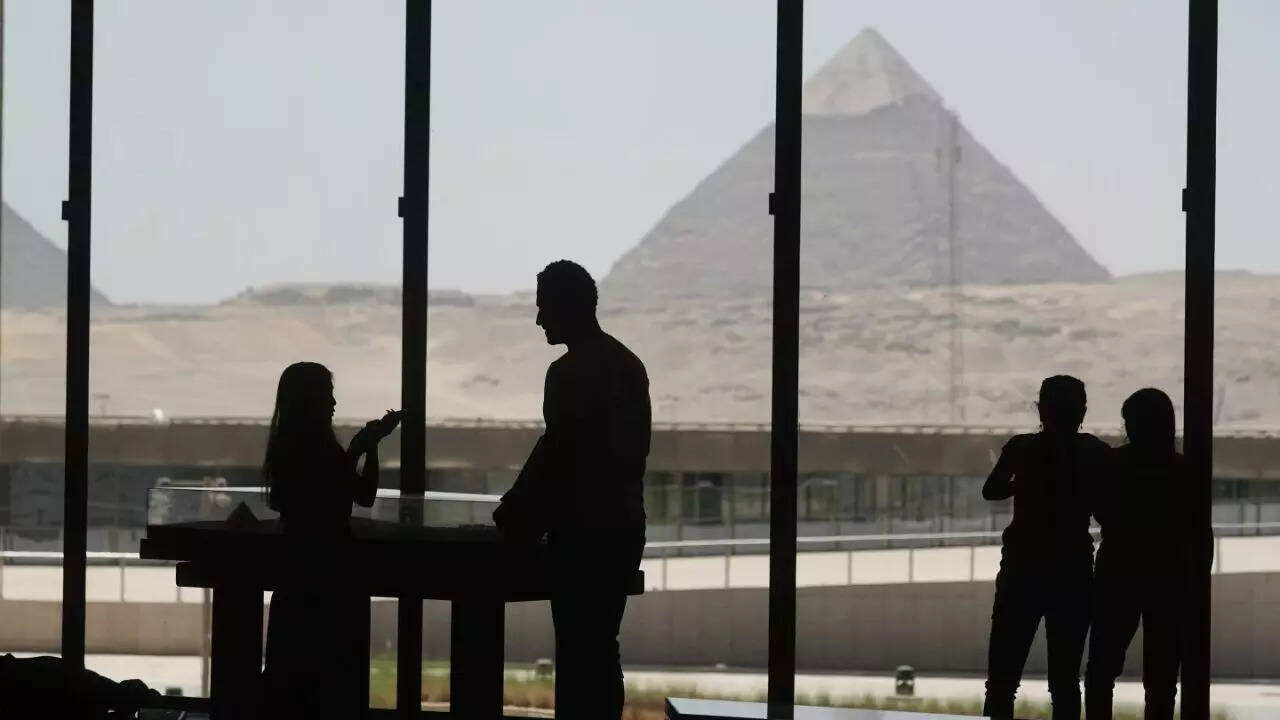
Near the shadow of the Great Pyramid of Khufu, one of the Seven Wonders of the Ancient World, Egypt has officially unveiled the Grand Egyptian Museum (GEM), a monumental project that has taken decades to complete and is now being hailed as the world’s largest archaeological museum.The museum, whose construction cost more than $1.2 billion, spans an astonishing 500,000 square metres, roughly the size of 70 football pitches, and houses around 100,000 artefacts chronicling over 7,000 years of Egyptian civilisation, from pre-dynastic cultures to the Greco-Roman era.But the greatest draw of all is the long-awaited full display of the treasures from Tutankhamun’s tomb, reunited for the first time since their discovery more than a century ago.
A century in the making: The complete Tutankhamun experience
The discovery of King Tutankhamun’s tomb in 1922 by British archaeologist Howard Carter remains one of the most celebrated moments in archaeological history. The find, remarkably intact, offered the world an unprecedented glimpse into the life, death, and splendour of Egypt’s 18th Dynasty.For the first time, visitors can see every single item found in Tutankhamun’s burial chamber, more than 5,500 objects, displayed together in one space. This includes his golden death mask, the intricately carved throne, his chariots, and even personal belongings such as jewellery, sandals, and preserved food offerings meant to accompany him into the afterlife.“I wanted to recreate the moment Howard Carter experienced in 1922,” says Dr Tarek Tawfik, president of the International Association of Egyptologists and former head of the GEM. “Nothing remains in storage. Visitors will now see the complete tomb, exactly as Carter saw it a hundred years ago.”This immersive exhibit represents a radical rethinking of museum storytelling. Instead of displaying individual pieces as isolated works of art, the Grand Museum reconstructs the context of the burial, offering a holistic narrative of Egypt’s most famous pharaoh and the cultural beliefs that surrounded his death.
Architectural grandeur: A monument to modern Egypt
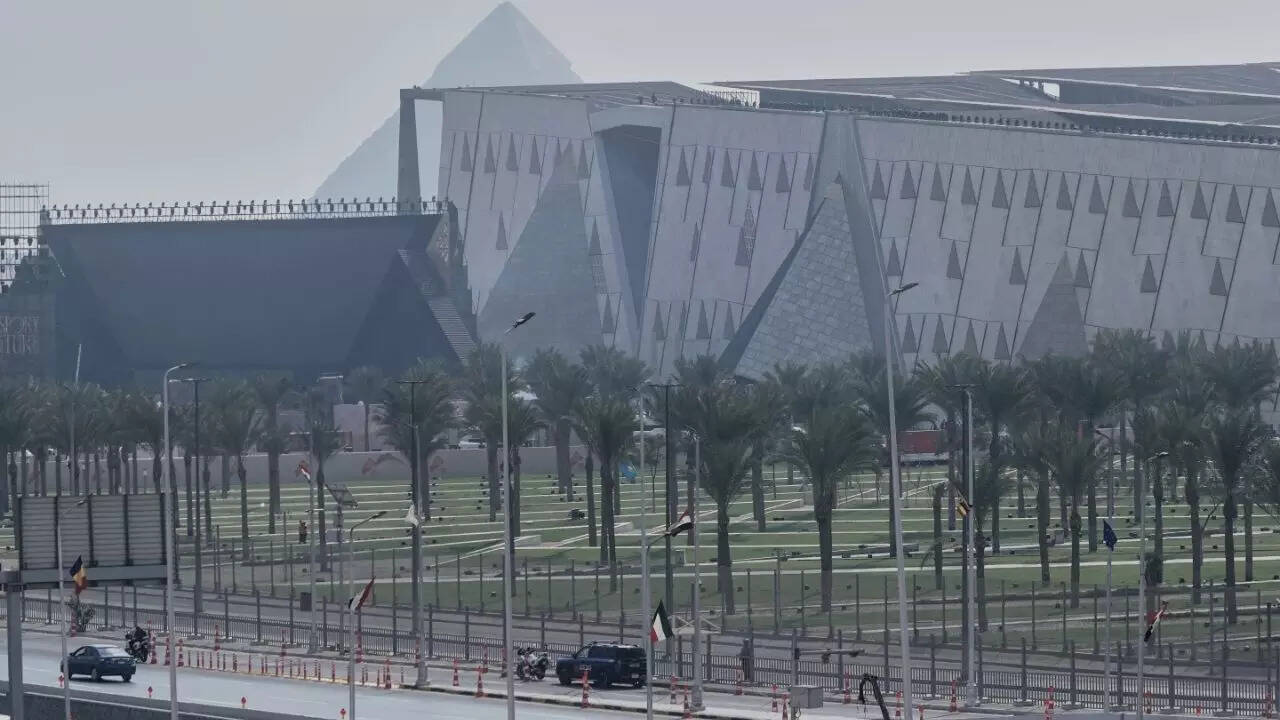
Designed by the Irish architectural firm Heneghan Peng, the Grand Egyptian Museum is itself a marvel of modern design. Its façade of translucent alabaster panels, cut into triangular patterns reminiscent of the nearby pyramids, creates a striking visual dialogue between antiquity and modernity.Visitors enter through a pyramid-shaped atrium, where they are greeted by an 11-metre-high statue of Pharaoh Ramses II, one of ancient Egypt’s most powerful rulers. The colossal granite figure, relocated from Cairo’s railway station in 2006, stands as the symbolic guardian of Egypt’s reborn heritage.A vast grand staircase rises behind him, flanked by statues of pharaohs, queens, and deities that seem to watch over guests as they ascend toward galleries that open to a breathtaking view of the Giza pyramids.Among the engineering highlights is a suspended obelisk of Ramses II, measuring 16 metres long, presented in a glass enclosure that allows visitors to walk beneath it, a first-of-its-kind exhibit that combines ancient craftsmanship with contemporary display technology.
A museum for Egypt and the world
The Grand Egyptian Museum is more than a display space. It is a national and scientific institution, housing conservation laboratories, research centres, and archives that have already been used to restore thousands of artefacts.In recent years, Egyptian conservators have painstakingly restored fragile objects from Tutankhamun’s tomb, including his ceremonial armour made of woven leather and gold. Under Egyptian law, all restoration work must be done by Egyptians, a point of immense pride for the country’s Egyptologists.“Colleagues around the world have been in awe of the conservation work done here,” says Dr Tawfik. “This museum is not just about the past; it’s a statement that modern Egypt can preserve and present its heritage at the highest international level.”Egyptian authorities hope the museum will attract up to eight million visitors a year, reviving the nation’s tourism industry after years of political upheaval, economic challenges, and the pandemic.“We hope the Grand Egyptian Museum will usher in a new golden age of Egyptology and cultural tourism,” says Ahmed Seddik, a local Egyptologist and guide. “Tutankhamun is the most famous king in human history, and now his entire story is finally being told in one place.”
Renewed calls for repatriation of Egyptian artefacts
The opening of the GEM has reignited long-standing demands for the repatriation of key Egyptian antiquities currently housed in museums abroad, such as the Rosetta Stone (British Museum), the Dendera Zodiac (Louvre), and the Bust of Nefertiti (Neues Museum, Berlin).Egyptian archaeologist Dr Monica Hanna agrees that the GEM strengthens Egypt’s moral and institutional case. “It gives the message that Egypt has done its homework,” she says. “We now have the infrastructure to care for our own heritage.”
A new chapter in Egypt’s cultural revival
The Grand Egyptian Museum has taken more than three decades to complete, with the project first proposed in 1992 under President Hosni Mubarak. Construction began in 2005 but faced numerous delays, from the 2011 Arab Spring and subsequent political instability to the financial crises and the Covid-19 pandemic.For many Egyptians, its long-awaited opening marks not just a cultural milestone but also a moment of national renewal.
The legacy of Tutankhamun endures
As visitors walk through the Tutankhamun galleries, they encounter more than golden relics, they step into a dialogue between history and modern identity. The boy king, who ruled for less than a decade over 3,300 years ago, continues to captivate the world with his mystery, beauty, and symbolism.In a sense, the Grand Egyptian Museum is Tutankhamun’s final triumph, a monument not only to his afterlife but to Egypt’s enduring quest to reclaim and reinterpret its past.Standing at the intersection of ancient wonder and modern ambition, the GEM is both a sanctuary of memory and a beacon of national pride, one that ensures Egypt’s ancient story continues to inspire generations to come. Go to Source