
Friday, June 19, 2026
40.3 C
New Delhi

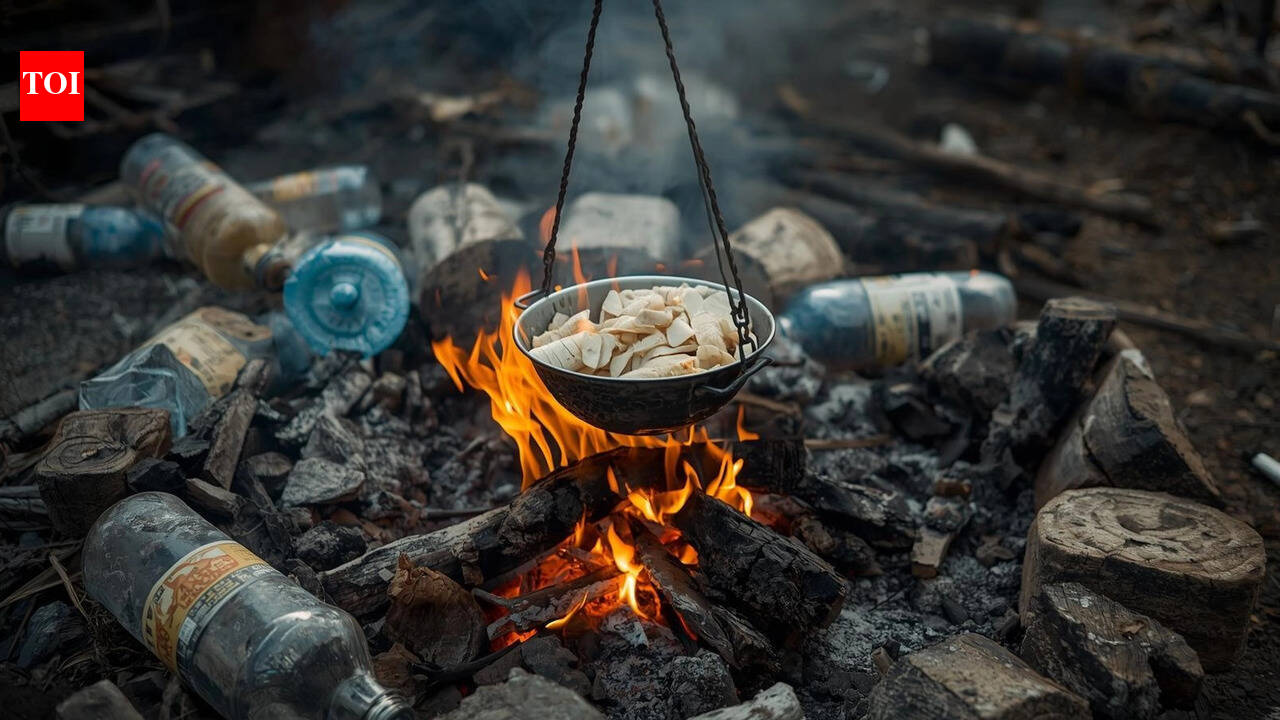
Easy availability has turned plastic waste in Latin America, Asia, Africa, and Oceania into a dangerous household fuel

Easy availability has turned plastic waste in Latin America, Asia, Africa, and Oceania into a dangerous household fuel

Easy availability has turned plastic waste in Latin America, Asia, Africa, and Oceania into a dangerous household fuel (AI-generated)

Plastic waste turns up in many places, sometimes piled at the edge of a road, sometimes tucked behind homes. In a growing number of cities across the Global South, it also turns up in cooking fires. A recent international study titled “Prevalence of plastic waste as a household fuel in low-income communities of the Global South” suggests this is not rare. Drawing on responses from more than 1,000 informants across 26 countries, the research points to plastic being burnt inside households as part of everyday life. Not always openly discussed, and rarely measured, the practice sits somewhere between waste disposal and energy use. About a third of those surveyed said they were aware of plastic burning in homes they knew well. The study does not claim precision. It offers a glimpse instead, uneven but persistent, into how people manage fuel and waste when options narrow.

Plastic waste is fuelling household fires in Global South cities

There is no single moment when plastic becomes fuel. It often slips in alongside other materials. A bag here, packaging there. Used to help start a fire, then sometimes kept going longer than intended. Informants spoke of plastic being mixed with wood or charcoal, or used when nothing else was available. In dense urban areas, waste collections may skip entire neighbourhoods. Plastic gathers fast. It is light, it burns, and it is already there.

Cities grow faster than systems can follow

Urban growth across low- and middle-income countries continues at speed. Informal settlements expand where land is cheaper and regulation thinner. Services do not always reach these areas, and when they do, they often arrive late. Waste management is one of the first gaps to appear. Plastic does not disappear on its own. Without collection, it accumulates in public and private spaces. Burning becomes less a choice and more a habit shaped by surroundings.

Energy scarcity shapes small decisions

Clean fuels remain out of reach for many households. Electricity can be unreliable. Gas often costs too much upfront. Ethanol and biogas are limited to certain markets. Traditional fuels do not fill the gap easily. Wood and charcoal are harder to find in cities, and prices rise as supply tightens. For families balancing daily costs, plastic waste is free. That matters more than long-term risk in the moment.

Health risks sit in the background

Burning plastic releases harmful smoke. This phenomenon is widely known, at least in broad terms. The damage is less visible day to day. Toxins linger in the air, settle on food, and move through soil and water. Studies near waste-burning sites have found contamination in animal products. These effects unfold slowly. They are hard to trace back to a single source, which makes them easier to live with or ignore.

Evidence remains thin and scattered

Systematic data on plastic used as household fuel is scarce. National surveys rarely ask about it directly. When they do, it is often grouped under vague categories like garbage. The study behind these findings relied on people familiar with local conditions rather than households themselves. This limits what can be claimed. Still, similar accounts appeared across regions. Different cities, similar patterns. That repetition carries weight, even if it resists neat measurement.

Policy exists, practice continues

Many governments have rules against open burning and plastic disposal. On paper, restrictions are clear. On the ground, enforcement varies. Expanding waste services and lowering the cost of clean energy are often proposed as solutions. Both require time and money. In the meantime, households continue to manage what surrounds them. Plastic burns quickly. It clears space. It heats food. The trade-off is rarely framed as a decision. It simply happens, again and again, in places where alternatives remain distant. Go to Source

Hot this week

Quote of the day by Queen Elizabeth: “Over the years, those who have seemed to me to be the most happy, contented and fulfilled...

Queen Elizabeth (Image: Wikipedia) We are told, more or less constantly, that happiness is something you get. Buy the thing, win the prize, land the promotion, treat yourself. Read More

The great reverse migration: Why India’s professionals are leaving Metro cities

More and more professionals are discovering the charm of working in smaller cities over metros and corporate hubs A quiet but significant shift is unfolding across the Indian landscape. Read More

‘India must take control of security-related necessities’: Rajnath Singh after ‘bhoomi pujan’ for aluminium extrusion press in Nagpur

Defence minister Rajnath Singh and Maharashtra CM Devendra Fadnavis at the ceremony in Nagpur NEW DELHI: Defence minister Rajnath Singh said on Friday “that a nation capable of meeting its own requirements moves forward with the gre Read More

Culture, history & diaspora ties are empowering India-Malaysia ties

File photo: PM Modi with Malaysian Prime Minister Anwar Ibrahim India’s growing soft-power presence and cultural diplomacy is witnessing a new vigour in Malaysia, one of India’s key economic partners and a historically connected Asea Read More

Imtiaz Ali questions people being comfortable with ‘burqa’ or ‘parda’: It’s not okay

Filmmaker Imtiaz Ali is known for the strong female characters in his movies which break stereotypes and live life on their own terms. Read More

Topics

Quote of the day by Queen Elizabeth: “Over the years, those who have seemed to me to be the most happy, contented and fulfilled...

Queen Elizabeth (Image: Wikipedia) We are told, more or less constantly, that happiness is something you get. Buy the thing, win the prize, land the promotion, treat yourself. Read More

The great reverse migration: Why India’s professionals are leaving Metro cities

More and more professionals are discovering the charm of working in smaller cities over metros and corporate hubs A quiet but significant shift is unfolding across the Indian landscape. Read More

‘India must take control of security-related necessities’: Rajnath Singh after ‘bhoomi pujan’ for aluminium extrusion press in Nagpur

Defence minister Rajnath Singh and Maharashtra CM Devendra Fadnavis at the ceremony in Nagpur NEW DELHI: Defence minister Rajnath Singh said on Friday “that a nation capable of meeting its own requirements moves forward with the gre Read More

Culture, history & diaspora ties are empowering India-Malaysia ties

File photo: PM Modi with Malaysian Prime Minister Anwar Ibrahim India’s growing soft-power presence and cultural diplomacy is witnessing a new vigour in Malaysia, one of India’s key economic partners and a historically connected Asea Read More

Imtiaz Ali questions people being comfortable with ‘burqa’ or ‘parda’: It’s not okay

Filmmaker Imtiaz Ali is known for the strong female characters in his movies which break stereotypes and live life on their own terms. Read More

Soni Razdan says family bond with Karisma made ‘Brown’ easy

Soni Razdan said working with Helen on ‘Brown’ became a joyful surprise because the veteran star’s comic timing kept making her laugh during scenes. Read More

Samantha and other ‘Maa Inti Bangaram’ stars’ salary revealed

‘Maa Inti Bangaram’ salary revealed The buzz surrounding Samantha Ruth Prabhu’s highly anticipated Telugu comeback film, Maa Inti Bangaram, has reached a fever pitch following recent reports detailing the star-stud Read More

Chitra Tripathi on Iran–US Deal: Trump Signs Agreement, Declares End to War

Chitra Tripathi on Iran–US Deal: Trump Signs Agreement, Declares End to War Go to Source Read More

Related Articles