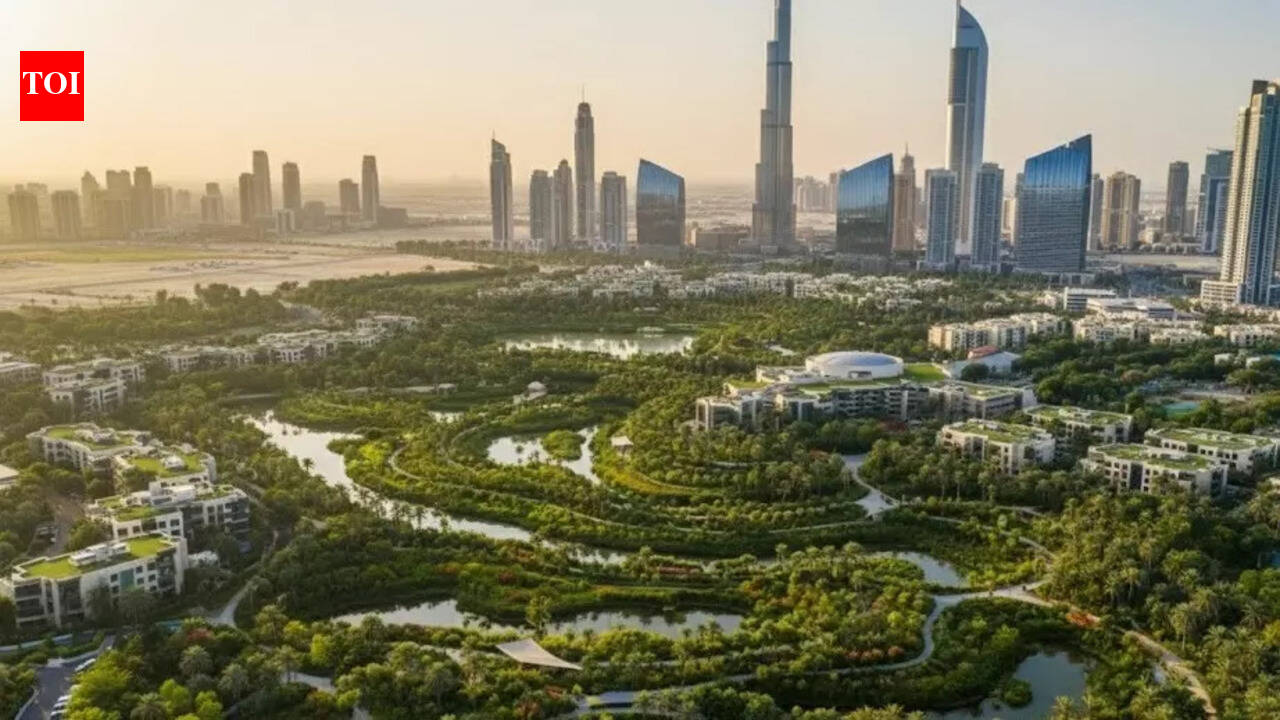

Inside the Sponge City Vision Set to Reshape Urban Life / Image: AI
In a major move toward climate resilience, Dubai has officially embraced the “Sponge City” urban model through a landmark partnership with the Chinese tech hub, Shenzhen. Announced during the World Governments Summit (WGS) 2026, this collaboration aims to transform how the emirate handles heavy rainfall. A “Sponge City” is designed to act just like its name suggests, rather than letting water pool on asphalt or overwhelm traditional sewers, the city uses permeable pavements, rooftop gardens, and specialized wetlands to absorb, store, and purify rainwater. By signing a Memorandum of Understanding (MoU) with Shenzhen, a world leader in this field, Dubai is bringing in decades of expertise to ensure its streets remain dry and functional even during the most intense desert storms.
What is China’s Sponge City?
China introduced sponge cities to tackle flooding, water scarcity, and urban overheating caused by rapid concrete-heavy development. In Shenzhen, the model combines permeable roads, green roofs, rain gardens, wetlands, underground reservoirs, and smart drainage systems into a single, integrated urban ecosystem.Rather than relying solely on pipes and pumps, sponge cities use nature-based solutions supported by technology. Water is absorbed where it falls, stored temporarily during heavy rain, filtered naturally, and reused for irrigation or cooling.Dubai officials see this as a practical model to adapt, especially as climate patterns shift and short bursts of heavy rainfall become more frequent across the region.
What Sponge City could offer in Dubai?
This initiative is a critical pillar of the Dubai 2040 Urban Master Plan, which focuses on enhancing the quality of life and doubling the city’s green areas. The partnership with Shenzhen will see the development of “Rain Gardens” and “Bio-Swell” zones, beautifully landscaped areas that double as natural drainage systems. City planners envision:
- Roads and pavements designed to absorb water instead of repelling it
- Parks, plazas, and landscaped areas that temporarily store rainwater during storms
- Green roofs and shaded corridors that reduce heat while managing runoff
- Underground water storage systems beneath urban zones for reuse in irrigation
- Smart, AI-driven monitoring systems to predict rainfall and manage drainage loads
His Excellency Dawoud Al Hajri, Director General of Dubai Municipality, emphasized that this isn’t just about disaster prevention; it’s about urban aesthetics. By integrating nature into the drainage strategy, Dubai will see more parks and tree-lined streets that naturally cool the city while managing water.
Dubai–Shenzhen Partnership
The agreement between Dubai Municipality and UPDIS sets out cooperation in urban planning, sponge city development, smart technologies, low-carbon growth, and future-ready city design.Dubai Municipality Director General Eng. Marwan Ahmed bin Ghalita said the partnership reflects Dubai’s strategy of learning from global leaders while developing cities that are sustainable, resilient, and people-centric. Shenzhen’s UPDIS President Yu Lu noted that both cities share similarities, young, fast-growing, and innovation-driven, making collaboration especially effective.The partnership includes research exchange, technical cooperation, and annual progress reviews, ensuring the sponge city concept is adapted carefully to Dubai’s environment and long-term plans.
Commute for all
For the average resident, “Sponge City” technology means no more waterlogged roads, reduced traffic delays during the rainy season, and a significant boost in local greenery. By utilizing the Shenzhen model, Dubai is positioning itself as a global leader in desert urbanism. As H.E. Abdulla Al Basti, Secretary General of the Dubai Executive Council, noted, this partnership reflects the city’s commitment to “proactive governance”, solving future problems today through global cooperation and high-tech engineering. Go to Source