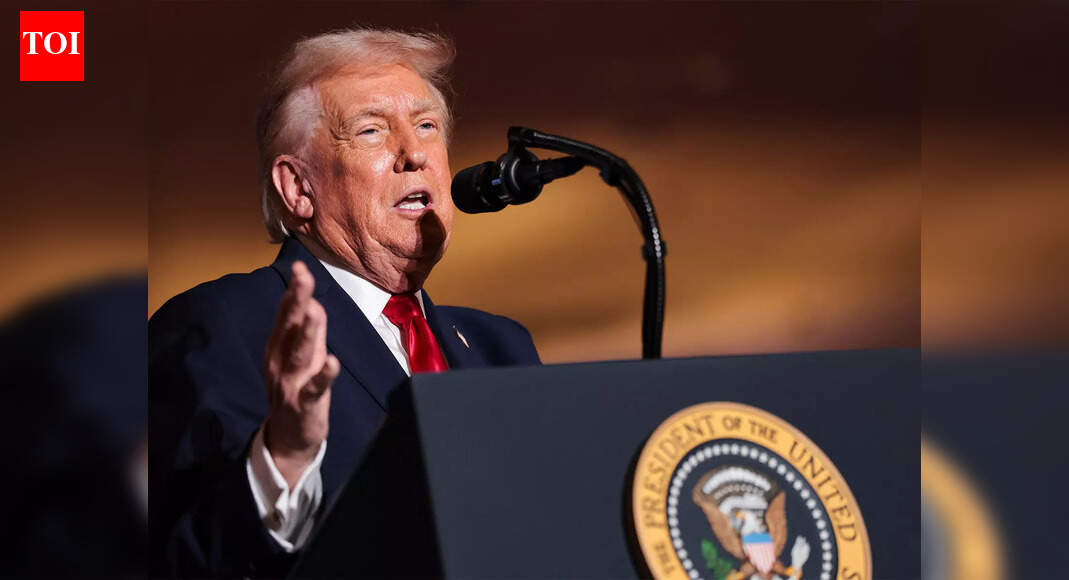


US President Donald Trump has announced plans for the federal government to purchase $200 billion worth of mortgage bonds, saying the move will help bring down mortgage rates as concerns over housing affordability continue to weigh down Americans.In a post on social media on Thursday, Trump said the funds would come from Fannie Mae and Freddie Mac, the two mortgage giants that have been under government conservatorship since the 2008 financial crisis. According to the US president, companies currently hold $200 billion in cash that will be used for the bond purchases.“This will drive Mortgage Rates DOWN, monthly payments DOWN, and make the cost of owning a home more affordable,” Trump wrote.The announcement comes as Trump and the White House seek to tackle affordability issues ahead of the November midterm elections. Home prices have continously outpaced income growth, largely due to a long-running shortage of new housing supply. That imbalance has made it harder for renters to step onto the property ladder and for existing homeowners to move up to larger homes, a problem that stretches back to Trump’s first term and the recovery from the housing market collapse that triggered the global financial crisis. White House officials did not immediately provide details on when or how the bond purchases would take place.The Federal Reserve has previously stepped in to buy mortgage-backed securities during periods of economic stress in an effort to push borrowing costs lower. Those interventions helped drive mortgage rates to historic lows, enabling many homeowners to refinance at rates of 3% or less. However, those same low rates have also discouraged homeowners from selling, limiting the number of homes available on the market.
What it make housing cheaper for Americans?
Daryl Fairweather, chief economist at real estate brokerage Redfin, questioned how effective the proposed move would be in addressing broader housing market constraints.“At a high level I feel this is putting a Band-Aid on a deeper issue and it probably wouldn’t lower rates enough to really undo the mortgage rate lock-in effect,” Fairweather told AP.She estimated that government purchases of mortgage debt could reduce rates on a 30-year fixed mortgage by around 0.25 to 0.5 percentage points. However, she cautioned that such a reduction would not tackle structural problems such as the chronic shortage of homes for sale, which continues to push prices higher and limit affordability.Mortgage rates are currently averaging about 6.2%, according to Freddie Mac. Thirty-year rates have not fallen below 6% since September 2022. Freddie Mac and Fannie Mae were placed into conservatorship in 2008 as the US economy slid into the Great Recession.“Lowering mortgage rates by maybe a quarter point or half a point maybe will encourage more demand on the margins, but I don’t think it’s going to solve the restrictions that exist in the housing market,” Fairweather added.The plan also carries risk, as it would draw down cash reserves that are intended to act as a buffer in the event of an economic downturn similar to the Great Recession. Using those reserves could leave Fannie Mae and Freddie Mac more exposed if the housing market were to weaken, effectively relying on the assumption that such a scenario is unlikely.Separately, the Federal Reserve continues to hold a substantial amount of mortgage-backed securities on its balance sheet, roughly $2 trillion, down from $2.7 trillion in June 2022. The Fed began reducing its holdings as the US economy recovered from the pandemic.
America and mortgage woes
Mortgage rates surged as inflation accelerated after the pandemic, with the consumer price index reaching a four-decade high in 2022. While average mortgage rates have eased from nearly 7% at the start of Trump’s second term last year, the decline has done little to alleviate public anxiety over rising costs of housing, food and energy.Lower interest rates can reduce monthly mortgage payments and temporarily improve affordability, though home prices typically adjust over time. As of mid-2024, outstanding mortgage debt in the US stood at around $21.1 trillion, according to the St. Louis Federal Reserve.During the pandemic, many homeowners refinanced their loans at rates of 3% or lower, further contributing to the reluctance to sell.Trump has said broader housing reforms are on the way. Last month, he announced plans to unveil new measures, and on Wednesday he said he wants to prevent institutional investors from purchasing homes. Go to Source