
Andrew Drury/ Instagram
A British journalist has alleged that while travelling through conflict zones over the past two decades, he was offered the opportunity to shoot civilians, describing the practice as neither “dark tourism” nor adventurism, but “murder”. His claims sit alongside a separate, ongoing investigation in Italy into allegations that wealthy Westerners paid to shoot civilians during the siege of Sarajevo in the 1990s. The allegations, reported across British and European media, concern what has been described as “sniper tourism” or “human safaris,” claims that civilians in active war zones were targeted for sport by outsiders with access to weapons and local armed groups.
Andrew Drury’s account of war zone encounters
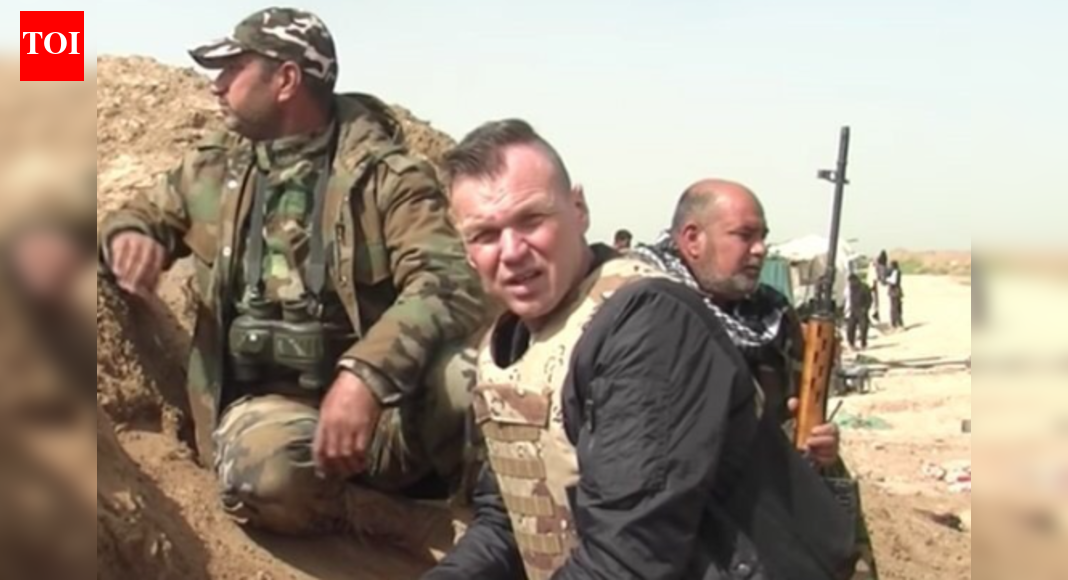
Andrew Drury, a father of four from Surrey who is now a journalist and documentary-maker, told The Sun that he has spent years travelling through some of the world’s most dangerous regions, including Somalia, Afghanistan, Chechnya and Iraq. He described these trips as “holidaying” in war zones, though he stressed that they involved moving through active front lines. Drury said that during his travels he heard repeated references to alleged “human safaris,” excursions in which civilians were deliberately targeted. He described the idea as “lunacy” but claimed that, in one instance, the proposition was made directly to him. While visiting the frontline in Kirkuk, Iraq, Drury said he was offered the chance to fire a sniper rifle at civilians. “I was offered the chance to have a shot by a sniper,” he told The Sun. “I wouldn’t even look into the scope. “I couldn’t take another human life, I couldn’t even kill an animal — but people are doing it all the time.” Drury said the offer was not framed as combat, but as something closer to participation in violence for its own sake. He also described seeing foreign nationals join Kurdish Peshmerga forces during the conflict with Isis, raising difficult questions about where tourism, volunteering and combat overlap. “You had people travelling to Iraq and joining the Peshmerga,” he said. “It could be classed that they were on holiday, although they joined and fought against Isis. “Was that tourism? They weren’t soldiers and that was all over the frontlines during the Iraq War.” Drury rejected any attempt to frame such actions as curiosity-driven travel. “It’s not dark tourism,” he said. “It’s murder.”
Claims of personal risk and targeting
Drury also said his own safety was repeatedly at risk during these trips. He claimed he had been “shot at a few times” while filming in Kirkuk and described being approached by individuals he believed to be intelligence officers while travelling in Iraq with his cousin. According to Drury, he was told that he “had a price tag on his head”. He also described encountering difficulties attempting to enter Chechnya, which he said resulted in him “upsetting the Russians a little bit”, though he did not provide further details.
Italian ivestigation into ‘Sniper Tourists’ in Sarajevo
Drury’s claims have emerged alongside a separate investigation in Italy into alleged “sniper tourism” during the Bosnian war. According to reporting by The Guardian, Italian prosecutors in Milan are investigating claims that wealthy foreign nationals paid large sums of money to shoot civilians during the siege of Sarajevo between 1992 and 1996. The investigation follows a complaint filed by journalist Ezio Gavazzeni, who alleges that Italian citizens were among groups taken to hills surrounding Sarajevo by Bosnian Serb militias, where they were given sniper rifles and allowed to fire on civilians trapped in the city below. Italian media have reported that fees allegedly varied depending on who was shot, men, women or children, with some trips said to have cost as much as £70,000. “People from all western countries who paid large sums of money to be taken there to shoot civilians,” Gavazzeni said, as quoted by The Guardian. “There were no political or religious motivations. They were rich people who went there for fun and personal satisfaction. “We are talking about people who love guns who perhaps go to shooting ranges or on safari in Africa.” Gavazzeni said he had identified several Italian nationals who are now expected to be questioned by prosecutors. Those under investigation could face charges of voluntary murder. “There was a traffic of war tourists who went there to shoot people,” he said. “I call it an indifference towards evil.”
The siege of Sarajevo and ‘Sniper Alley’
The allegations relate to one of the most notorious episodes of the Bosnian war. Following the collapse of the Socialist Federal Republic of Yugoslavia in 1992, Bosnia and Herzegovina descended into a multi-sided conflict involving Bosnian Serbs, Bosnian Croats and Bosniak Muslims. The siege of Sarajevo lasted nearly four years, from 1992 to 1996. Around 300,000 civilians were trapped inside the city, with limited access to food, water and electricity. More than 11,000 people were killed, including over 1,600 children. Sarajevo’s main thoroughfare became known as “Sniper Alley”, where civilians attempting to cross open spaces were routinely fired upon from surrounding hills. According to figures cited by the United States Holocaust Memorial Museum, around 100,000 people died during the wider Bosnian conflict, which also included mass rape, ethnic cleansing and the 1995 Srebrenica genocide.
Scepticism and challenges to the claims
The claims and the investigation have not been without scepticism, particularly given the passage of time and the difficulty of verifying events alleged to have taken place more than three decades ago. The Italian investigation has drawn a mixed response from journalists and historians familiar with the conflict. Tim Judah, a British journalist and Balkans specialist who reported from the region during the war, told The Telegraph that while the allegations could not be ruled out, proving them would be difficult. “I’m not saying it didn’t happen. It is possible that there were people willing to pay to do this,” he said. “But I don’t think the numbers would have been very large.” Critics have also pointed to the passage of time and the lack of physical evidence as obstacles to prosecution, with many of the alleged crimes dating back more than three decades.As of now, Italian prosecutors have confirmed that the inquiry remains at an early, preliminary stage, with suspects yet to be formally charged and investigators still assessing whether sufficient evidence exists to proceed.The investigation has also referenced claims made by journalist Domagoj Margetić linking Serbia’s current president, Aleksandar Vučić, to alleged “human safari” activity during the Bosnian war. Vučić’s spokesperson has rejected the allegation, describing it as “malicious disinformation” and stating that he never picked up a weapon during the conflict. Go to Source