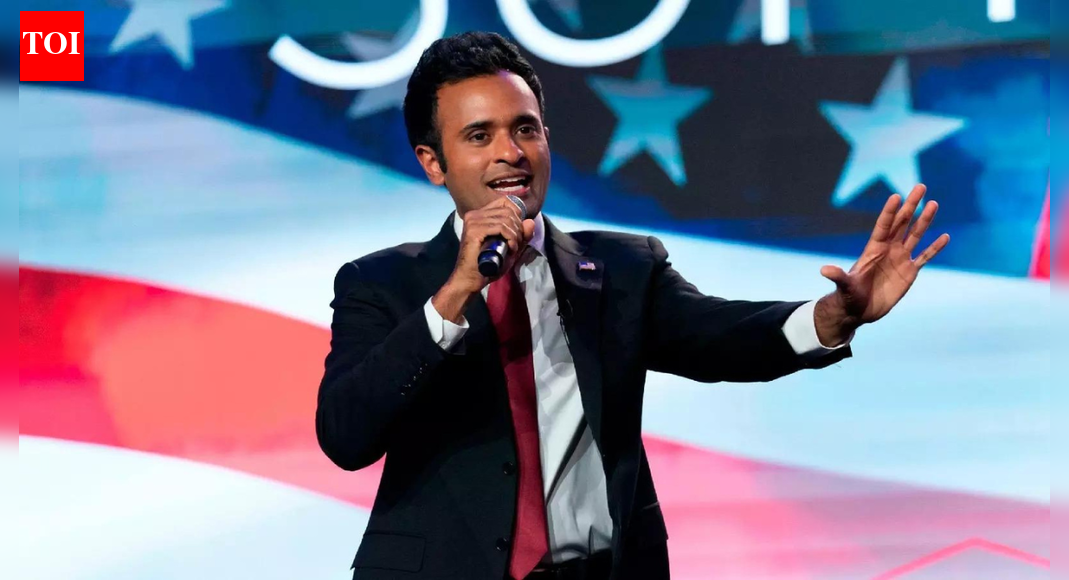


America’s culture wars are no longer just about policy. They are about belonging. Who gets to call themselves American, on what terms, and who decides the rules of entry. Into this increasingly combustible debate steps Vivek Ramaswamy, Indian-origin Republican leader, former presidential candidate, and now a conservative intellectual polemicist writing for The New York Times.His argument is deceptively simple and deliberately confrontational: America is not a bloodline. It is a belief system. And both the right and the left, he argues, are betraying that idea in different ways.
Two extremes pulling America apart
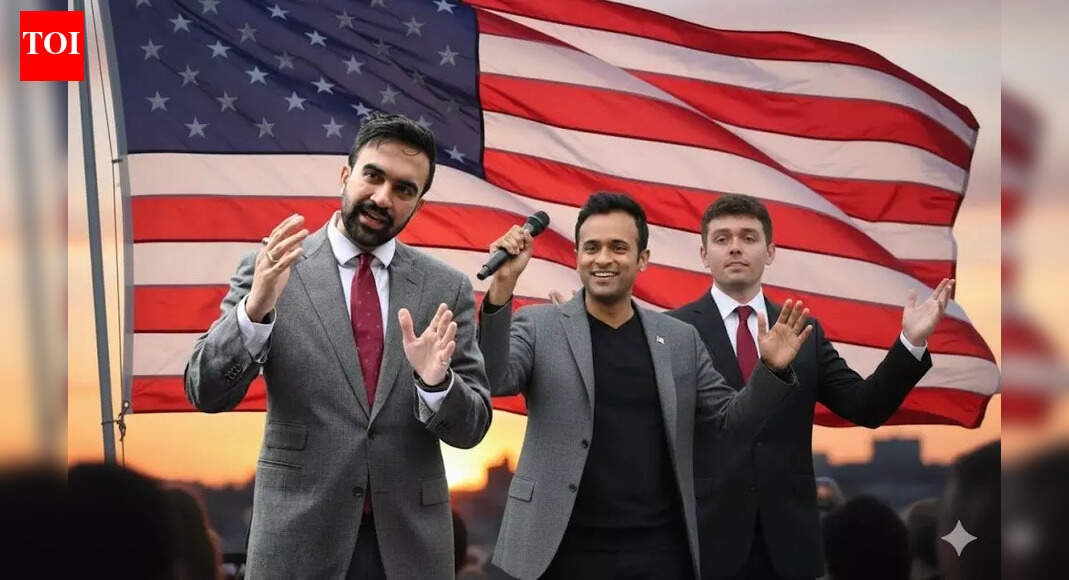
Ramaswamy frames the current moment as a pincer movement on American identity.On the right is groyperism: an online-to-offline movement that treats Americanness as a function of ancestry, race, and heritage. In this worldview, legitimacy flows from blood and soil. The “real” American is someone whose roots predate immigration waves, civil rights legislation, or demographic change.On the left, Ramaswamy sees a different but equally corrosive force: what he describes as Zohran Mamdani-infused socialism. This shorthand is not about one politician alone but about a broader ideological current that defines identity through grievance, class struggle, and group membership, often placing race, victimhood, and redistribution at the centre of politics. Different aesthetics. Same outcome. Fragmentation.
America as a civic idea, not a racial inheritance
Ramaswamy’s core claim is classically conservative and quietly radical in today’s climate: Americanness is binary. You are either American or you are not. There are no gradations based on skin colour, ancestry, or how early your family arrived. Under his definition, an American is someone who believes in the Constitution, the rule of law, freedom of speech and conscience, and who pledges exclusive allegiance to the United States. Citizenship, not lineage, is the qualifying test. This idea draws heavily from the Reaganite tradition. You can live in many countries, but America is one of the few where anyone, from anywhere, can fully become part of the nation by subscribing to its civic creed. That openness, Ramaswamy argues, is not a modern deviation. It is the point.
Why his own identity sharpens the argument
Ramaswamy’s intervention carries extra weight because of who he is. Born and raised in Ohio to Indian immigrant parents, he has never lived outside the US. Yet his rise within Republican politics has been accompanied by a steady stream of racial abuse. He has spoken about being called slurs, told to “go back to India,” and dismissed as un-American for one reason only: he is not white. Even his wife has been targeted by far-right commentators using demeaning ethnic labels. For Ramaswamy, this is not an abstract debate. It is proof that parts of the right are drifting into the very identity politics they claim to despise. In rejecting race-based narratives from the left, some conservatives, he argues, have quietly embraced a racial narrative of their own.
Identity politics, but with different flags
One of the sharper edges of Ramaswamy’s argument is his insistence that today’s ethnic nationalism is not driven by ideology alone, but by anxiety. Young Americans face high housing costs, stagnant wages, student debt, and declining faith in institutions. In the absence of a unifying national story, frustration curdles into tribalism. On the left, it becomes grievance-driven politics. On the right, it becomes ethnic exclusion.
His larger prescription
Ramaswamy does not stop at diagnosis. He calls for moral clarity against racism and antisemitism, economic reforms that restore faith in the American dream, broader participation in wealth creation, and a shared national project ambitious enough to give people a reason to believe again. But beneath all the policy scaffolding lies one central idea: America cannot function as a civilisation if it defines itself by who belongs less. It only works if it defines itself by what it believes together.
Why this debate matters now
Ramaswamy’s essay matters not because it settles the argument, but because it exposes the fault lines. A conservative leader, writing in America’s most influential newspaper, openly warning his own side against racial nationalism is not a small moment. His vision of American identity is neither multicultural in the progressive sense nor ethno-nationalist in the reactionary sense. It is demanding, civic, and unforgiving of both bloodline politics and grievance politics. In his formulation, America is not something you inherit. It is something you choose. And increasingly, the country is being forced to decide whether it still believes that Go to Source