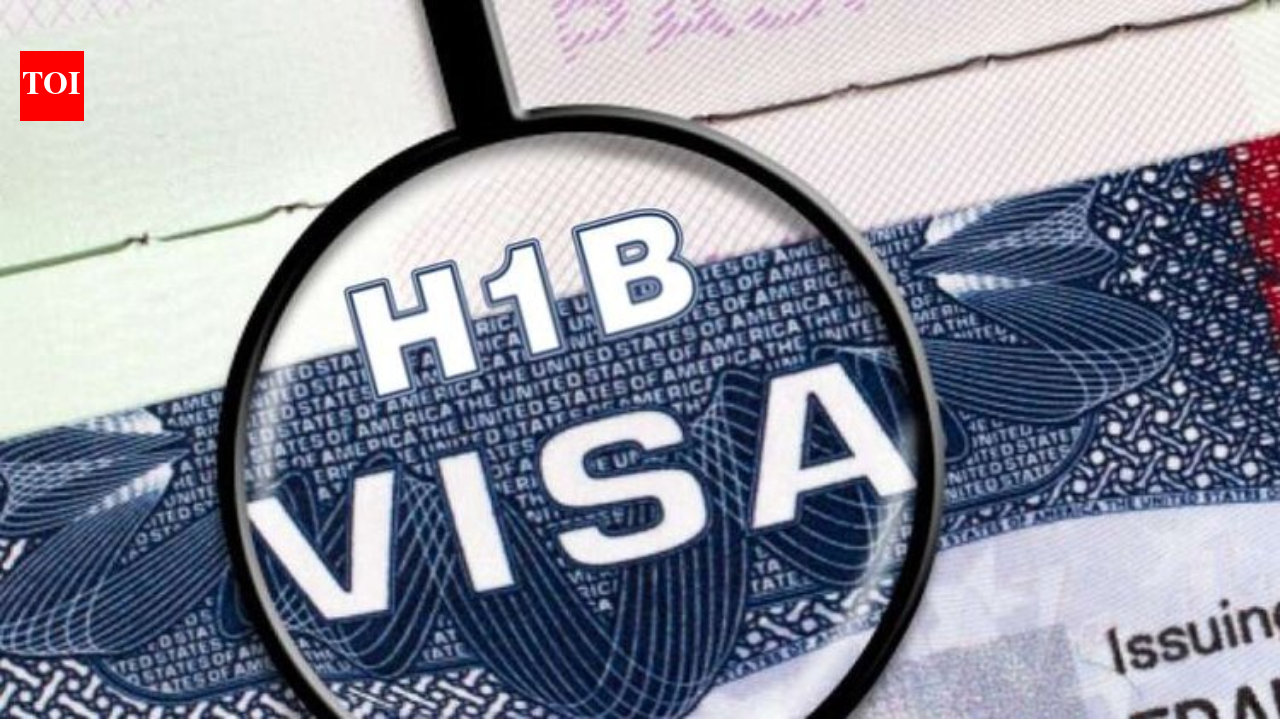

Canadian-Indian entrepreneur Vijay Sappani said on X that taking a hardline stance on H-1B visas was “the best thing Trump did to Corporate America.” He added that the policy forced companies to “dive deeper into India where they can pay half of H1B salary for the same talent instead of bringing them to US.” Sappani predicts that more US jobs will move to India and that trend will keep growing.Sappani is the founder and CEO of Ela Capital, a Toronto-based investment firm with global business ventures.His comments come as major technology companies prepare to expand hiring in India in 2026. According to a new survey by the professional network-based company Blind, about 52 per cent of tech and banking professionals said their companies plan to hire more staff in India next year. Of these, 34 per cent expect a significant increase and 18 per cent a moderate rise.The survey included responses from 2,392 verified professionals across the US and India. It found that top companies such as Google, Amazon, Microsoft, Uber, and eBay are increasingly looking to India as a hiring base. When asked about the effect on US roles, 38 per cent said India hiring is replacing US positions, while 23 per cent said it helps the recruitment process in US. The study also noted the role of immigration policy. About 28 per cent of respondents said H-1B visa restrictions are pushing companies to hire more in India. Meanwhile, 25 per cent said the changes had no proper effect and 4 per cent reported increased US hiring as a result.
Attacking H1-B was the best thing Trump did to Corporate America. It forced them to dive deeper into India where they can pay half of H1B salary for the same talent instead of bringing them to US. More US jobs will move to India and that trend will keep growing.
https://t.co/9f9PgsKAAZ
— Vijay Sapps (@VJsapps) January 26, 2026
Sappani’s comments matches with the survey findings, indicating India’s growing role as a functional alternative to US labour. “Rather than relying on US-based expansion, many companies appear to be redirecting growth to India, signalling a structural shift in global workforce planning,” the report said, according to the International Business Times.Among employees at global firms such as eBay, Wayfair, LinkedIn, Qualcomm, Capital One, Google, Amazon, Salesforce, SAP, and Microsoft, up to 93 per cent reported plans to expand hiring in India. Companies are pursuing this through scaling existing teams, creating new roles, or relocating projects and functions to India.The MAGA base in the US is not happy with the number of H1-B workers replacing native American workers in major industries. This has led the GOP base to urge the Trump administration to ban the visas once and for all. However, major employers that hire mainly Indian and Chinese workers say that this would eventually result in the collapse of the American economy. However, stricter social media screening rules, a delayed application process and a whopping fee of $100,000 for an H1-B visa have led many to reconsider their choice of working in US