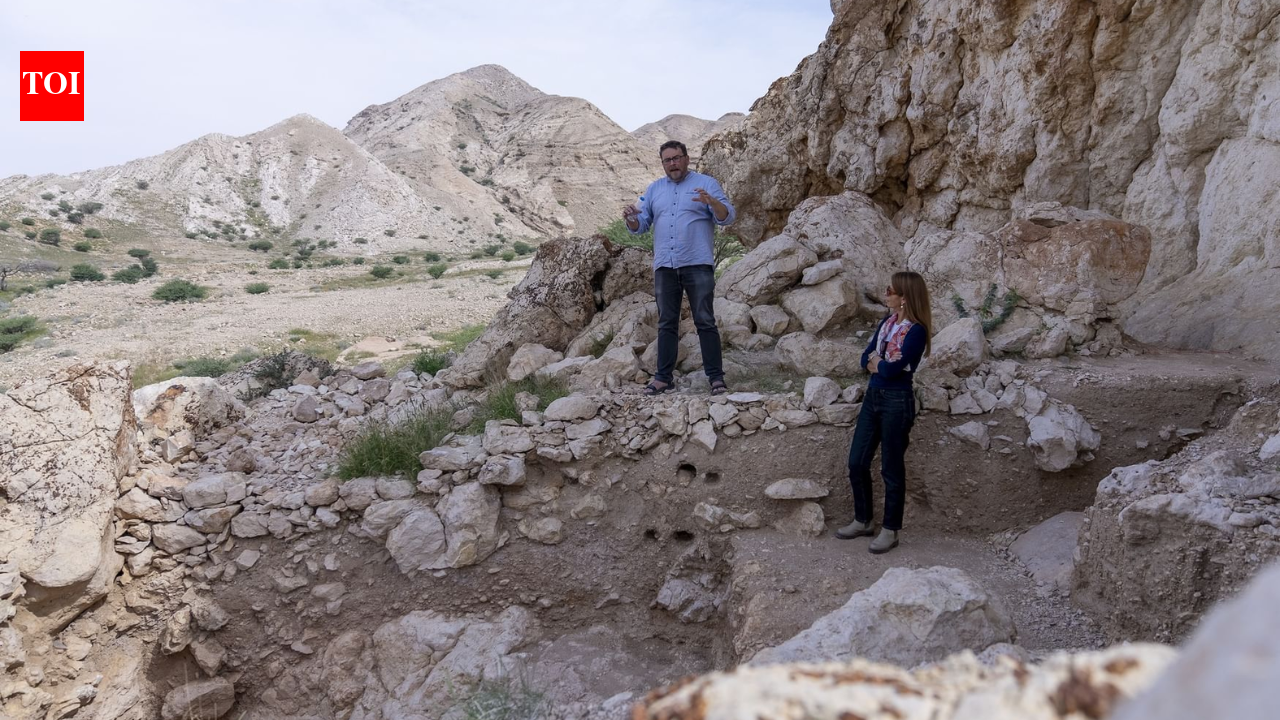

Study reveals humans lived at Sharjah’s Buhais Rockshelter from 125,000 to 16,000 years ago/Image: WAM
For years, a site believed to have remained largely uninhabited between 60,000 and 12,000 years ago has been re-evaluated, as new research uncovers evidence of repeated human occupation at Buhais Rockshelter, an archaeological site in Sharjah, UAE. The findings challenge long-held assumptions about human settlement in southeastern Arabia and offer a clearer picture of how early populations adapted to changing environments. The study, published on Monday, March 23 in Nature Communications, was led by Eisa Yousif, Director-General of the Sharjah Archaeology Authority (SAA), and Dr Sabah Jasim, Advisor to the Authority. It was conducted in collaboration with Dr Knut Bretzke of Friedrich Schiller University Jena and Professor Adrian Parker of Oxford Brookes University, alongside researchers from the universities of Tübingen and Freiburg in Germany. Titled Evidence from Buhais Rockshelter for human settlement in Arabia between 60,000 and 16,000 years ago, the research identifies multiple phases of human presence at the site, dating to approximately 125,000, 59,000, 35,000, and 16,000 years ago.
Israel Iran War
“The publication of this study marks a major step in advancing our understanding of early human history in this region. The evidence from Buhais demonstrates that southeastern Arabia was not simply a passage for early humans, but a landscape where they returned, adapted, and sustained life across changing environmental conditions,” Yousif said.
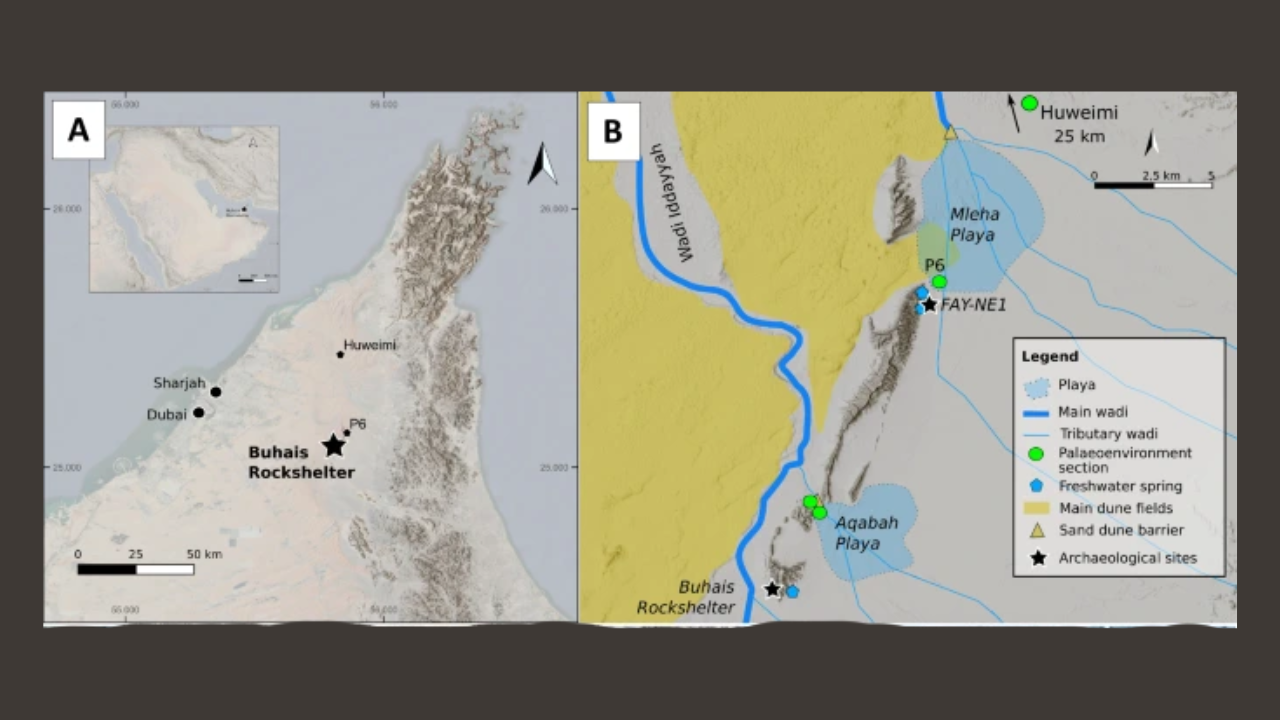
Overview of Buhais Rockshelter/Image: Nature Communications
The findings are based on extensive archaeological excavations at Buhais Rockshelter, located within Sharjah’s Faya Palaeolandscape, a UNESCO World Heritage site inscribed in 2025. The results add a significant new chapter to the early settlement history of the Arabian Peninsula and extend the well-established Jebel Faya archaeological sequence into a previously undocumented timeframe.
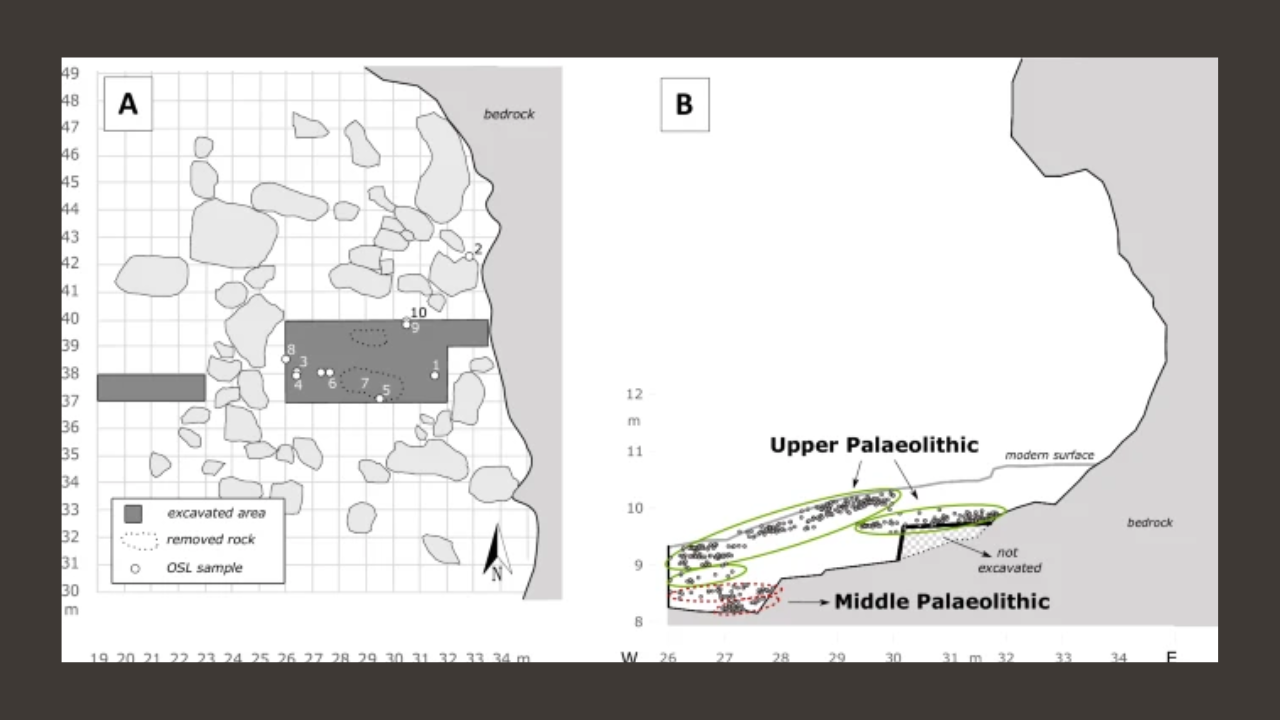
Overview of excavations at Buhais Rockshelter/Image: Nature Communications
For decades, southeastern Arabia was widely believed to have been largely uninhabited between 60,000 and 12,000 years ago due to extreme aridity during the last glacial period. The new study directly challenges that assumption. Instead of a prolonged absence of human activity, the evidence points to repeated occupation during different periods, suggesting that early humans were able to survive and return despite harsh climatic conditions. Rather than representing a single phase of habitation, the research confirms multiple phases of recurring human activity at the site. While evidence of human presence dating back to around 125,000 years ago was already known, the identification of three additional phases at approximately 59,000, 35,000, and 16,000 years ago fills critical gaps in the archaeological record of the region. These findings provide a more continuous timeline of human presence in southeastern Arabia than previously understood. The study also draws on additional palaeoenvironmental research conducted within the Faya Palaeolandscape. This data shows that the periods of human occupation coincided with phases of increased rainfall and water availability. These environmental improvements would have supported vegetation and created conditions suitable for human life, offering a clear explanation for the repeated return of populations to the site. This marks the first clear evidence in Arabia linking human settlement during this timeframe with specific environmental conditions. The findings suggest that early populations were not merely passing through the region as part of migration routes, but were capable of adapting to shifting climates and sustaining life over extended periods. The Buhais Rockshelter itself played a crucial role in preserving this record. Its limestone formation provided natural shelter, allowing sediment layers to build up over thousands of years. These layers, reaching depths of around 1.7 metres, preserved stone tools and artefacts in a stratified sequence, offering valuable insights into human activity across different periods. Using luminescence dating techniques, researchers were able to determine when these sediment layers were last exposed to sunlight. This method enabled them to reconstruct a detailed timeline of both human presence and environmental change, providing a rare and well-preserved record of life in an arid landscape over tens of thousands of years. Southeastern Arabia has long been regarded as a key corridor for early human movement out of Africa and into Asia. The new findings provide empirical evidence that this region was not only a route of passage but also a place of repeated settlement during multiple stages of human evolution. This positions the region at the centre of ongoing scientific discussions on global human migration and the formation of early populations in Southwest Asia. Together with nearby discoveries at Jebel Faya, which document human activity in the region dating back over 200,000 years, the study reinforces the broader significance of the Faya Palaeolandscape. The site is now recognised as one of the most important and continuous records of early human occupation in arid environments. The research also reflects decades of work led by the Sharjah Archaeology Authority in collaboration with international institutions. This long-term partnership has combined scientific expertise with a shared commitment to preserving and interpreting early human history. The growing body of evidence from sites like Buhais and Jebel Faya continues to highlight the UAE’s and Sharjah’s contribution to the global narrative of human evolution, adaptation, and migration. Go to Source